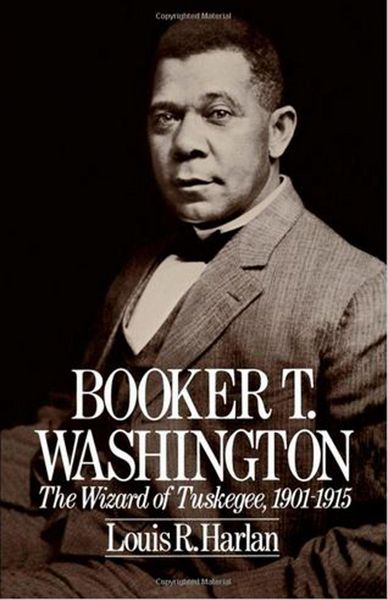
Booker T. Washington Volume 2: The Wizard Of Tuskegee, 1901-1915
-
- Hardcover
- Taschenbuch
- eBook ausgewählt
-
Form:Einzelkauf Download
-
Sprache:Englisch
-
eBook Format:PDF
- PDF 28,99 € ausgewählt
- ePUB 24,99 €
-
Verlag:OUP eBook
- OUP eBook 28,99 € ausgewählt
- OUP eBook 30,49 €
28,99 €
inkl. gesetzl. MwSt.Beschreibung
Produktdetails
Format
Kopierschutz
Ja
Family Sharing
Nein
Text-to-Speech
Nein
Erscheinungsdatum
28.04.1983
Verlag
OUP eBookSeitenzahl
(Printausgabe)
Dateigröße
33104 KB
Sprache
Englisch
EAN
9780199729098
Long one of nature's most fascinating phenomena, magnetism was once the subject of many superstitions. Magnets were thought useful to thieves, effective as a love potion or as a cure for gout or spasms. They could remove sorcery from women and put demons to flight and even reconcile married couples. It was said that a lodestone pickled in the salt of sucking fish had the power to attract gold. Today, these beliefs have been put aside, but magnetism is no less
remarkable for our modern understanding of it. In Hidden Attraction, Gerrit L. Verschuur, a noted astronomer and National Book Award nominee for The Invisible Universe, traces the history of our fascination with magnetism, from the first discovery of magnets in Greece, to state-of-the-art theories that see
magnetism as a basic force in the universe.
The book begins with the early debunking of superstitions by Peter Peregrinus (Pierre de Maricourt), whom Roger Bacon hailed as one of the world's first experimental scientists (Perigrinus held that "experience rather than argument is the basis of certainty in science"). Verschuur discusses William Gilbert, who confronted the multitude of superstitions about lodestones in De Magnete, widely regarded as the first true work of modern science, in which Gilbert reported his greatest
insight: that the earth itself was magnetic. We also meet Hans Christian Oersted, who demonstrated that an electric current could influence a magnet (Oersted did this for the first time during a public lecture) and Andre-Marie Ampere, who showed that a current actually produced magnetism. Verschuur also examines
the pioneering experiments and theoretical breakthroughs of Faraday and Maxwell and Zeeman (who demonstrated the relationship between light and magnetism), and he includes many lively stories of discovery, such as the use of frogs by Galvani and Volta, and Hertz's accidental discovery of radio waves. Along the way, we learn many interesting scientific facts, perhaps the most remarkable of which is that lodestones are made by bacteria (a sediment organism known as GS-15 eats iron, converting
ferric oxide to magnetite and, over billions of years, forming the magnetite layers in iron formations).
Boasting many informative illustrations, this is an adventure of the mind, using the specific phenomenon of magnetism to show how we have moved from an era of superstitions to one in which the Theory of Everything looms on the horizon.
remarkable for our modern understanding of it. In Hidden Attraction, Gerrit L. Verschuur, a noted astronomer and National Book Award nominee for The Invisible Universe, traces the history of our fascination with magnetism, from the first discovery of magnets in Greece, to state-of-the-art theories that see
magnetism as a basic force in the universe.
The book begins with the early debunking of superstitions by Peter Peregrinus (Pierre de Maricourt), whom Roger Bacon hailed as one of the world's first experimental scientists (Perigrinus held that "experience rather than argument is the basis of certainty in science"). Verschuur discusses William Gilbert, who confronted the multitude of superstitions about lodestones in De Magnete, widely regarded as the first true work of modern science, in which Gilbert reported his greatest
insight: that the earth itself was magnetic. We also meet Hans Christian Oersted, who demonstrated that an electric current could influence a magnet (Oersted did this for the first time during a public lecture) and Andre-Marie Ampere, who showed that a current actually produced magnetism. Verschuur also examines
the pioneering experiments and theoretical breakthroughs of Faraday and Maxwell and Zeeman (who demonstrated the relationship between light and magnetism), and he includes many lively stories of discovery, such as the use of frogs by Galvani and Volta, and Hertz's accidental discovery of radio waves. Along the way, we learn many interesting scientific facts, perhaps the most remarkable of which is that lodestones are made by bacteria (a sediment organism known as GS-15 eats iron, converting
ferric oxide to magnetite and, over billions of years, forming the magnetite layers in iron formations).
Boasting many informative illustrations, this is an adventure of the mind, using the specific phenomenon of magnetism to show how we have moved from an era of superstitions to one in which the Theory of Everything looms on the horizon.
Noch keine Bewertungen vorhanden
Verfassen Sie die erste Bewertung zu diesem Artikel
Helfen Sie anderen Kundinnen und Kunden durch Ihre Meinung.
Kurze Frage zu unserer Seite
Vielen Dank für Ihr Feedback
Wir nutzen Ihr Feedback, um unsere Produktseiten zu verbessern. Bitte haben Sie Verständnis, dass wir Ihnen keine Rückmeldung geben können. Falls Sie Kontakt mit uns aufnehmen möchten, können Sie sich aber gerne an unseren Kund*innenservice wenden.
zum Kundenservice