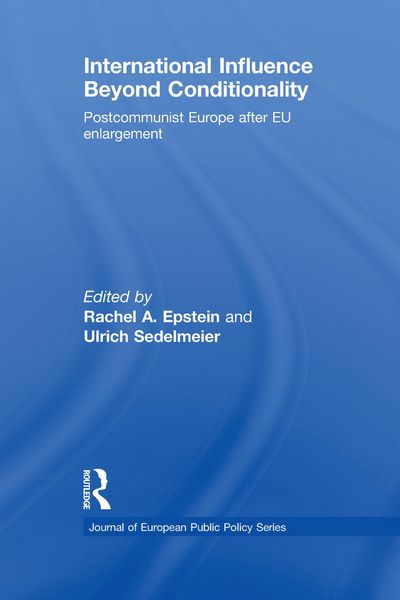
International Influence Beyond Conditionality Postcommunist Europe after EU enlargement
-
Form:Einzelkauf Download
-
Sprache:Englisch
-
eBook Format:ePUB 3
- ePUB 3 50,49 € ausgewählt
- PDF 50,49 €
50,49 €
inkl. gesetzl. MwSt.Beschreibung
Produktdetails
Format
ePUB 3
Kopierschutz
Ja
Family Sharing
Nein
Text-to-Speech
Ja
Erscheinungsdatum
13.09.2013
Herausgeber
Rachel A. Epstein + weitereVerlag
Taylor & Francis eBooksSeitenzahl
176 (Printausgabe)
Auflage
1. Auflage
Sprache
Englisch
EAN
9781317989875
The European Union's (EU) membership conditionality has been perceived as a highly effective means of influence on non-member states in the run-up to the 2004 and 2007 enlargements. According to the incentive-based explanation that dominates the literature, conditionality has been particularly effective when the EU offered a credible membership incentive and when governments did not consider the domestic costs of compliance threatening to their hold on power.
This volume challenges much of the existing work on EU enlargement and postcommunist transition, however, by testing the conditionality thesis in the post-accession setting. Whereas a conditionality hypothesis would predict deteriorating compliance among the newest member states, several contributions here actually find the opposite. Enduring compliance among postcommunist states with the acquis, as well as with less formally institutionalized EU preferences for economic liberalization and minority protection, calls into question the role that conditionality plays in eliciting conformity. Simultaneously, support for the conditionality hypothesis in areas such as political party development and EU relations with Turkey and the western Balkans suggests conditionality's effects vary across countries and issues. As the first study to systematically examine the relationship between international institutions and postcommunist states after enlargement, this volume provides new insights into how external actors exercise their power in domestic politics.
This book was published as a special issue of the Journal of European Public Policy.
Noch keine Bewertungen vorhanden
Verfassen Sie die erste Bewertung zu diesem Artikel
Helfen Sie anderen Kundinnen und Kunden durch Ihre Meinung.
Kurze Frage zu unserer Seite
Vielen Dank für Ihr Feedback
Wir nutzen Ihr Feedback, um unsere Produktseiten zu verbessern. Bitte haben Sie Verständnis, dass wir Ihnen keine Rückmeldung geben können. Falls Sie Kontakt mit uns aufnehmen möchten, können Sie sich aber gerne an unseren Kund*innenservice wenden.
zum Kundenservice