• Produktbild: Bus Transport
  • Produktbild: Bus Transport
Band 18

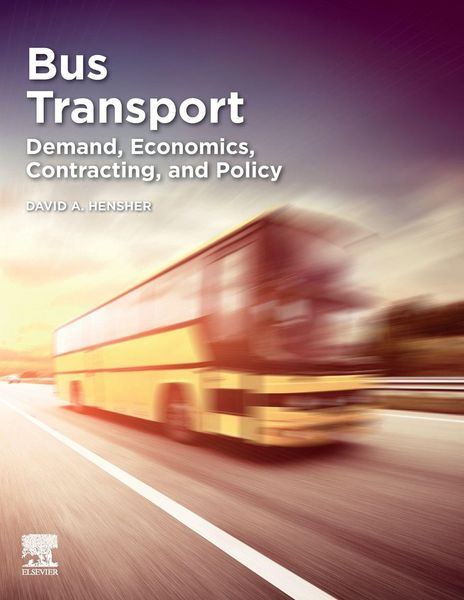
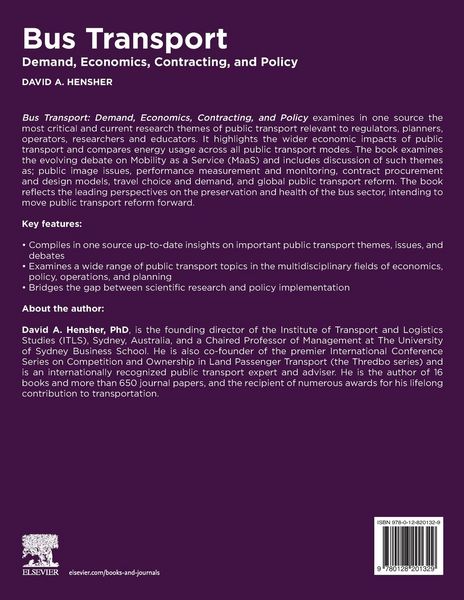
Bus Transport Demand, Economics, Contracting, and Policy

122,99 €

inkl. gesetzl. MwSt., Versandkostenfrei


Beschreibung

Produktdetails

Einband

Taschenbuch

Erscheinungsdatum

01.05.2020

Verlag

Elsevier Science & Technology

Seitenzahl

526

Maße (L/B/H)

27,9/21,6/2,7 cm

Gewicht

1207 g

Sprache

Englisch

ISBN

978-0-12-820132-9

Beschreibung

Produktdetails

Einband

Taschenbuch

Erscheinungsdatum

01.05.2020

Verlag

Elsevier Science & Technology

Seitenzahl

526

Maße (L/B/H)

27,9/21,6/2,7 cm

Gewicht

1207 g

Sprache

Englisch

ISBN

978-0-12-820132-9

Herstelleradresse

Libri GmbH
Europaallee 1
36244 Bad Hersfeld
DE

Email: gpsr@libri.de

Noch keine Bewertungen vorhanden

Verfassen Sie die erste Bewertung zu diesem Artikel

Helfen Sie anderen Kundinnen und Kunden durch Ihre Meinung.

Kundinnen und Kunden meinen

Bewertungen (0)

Die Leseprobe wird geladen.
  • Produktbild: Bus Transport
  • Produktbild: Bus Transport
  • 1. Introduction and Overview

    Part I: Reviews2. Public service contracts in the bus sector3. Disruptive technology and moving people4. The influence of the Thredbo Series5. Competition and ownership in land passenger transport: the Thredbo story

    Part II: Contracting6. Contracting regimes for bus services: what have we learnt in recent years?7. Incompleteness and clarity in bus contracts8. A simplified performance-linked value for money model for bus contract payments9. Bus contract costs, user perceived service quality and performance assessment10. Customer service quality and benchmarking in bus contracts11. Are there cost efficiency gains through competitive tendering or negotiated performance-based contracts and benchmarking in the absence of an incumbent public monopolist?12. Efficient contracting and incentive agreements between regulators and bus operators: the influence of risk preferences of contracting agents on contract choice13. Using contracted assets to undertake non-contracted services to improve cost efficiency 14. Disruption costs in contract transitions

    Part III: Bus Rapid Transit15. Sustainable bus systems: moving towards a value for money and network-based approach and away from blind commitment16. Ridership drivers of bus based transit systems17. Performance contributors of bus rapid transit systems within the ITDP BRT standard18. Review of bus rapid transit and branded bus services in Australia

    Part IV: Image19. Identifying resident preferences for bus and rail investments20. Cultural contrasts of preferences for bus rapid transit and light rail transit

    Part V: Elasticities21. Assessing sources of variation in public transport elasticities: some warnings

    Part VI: Crowding22. A review of willingness to pay evidence on public transport crowding23. A review of objective and subjective measures of crowding in public transport24. The effects of passenger crowding on public transport demand and supply system25. Multimodal transport pricing with extensions to non-motorised transport

    Part VII: Transport Appraisal26. Estimating the wider economic benefits of the Sydney North West Rail Link project27. Clarifying the complementary contributions of cost benefit analysis and economic impact analysis in public transport investment28. How well does BRT perform in contrast to LRT? An Australian case study

    Part VIII: Energy29. Can bus be cleaner and greener than rail?

    Part IX: Social Exclusion30. The roles of mobility and bridging social capital in reducing social exclusion in regional Australia

    Part X: Mobility as a Service (MaaS)31. Future bus transport contracts under mobility as a service regime32. Potential uptake and willingness-to-pay for mobility as a service33. Identifying broker/aggregator models for delivering mobility as a service34. What might road congestion look like in the future under a collaborative and connected mobility model?