• Produktbild: Signal Processing to Drive Human-Computer Interaction
  • Produktbild: Signal Processing to Drive Human-Computer Interaction

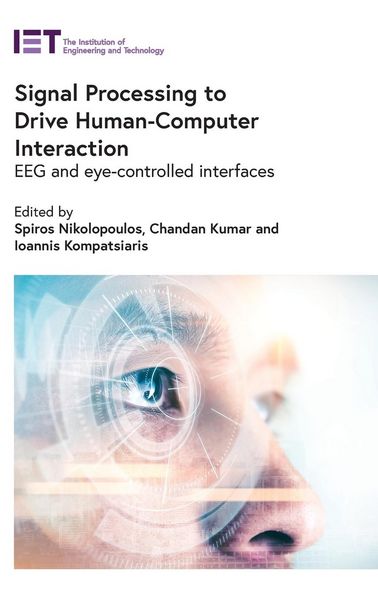
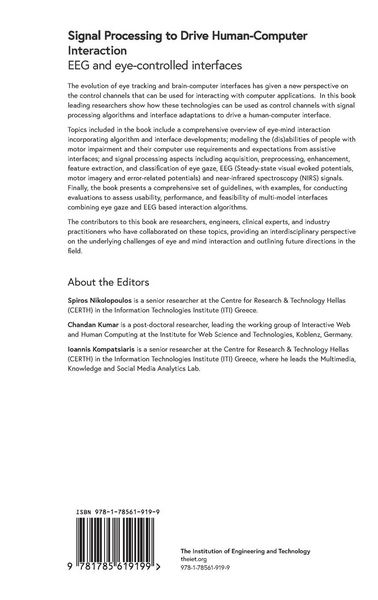
Signal Processing to Drive Human-Computer Interaction Eeg and Eye-Controlled Interfaces

156,99 €

inkl. gesetzl. MwSt., Versandkostenfrei


Beschreibung

Produktdetails

Einband

Gebundene Ausgabe

Erscheinungsdatum

08.07.2020

Herausgeber

Spiros Nikolopoulos + weitere

Verlag

Institution of Engineering & Technology

Seitenzahl

312

Maße (L/B/H)

23,9/16/2 cm

Gewicht

635 g

Sprache

Englisch

ISBN

978-1-78561-919-9

Beschreibung

Produktdetails

Einband

Gebundene Ausgabe

Erscheinungsdatum

08.07.2020

Herausgeber

Verlag

Institution of Engineering & Technology

Seitenzahl

312

Maße (L/B/H)

23,9/16/2 cm

Gewicht

635 g

Sprache

Englisch

ISBN

978-1-78561-919-9

Noch keine Bewertungen vorhanden

Verfassen Sie die erste Bewertung zu diesem Artikel

Helfen Sie anderen Kundinnen und Kunden durch Ihre Meinung.

Kundinnen und Kunden meinen

Bewertungen (0)

  • Produktbild: Signal Processing to Drive Human-Computer Interaction
  • Produktbild: Signal Processing to Drive Human-Computer Interaction
    • Chapter 1: Introduction
    • Part I: Reviewing existing literature on the benefits of BCIs, studying the computer use requirements and modeling the (dis)abilities of people with motor impairment
      • Chapter 2: The added value of EEG-based BCIs for communication and rehabilitation of people with motor impairment
      • Chapter 3: Brain-computer interfaces in a home environment for patients with motor impairment - the MAMEM use case
      • Chapter 4: Persuasive design principles and user models for people with motor disabilities
    • Part II: Algorithms and interfaces for interaction control through eyes and mind
      • Chapter 5: Eye tracking for interaction: adapting multimedia interfaces
      • Chapter 6: Eye tracking for interaction: evaluation methods
      • Chapter 7: Machine-learning techniques for EEG data
      • Chapter 8: BCIs using steady-state visual-evoked potentials
      • Chapter 9: BCIs using motor imagery and sensorimotor rhythms
      • Chapter 10: Graph signal processing analysis of NIRS signals for brain-computer interfaces
    • Part III: Multimodal prototype interfaces that can be operated through eyes and mind
      • Chapter 11: Error-aware BCIs
      • Chapter 12: Multimodal BCIs - the hands-free Tetris paradigm
      • Chapter 13: Conclusions