• Produktbild: Special Educational Needs
  • Produktbild: Special Educational Needs
- 21%

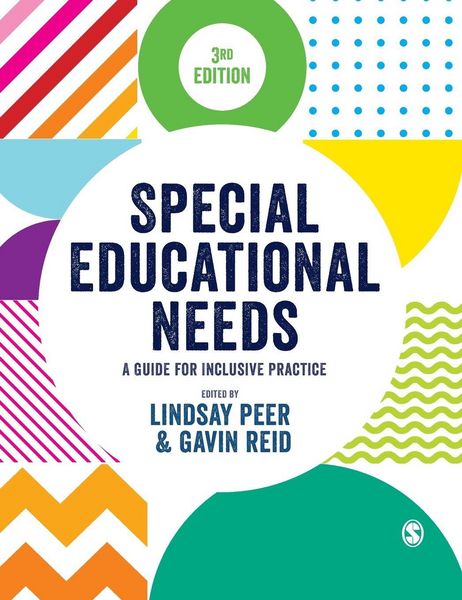
Special Educational Needs A Guide for Inclusive Practice

21% sparen

106,99 € UVP 137,00 €

inkl. gesetzl. MwSt., Versandkostenfrei


Beschreibung

Produktdetails

Einband

Gebundene Ausgabe

Erscheinungsdatum

18.11.2020

Herausgeber

Lindsay Peer + weitere

Verlag

Sage Publications

Seitenzahl

424

Maße (L/B/H)

24,1/19,6/2,7 cm

Gewicht

878 g

Auflage

3. Auflage

Sprache

Englisch

ISBN

978-1-5264-9219-7

Beschreibung

Produktdetails

Einband

Gebundene Ausgabe

Erscheinungsdatum

18.11.2020

Herausgeber

Verlag

Sage Publications

Seitenzahl

424

Maße (L/B/H)

24,1/19,6/2,7 cm

Gewicht

878 g

Auflage

3. Auflage

Sprache

Englisch

ISBN

978-1-5264-9219-7

EU-Ansprechpartner

Zeitfracht Medien GmbH
Ferdinand-Jühlke-Straße 7
99095 Erfurt
DE

Herstelleradresse

SAGE Publications
1 Oliver's Yard 55 City Road
EC1Y 1SP London
GB

Noch keine Bewertungen vorhanden

Verfassen Sie die erste Bewertung zu diesem Artikel

Helfen Sie anderen Kundinnen und Kunden durch Ihre Meinung.

Kundinnen und Kunden meinen

Bewertungen (0)

Die Leseprobe wird geladen.
  • Produktbild: Special Educational Needs
  • Produktbild: Special Educational Needs
  • Chapter 1: Introduction - Gavin Reid & Lindsay Peer
    Part I: Policy, Practice and Provision
    Chapter 2: Special and additional support needs in England and Scotland: current dilemmas and solutions - Sheila Riddell, Elisabet Weedon & Neville Harris
    Chapter 3: Putting the dyslexic learner at the centre - Janice Wearmouth
    Chapter 4: Inclusion and special educational needs: a dialogic inquiry into controversial issues - Artemi Sakellariadis
    Chapter 5: The potential impact and influence of the social model of disability - Charles Weedon
    Part II: Perspectives from Practice
    Chapter 6: Speech, language and communication - Juanita Hurley and Sally Moore
    Chapter 7: Auditory Processing Disorder - Tony Sirimanna
    Chapter 8: Developmental coordination disorder/ developmental dyspraxia in the context of education - Sally Scott-Roberts & Dr Catherine Purcell
    Chapter 9: Vision and learning - John Stevenson
    Chapter 10: Literacy: literacy and the training of professionals who teach and assess individuals with literacy difficulties - Margaret Crombie, Julian Brown & Una Lodge
    Chapter 11: Mathematics learning difficulties and dyscalculia - Steve Chinn
    Chapter 12: The role of technology in supporting young people with Additional and Special Needs - Arran Smith
    Chapter 13: Using technology to support learners with additional needs: practical information and advice - Adam Gordon
    Part III: Syndromes and the Brain
    Chapter 14: Students with Down syndrome in inclusive classrooms: using evidence-based practices - Iva Strnadová & David Evans
    Chapter 15: Attention deficit hyperactivity disorder - Fin O¿Regan
    Chapter 16: Visual and cerebral impairment and mainstream education: beyond mere awareness raising - John Ravenscroft
    Chapter 17: Students with hearing loss - Jill Duncan
    Chapter 18: Pathological/Extreme Demand Avoidance (PDA/EDA) - Richard Soppitt
    Chapter 19: Autism Spectrum Disorder (ASD): Identification, Intervention and Research - Jo-Ann Page
    Part IV: Working Together
    Chapter 20: Working together: a system working together to serve the child with Special Educational Needs? A critical look at current practice in Irish primary education - Fidelma Healy Eames & Annmarie Meehan
    Chapter 21: Parents as partners - Jillian Zocher & Katie Nelson
    Chapter 22: Children and Young People's Perspectives - Jennie Guise, Jenn Clark & Jo-Ann Page