Gutscheinbedingungen

Gültig bis 13.07.2026 | Gültig für Spielzeug (außer Tonieboxen & ausgewählte Tonies), Filme, Musik, Software, Games, Schreibwaren, Hörbücher und Hörbuch-Downloads (außer Abo & Shelfies), gebrauchte Bücher, nicht preisgebundene Bücher und Kalender | Einlösbar unter osiander.de und in der Osiander App | Click & Collect nur mit Online-Zahlung (Paypal/Kreditkarte) vorab | Einzelne Artikel können ausgeschlossen sein | Nicht kombinierbar mit anderen Gutscheinen oder Preisaktionen | Nur einmal pro Einkauf einlösbar | Gutschein wird auf max. 500€ Bestellwert angerechnet | Keine Barauszahlung | Digitale Hörbücher nur für Android | Nicht gültig für preisgebundene Artikel (aufgrund der Buchpreisbindung sind Gutscheine nicht auf Bücher, eBooks, Presse einlösbar), tolino eReader & Zubehör, Elektronik, Geschenke & Trends, Abonnements & Flatrates, Geschenkkarten, Versandkosten und Services

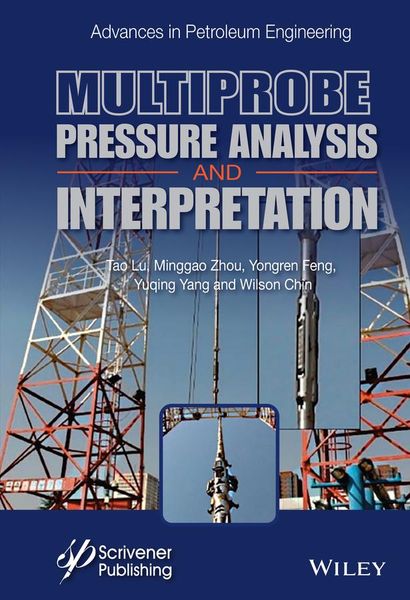
Produktbild: Multiprobe Pressure Analysis and Interpretation

Multiprobe Pressure Analysis and Interpretation Multiprobe Design and Pressure Analysis

269,99 €

inkl. gesetzl. MwSt., Versandkostenfrei


Produktdetails

Einband

Gebundene Ausgabe

Erscheinungsdatum

29.06.2021

Herausgeber

Tao Lu + weitere

Verlag

Wiley

Seitenzahl

416

Maße (L/B/H)

22,6/15,2/2,8 cm

Gewicht

726 g

Sprache

Englisch

ISBN

978-1-119-76065-8

Produktdetails

Einband

Gebundene Ausgabe

Erscheinungsdatum

29.06.2021

Herausgeber

Verlag

Wiley

Seitenzahl

416

Maße (L/B/H)

22,6/15,2/2,8 cm

Gewicht

726 g

Sprache

Englisch

ISBN

978-1-119-76065-8

Herstelleradresse

Libri GmbH
Europaallee 1
36244 Bad Hersfeld
DE

Email: gpsr@libri.de

Noch keine Bewertungen vorhanden

Verfassen Sie die erste Bewertung zu diesem Artikel

Helfen Sie anderen Kundinnen und Kunden durch Ihre Meinung.

Kundinnen und Kunden meinen

Bewertungen (0)

Die Leseprobe wird geladen.
  • Produktbild: Multiprobe Pressure Analysis and Interpretation
  • Preface xi

    Acknowledgements xv

    1 Formation Testing - Background, Perspectives and New Industry Requirements 1

    1.1 Formation Testing - A Brief Introduction 1

    1.2 Conventional Formation Testing Concepts 6

    1.3 A New Triple Probe Tool - Design Concepts and Well Logging Advantages 7

    1.3.1 Azimuthal flow signal strength (circumferential probes) 9

    1.3.2 Axial signal strength (centerline oriented dual probes) 14

    1.3.3 Hardware and software considerations simulation considerations 21

    1.3.4 Closing remarks 24

    1.4 References 24

    2 Visual Tour in Formation Testing, Design and Manufacturing 25

    2.1 Detailed Mechanical CAD Animation 26

    2.2 From Drawing Board to Engineering Prototyping 35

    2.3 Manufacturing Highlights and Production 39

    2.4 Laboratory Facilities with Formation Testing Fixtures 40

    2.5 Beijing Test Well and Logging Facilities 42

    2.6 Tool Positioning in Beijing Test Well 44

    2.7 Field Operations - Bohai Bay and Middle East 45

    2.8 Closing Remarks 48

    2.9 References 48

    3 Triple Probe Formation Tester - from Idea to Design to Field Evaluation 49

    3.1 Laboratory Highlights - Triple Probe Formation Tester 50

    3.2 Triple Probe Close-ups in Field Test 53

    3.3 Positioning the Tool in the Well 56

    3.4 Example Pressure Testing Well Logs 59

    3.5 References 61

    4 Project Background - Analysis, Modeling and Interpretation 62

    4.1 Well Logging Advantages 64

    4.2 Math Model Perspectives 65

    4.3 Related Formation Testing Literature 68

    4.4 Background Schlumberger Results 71

    4.5 Analysis of MDT Pressure Data 73

    4.6 References 74

    5 Dual Probe Analysis for Thamama Formation 76

    5.1 Thamama Formation Problem Definition 76

    5.2 FT-Multiprobe Simulation 78

    5.3 FT-00 Forward Simulation 87

    5.4 FT-01 Inverse Analysis 89

    5.5 References 91

    6 Dual Probe Application for Wara Formation 92

    6.1 Wave Formation Data Description 92

    6.2 FT-Multiprobe History Matching 93

    6.3 FT-00 and FT-01 Analysis for Sink and Vertical Probe Data 100

    6.4 References 103

    7 Multiprobe Flow Modeling Strategies 104

    7.1 Triple-probe Formation Testing Instrument 104

    7.1.1 Background remarks 104

    7.1.2 Multiprobe tool introduction 106

    7.2 Dual and Triple-probe Steady Flow Modeling 112

    7.2.1 Background - Sources, sinks, doublets and more 112

    7.2.2 Modeling hierarchies 112

    7.2.3 Exact steady flow pressure analysis 114

    7.2.4 Exact streamline tracing and geometric analysis 117

    7.2.5 Unbalanced doublet flows - a new approach 118

    7.3 Transient Numerical Model 123

    7.3.1 Simulator overview 123

    7.3.2 Computational details 125

    7.3.3 Flowline volume storage modeling 125

    7.3.4 Active flowline volume coupling at observation probes 126

    7.3.5 Mud filtrate invasion and supercharging, and underbalanced drilling 126

    7.3.6 Periodicity conditions in flows from circular wells 127

    7.4 References 130

    8 Multiprobe Applications - Detailed Examples and Assessment 132

    8.1 Drawdown for Round and Slot Nozzles With and Without Mud Filtrate Migration Through the  Sandface 134

    Example 1. Simple drawdown, round nozzle, no invasion 134

    Example 2. Simple drawdown, round nozzle, invasion with supercharging, 200 psi overbalance 143

    Example 3. Simple drawdown, round nozzle, invasion with strong supercharging, 2,000 psi overbalance 147

    Example 4. Simple drawdown, round nozzle, underbalanced drilling, 100 psi underbalance 149

    Example 5. Simple drawdown, slot nozzle, no invasion 151

    Example 6. Simple drawdown, three pumping slot nozzles, no invasion 156

    8.2 Highly Transient Applications, Drawdown and Buildup, Multiple Round or Slot Nozzles, No Invasion 160

    Example 7. Simple drawdown and buildup, single round nozzle 160

    Example 8. Three round nozzles executing drawdown and buildup simultaneously and independently, no invasion 165

    Example 9. Two round nozzles, one withdrawing fluid, the second simultaneously injecting, no invasion 170

    Example 10. Invasion or supercharge characterization in transient problems 174

    8.3 Additional Topics 178

    Example 11. A complicated simulation, effect of pore pressure in output displays 178

    Example 12. Batch processing capabilities 183

    Example 13. Spherical flow evaluation and geometric factors 191

    viii Contents

    Example 14. Pressure behavior at permeability extremes 194

    Example 15. Comparing problems with and without supercharge 197

    9 Special Topics - Gas Release, Convergence Acceleration, Big Data and Inverse Methods 200

    9.1 Suppressing Dissolved Gas Release 201

    Bubble point considerations 201

    Example 1. Undesirable dissolved gas release 202

    Example 2. Dissolved gas remains in solution 207

    9.2 Steady Flow Convergence Acceleration for Interpretation Applications 212

    Interpretation applications 213

    Validating convergence accelerations 214

    Big data inverse applications 219

    9.3 Heterogeneity and Dip Detection Using Multiple Firings 219

    9.4 Triple Probe Tools with Different Nozzle Geometries 225

    9.5 Inverse Problems for Azimuthal and Axial Probe Applications 229

    9.5.1 Azimuthal inverse problem 229

    Steady flow forward calculations 231

    Limited (kh,kv) range example 231

    Inverse permeability predictions 241

    Algorithm analysis 241

    Wider (kh,kv) permeability example 247

    Inverse method recapitulation 251

    Data integrity in "big data" implementation 254

    Azimuthal inverse strategies 256

    9.5.2 Axial inverse problem for any dip angle 257

    9.5.2.1 Dual probe anisotropy inverse analysis 257

    Existing source model simulators 258

    9.5.2.2 Supercharging - Effects of nonuniform initial pressure 267

    Conventional zero supercharge model 268

    Supercharge "Fast Forward" solver 269

    9.5.2.3 Multiprobe "DOI," inverse and barrier analysis 275

    9.6 Closing Remarks 282

    9.7 References 283

    Contents ix

    10 Integrated Multiprobe Modeling System 284

    Section 1 - General transient 3D simulator 286

    10.1 Overall Capabilities and Enhancements 286

    10.2 The "Steady" Check-box Option for Low and High Permeability Flows 291

    10.3 Flows with Mixed Nozzle Designs and Different Pumping Schedules 294

    Run 1. All round nozzles with staggered flow rates 294

    Run 2. All slotted nozzles with staggered flow rates 296

    Run 3. All slotted nozzles with identical flow rates 297

    Run 4. Slot, round, slot combination with identical flow rates 300

    Run 5. Round, slot, round combination with identical flow rates 301

    10.4 Geometric Factor Role in Model and Tool Calibration 303

    10.4.1 Model calibration 303

    10.4.2 Tool and software calibration 306

    10.5 Pad Nozzles with Different Orifice Sizes and Shapes 307

    10.6 Pore Pressure Determination with Triple Probe Tool and Effects of Supercharge 309

    Section 2 - Steady Simulator and Inverse Applications 312

    10.7 Software Reference Overview 312

    10.8 General Transient 3D Simulator in Batch Mode 315

    10.9 Rapid Steady 3D Simulator in Batch Mode 319

    10.10 Big Data Inverse Approach and Examples 333

    10.10.1 Run 1. Center pumping probe, two observation probes with a first viscosity guess 333

    10.10.2 Run 2. Center pumping probe, two observation probes with a second viscosity guess 348

    10.10.3 Run 3. Three pumping probes in drawdown mode 350

    10.10.4 Run 4. Two pumping probes in drawdown mode 359

    10.11 Closing Remarks 361

    Cumulative References 362

    Index 377

    About the Authors 387