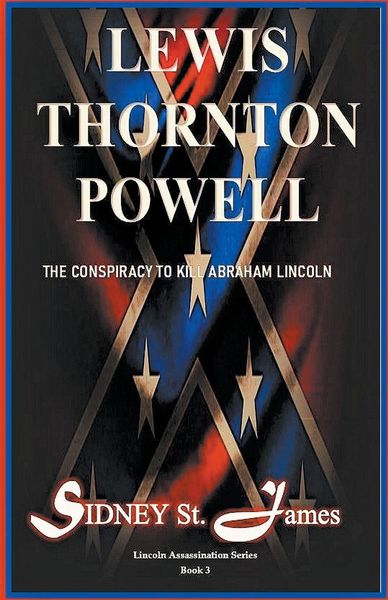

Lewis Thornton Powell - The Conspiracy to Kill Abraham Lincoln
-
- Englisch ausgewählt
19,99 €
inkl. gesetzl. MwSt.,
Beschreibung
Produktdetails
Einband
Taschenbuch
Erscheinungsdatum
04.06.2020
Verlag
BeeBop Publishing GroupSeitenzahl
346
Maße (L/B/H)
21,6/14/2 cm
Gewicht
489 g
Sprache
Englisch
ISBN
978-1-393-77932-2
Lewis Thornton Powell The Conspiracy to Kill Abraham Lincoln Lincoln Assassination Series Book 3 "Fourscore and seven years ago our fathers brought forth, on this continent, a new nation, conceived in liberty, and dedicated to the proposition that all men are created equal." – Abraham Lincoln Reporters were denied access to Lewis Thornton Powell and David "Davy" Herold, conspirators in the Lincoln Assassination while held captive on the USS Montauk. Furthermore, the press was held at bay, but not Alexander Gardner, a favorite photographer of the government in Washington City at the time. On April 27th, Gardner was busy taking photographs of those who had been arrested in the government's dragnet. Say a derogatory word against the government or Abe Lincoln, one could find themselves locked up in the slammer with three hundred others. Each of the prisoners were brought on deck and photographed in a few different poses. Far more photographs were taken of Lewis Powell than anyone else. He was a camera hound and gave his time to the celebrated photographer. Powell cooperated with Gardner's requests and posed sitting down, standing, with and without restraints, and modeling the overcoat and hat he wore the night of the Secretary of State Seward's attacks. The one used in most discussions was where he stood against the gun turret of the USS Saugus, staring right at the camera, relaxing in a calm manner. Powell was shackled with a form of manacles known as "lily irons," riveted handcuffs with two separate iron bands on each of his wrists, preventing him the ability to bend his wrist or use either of his hands. Like most of the male prisoners on board, he drug around with him a heavy iron ball at the end of a six foot long chain manacled to one of his legs. In LEWIS THORNTON POWELL – The Conspiracy to Kill Abraham Lincoln, a military tribunal, rather than a civilian court, was chosen as the prosecutorial venue. The government officials at the time thought the Commission might be more lenient in regards to the evidence allowing the court to get to the bottom of what they perceived as a vast conspiracy. Conviction required a simple majority of the judges, while imposition of the death sentence required a two-thirds majority. The only appeal available to the prisoners was to go directly to the President of the United States. From all indication, enough preliminary witnesses had placed Powell in the same room with Secretary of State Seward. Finding legal counsel was difficult, and after three days waiting, Powell was finally able to locate representation for the trial that began on May 12, 1865. William E. Doster took over representation for the defense of Lewis Powell. Doster was a graduate of Yale and Harvard and the former provost marshal for the District of Columbia. William Doster for the Defense opened his case on June 21st, 1865, for Lewis Thornton Powell. The weight of the evidence against Powell was so overwhelming, the Defense, instead of trying to disprove his guilt, characterizes Powell's actions as those of a soldier who aimed at the Secretary of State instead of the lesser corps of the Union. This court case in its entirety for Lewis Thornton Powell was brought to paper for the reader to determine from the evidence and the testimony of witnesses whether or not Lewis Thornton Powell should have been hung or be turned free.
Noch keine Bewertungen vorhanden
Verfassen Sie die erste Bewertung zu diesem Artikel
Helfen Sie anderen Kundinnen und Kunden durch Ihre Meinung.
Kurze Frage zu unserer Seite
Vielen Dank für Ihr Feedback
Wir nutzen Ihr Feedback, um unsere Produktseiten zu verbessern. Bitte haben Sie Verständnis, dass wir Ihnen keine Rückmeldung geben können. Falls Sie Kontakt mit uns aufnehmen möchten, können Sie sich aber gerne an unseren Kund*innenservice wenden.
zum Kundenservice