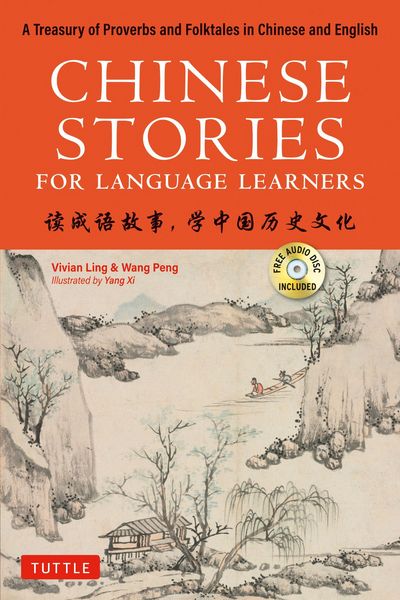
Chinese Stories for Language Learners A Treasury of Proverbs and Folktales in Bilingual Chinese and English (Online Audio Recordings Included)
-
- Taschenbuch ausgewählt
- eBook
-
Sprache:Englisch
18,99 €
inkl. gesetzl. MwSt.,
Beschreibung
Produktdetails
Einband
Taschenbuch
Erscheinungsdatum
23.03.2021
Abbildungen
256 pages with audio CD and 22 illustrations; 22 bilingual Chinese and English Stories
Illustriert von
Yang Xi
Verlag
Pan macmillan Ltd.Seitenzahl
256
Maße (L/B/H)
22,8/15,1/2 cm
Gewicht
480 g
Farbe
Lachs
Sprache
Englisch
ISBN
978-0-8048-5278-4
The highly anticipated next book in Tuttle's Stories for Language Learners series is here! This book presents 22 classic Chinese proverbs and the traditional tales behind them. The stories are bilingual, with the Chinese and English versions presented on facing pages. Each includes an explanation of how the proverb is used today, cultural notes, vocabulary and discussion questions. Audio recordings of the tales read by native speakers are included—both on the accompanying CD and as downloadable online audio—giving students a chance to improve their pronunciation and comprehension. Some of the proverbs featured in this collection include:
- "Painting the Eyes on the Dragon" Based on the story of a famous court painter in 6th century China who painted dragons, this proverb refers to the finishing touches needed to bring a work of art or literature to life. In a discussion, it refers to the final statements used to clinch the argument.
- "Waiting for Rabbits by a Tree Stump" Based on an ancient folktale about a foolish farmer who sees a rabbit kill itself in front of him by running into a tree stump, then gives up tilling his field to wait for more rabbits by the stump. This saying is applied to people who wait passively for luck to strike again. It also refers to impractical people who stick to one way of doing things only because it has worked for them once in the past.
- "Pure Water Has No Fish; Perfect People Have No Friends" Many versions of this historical tale exist. The one told here is about a 2nd century AD official sent to govern a far-flung outpost on the Silk Road who is fastidious in applying strict rules and thereby causes the local people to rebel against him. In the professional world, it is used to refer to people who do not like to work with an overly strict supervisor or colleague.
Noch keine Bewertungen vorhanden
Verfassen Sie die erste Bewertung zu diesem Artikel
Helfen Sie anderen Kundinnen und Kunden durch Ihre Meinung.
Kurze Frage zu unserer Seite
Vielen Dank für Ihr Feedback
Wir nutzen Ihr Feedback, um unsere Produktseiten zu verbessern. Bitte haben Sie Verständnis, dass wir Ihnen keine Rückmeldung geben können. Falls Sie Kontakt mit uns aufnehmen möchten, können Sie sich aber gerne an unseren Kund*innenservice wenden.
zum Kundenservice