Beschreibung
Produktdetails
Einband
Taschenbuch
Erscheinungsdatum
26.10.2020
Verlag
Sutton PublishingSeitenzahl
96
Maße (L/B/H)
23,4/16,8/0,5 cm
Gewicht
272 g
Sprache
Englisch
ISBN
978-1-68473-005-6
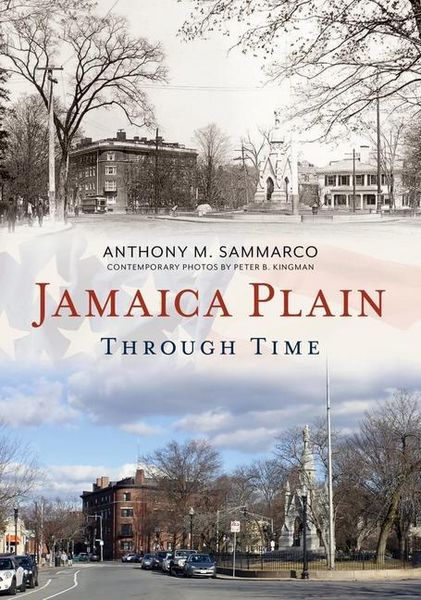
Jamaica Plain, Massachusetts, evolved from agrarian farmland to a dynamic, inclusive neighborhood with rich cultural, residential, and institutional development.
Known in the seventeenth and eighteenth centuries as the Jamaica End of Roxbury, the neighborhood of Jamaica Plain, Massachusetts, evolved from agrarian farmland for over 200 years into one of the more dynamic and inclusive neighborhoods of twenty-first century Boston. Jamaica Plain became one of the earliest streetcar suburbs of Boston with various forms of transportation linking it to downtown Boston. With horse drawn streetcars, the Boston & Providence Railroad as well as the Boston Elevated Railway, by the turn of the twentieth century, the ease of transportation allowed a thriving nexus of cultures to move to a community that not only saw tremendous residential and commercial development, especially with the numerous breweries along the Stony Brook, but also greenspace and open lands that were laid out by Frederick Law Olmstead as a part of the "Emerald Necklace" of Boston. Its bucolic setting led to Jamaica Plain being called The Eden of America. In the twentieth century, Jamaica Plain was also to become the location of numerous hospitals and institutions that provided care for Bostonians. The Faulkner, Washington, Shattuck, Vincent Memorial, Massachusetts Osteopathic and the Veterans Administration Hospitals; the New England Home for Little Wanderers and the Trinity Church Home; the Boston School of Physical Education, the Eliot School, the Perkins School for the Blind and the Nursery for Blind Babies; the Massachusetts Society for the Prevention of Cruelty to Animals and the Children's Museum all contributed to Jamaica Plain's pride of place in Boston. In this photographic history of Jamaica Plain, Anthony M. Sammarco, with contemporary photographs by Peter B. Kingman, has created a fascinating book that chronicles the neighborhood from the late nineteenth century through to the twenty-first century.
Noch keine Bewertungen vorhanden
Verfassen Sie die erste Bewertung zu diesem Artikel
Helfen Sie anderen Kundinnen und Kunden durch Ihre Meinung.
Kurze Frage zu unserer Seite
Vielen Dank für Ihr Feedback
Wir nutzen Ihr Feedback, um unsere Produktseiten zu verbessern. Bitte haben Sie Verständnis, dass wir Ihnen keine Rückmeldung geben können. Falls Sie Kontakt mit uns aufnehmen möchten, können Sie sich aber gerne an unseren Kund*innenservice wenden.
zum Kundenservice