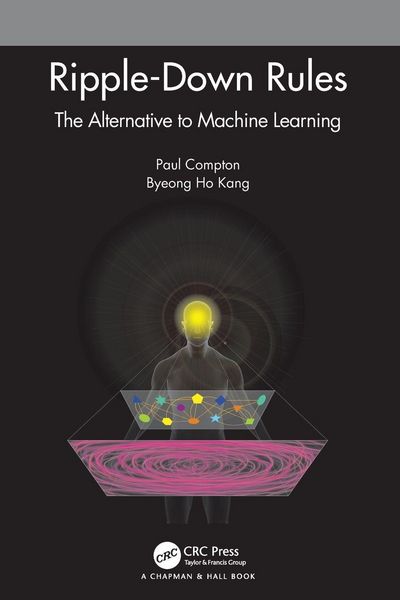
Ripple-Down Rules The Alternative to Machine Learning
-
- Hardcover
- Taschenbuch ausgewählt
- eBook
-
Sprache:Englisch
105,99 €
inkl. gesetzl. MwSt.,
Beschreibung
Produktdetails
Einband
Taschenbuch
Erscheinungsdatum
31.05.2021
Abbildungen
farbige Illustrationen, Tabellen, schwarz-weiss
Verlag
Taylor and FrancisSeitenzahl
196
Maße (L/B/H)
23,4/15,6/1,1 cm
Gewicht
660 g
Sprache
Englisch
ISBN
978-0-367-64432-1
Machine learning algorithms hold out extraordinary promise, but the reality is that their success depends entirely on the suitability of the data available. This book is about Ripple-Down Rules an alternative manual technique for rapidly building AI systems. With a human in the loop, RDR is much better able to deal with the limitations of the data.
Kundinnen und Kunden meinen
Verfassen Sie die erste Bewertung zu diesem Artikel
Helfen Sie anderen Kund*innen durch Ihre Meinung
Kurze Frage zu unserer Seite
Vielen Dank für Ihr Feedback
Wir nutzen Ihr Feedback, um unsere Produktseiten zu verbessern. Bitte haben Sie Verständnis, dass wir Ihnen keine Rückmeldung geben können. Falls Sie Kontakt mit uns aufnehmen möchten, können Sie sich aber gerne an unseren Kund*innenservice wenden.
zum Kundenservice