
The 2019 Yearbook of the Digital Ethics Lab
-
- Hardcover
- Taschenbuch ausgewählt
- eBook
-
Sprache:Englisch
49,99 €
inkl. gesetzl. MwSt.,
Beschreibung
Produktdetails
Einband
Taschenbuch
Erscheinungsdatum
26.08.2021
Herausgeber
Christopher Burr + weitereVerlag
SpringerSeitenzahl
144
Maße (L/B/H)
23,5/15,5/0,9 cm
Gewicht
248 g
Auflage
1st ed. 2020
Sprache
Englisch
ISBN
978-3-030-29147-1
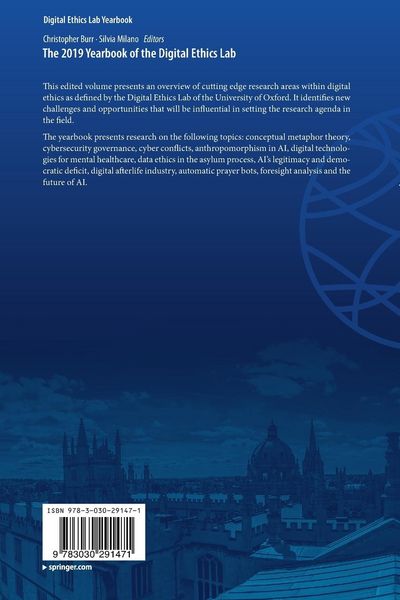
This edited volume presents an overview of cutting-edge research areas within digital ethics as defined by the Digital Ethics Lab of the University of Oxford. It identifies new challenges and opportunities of influence in setting the research agenda in the field.
The yearbook presents research on the following topics: conceptual metaphor theory, cybersecurity governance, cyber conflicts, anthropomorphism in AI, digital technologies for mental healthcare, data ethics in the asylum process, AI’s legitimacy and democratic deficit, digital afterlife industry, automatic prayer bots, foresight analysis and the future of AI. This volume appeals to students, researchers and professionals.
Noch keine Bewertungen vorhanden
Verfassen Sie die erste Bewertung zu diesem Artikel
Helfen Sie anderen Kundinnen und Kunden durch Ihre Meinung.
Kurze Frage zu unserer Seite
Vielen Dank für Ihr Feedback
Wir nutzen Ihr Feedback, um unsere Produktseiten zu verbessern. Bitte haben Sie Verständnis, dass wir Ihnen keine Rückmeldung geben können. Falls Sie Kontakt mit uns aufnehmen möchten, können Sie sich aber gerne an unseren Kund*innenservice wenden.
zum Kundenservice