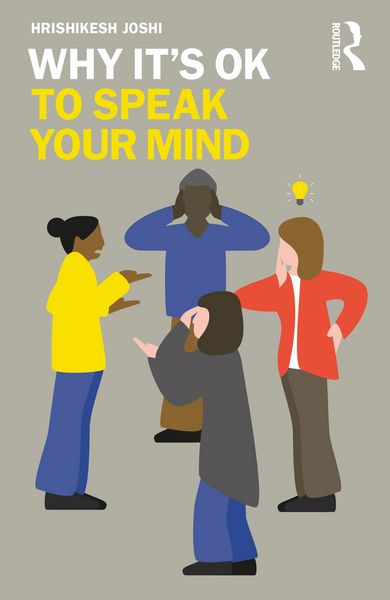
Why It's OK to Speak Your Mind
-
- Taschenbuch
- eBook ausgewählt
-
Form:Einzelkauf Download
-
Sprache:Englisch
-
eBook Format:ePUB 3
- ePUB 3 32,99 € ausgewählt
- PDF 32,99 €
32,99 €
inkl. gesetzl. MwSt.Beschreibung
Produktdetails
Format
ePUB 3
Kopierschutz
Ja
Family Sharing
Nein
Text-to-Speech
Ja
Erscheinungsdatum
08.03.2021
Verlag
Taylor & Francis eBooksSeitenzahl
196 (Printausgabe)
Auflage
1. Auflage
Sprache
Englisch
EAN
9781000344950
Political protests, debates on college campuses, and social media tirades make it seem like everyone is speaking their minds today. Surveys, however, reveal that many people increasingly feel like they're walking on eggshells when communicating in public. Speaking your mind can risk relationships and professional opportunities. It can alienate friends and anger colleagues. Isn't it smarter to just put your head down and keep quiet about controversial topics?
In this book, Hrishikesh Joshi offers a novel defense of speaking your mind. He explains that because we are social creatures, we never truly think alone. What we know depends on what our community knows. And by bringing our unique perspectives to bear upon public discourse, we enhance our collective ability to reach the truth on a variety of important matters.
Speaking your mind is also important for your own sake. It is essential for developing your own thinking. And it's a core aspect of being intellectually courageous and independent. Joshi argues that such independence is a crucial part of a well-lived life.
The book draws from Aristotle, John Stuart Mill, Friedrich Nietzsche, Bertrand Russell, and a range of contemporary thinkers to argue that it's OK to speak your mind.
Key Features
- Shows that we have not just a right but a moral duty to publicly share what we know.
- Argues that discussing your unique ideas with others is essential for developing as a critical thinker.
- Explores the value of intellectual honesty and independence in the writings of John Stuart Mill and Friedrich Nietzsche and connects their thinking to contemporary problems.
- Argues that avoiding cultural blind spots today is important for the fate of future generations.
Noch keine Bewertungen vorhanden
Verfassen Sie die erste Bewertung zu diesem Artikel
Helfen Sie anderen Kundinnen und Kunden durch Ihre Meinung.
Kurze Frage zu unserer Seite
Vielen Dank für Ihr Feedback
Wir nutzen Ihr Feedback, um unsere Produktseiten zu verbessern. Bitte haben Sie Verständnis, dass wir Ihnen keine Rückmeldung geben können. Falls Sie Kontakt mit uns aufnehmen möchten, können Sie sich aber gerne an unseren Kund*innenservice wenden.
zum Kundenservice