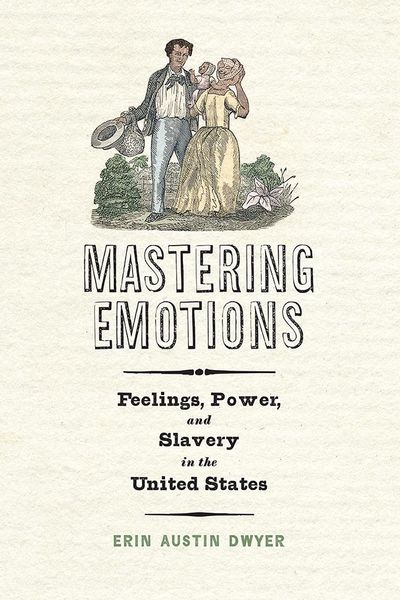
Mastering Emotions Feelings, Power, and Slavery in the United States
39,49 €
inkl. gesetzl. MwSt.Beschreibung
Produktdetails
Format
ePUB
Kopierschutz
Ja
Family Sharing
Nein
Text-to-Speech
Ja
Erscheinungsdatum
21.10.2021
Verlag
Nyu PressSeitenzahl
320 (Printausgabe)
Dateigröße
4535 KB
Sprache
Englisch
EAN
9780812299984
Emotions were central to the ways that slaveholders perpetuated slavery, as well as to the ways that enslaved people survived and challenged bondage and experienced freedom. Mastering Emotions examines the interactions between slaveholders and enslaved people, and between White people and free Black people, to expose how emotions such as love, terror, happiness, and trust functioned as social and economic capital for slaveholders and enslaved people alike.
The daily interactions that occurred between slaveholders and enslaved people around emotions, in conjunction with larger debates about race and freedom, form the backbone of what Erin Austin Dwyer calls the emotional politics of slavery. Race and status determined which emotions were permissible or punishable, which should be restrained, and by whom. As a result, mastering emotions, one's ability to control one's own feelings and those of others, was paramount for slaveholders and enslaved. The emotional politics of slavery were thus fashioned by enslaved people and slaveholders together through the crucible of slavery.
Emancipation was a seismic shift in the affective landscape of the antebellum South. Though the end of the Civil War rendered moot the debate over how to emotionally maintain slavery, the lingering conflict over whether the emotional strictures governing the South would be based on race or free status had serious repercussions, particularly for free Black people. The postwar rise of legal and extralegal attempts to affectively control free Black people underscored the commitment of elite White Southerners to preserving the power dynamics of the emotional politics of slavery, by any means necessary. Mastering Emotions concludes by detailing how the long-term legacy of those emotional politics reverberated through Reconstruction and the Jim Crow eras.
Noch keine Bewertungen vorhanden
Verfassen Sie die erste Bewertung zu diesem Artikel
Helfen Sie anderen Kundinnen und Kunden durch Ihre Meinung.
Kurze Frage zu unserer Seite
Vielen Dank für Ihr Feedback
Wir nutzen Ihr Feedback, um unsere Produktseiten zu verbessern. Bitte haben Sie Verständnis, dass wir Ihnen keine Rückmeldung geben können. Falls Sie Kontakt mit uns aufnehmen möchten, können Sie sich aber gerne an unseren Kund*innenservice wenden.
zum Kundenservice