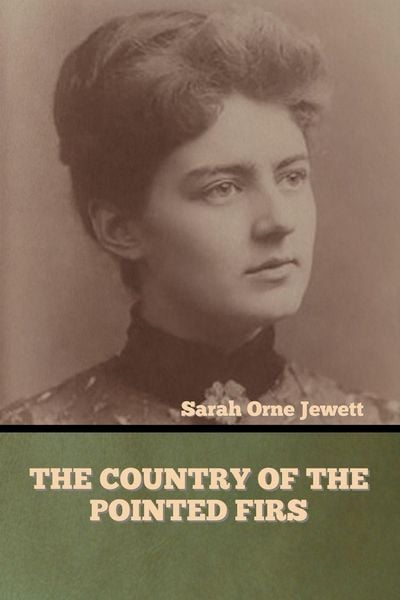
The Country of the Pointed Firs
-
- Hardcover
- Taschenbuch ausgewählt
- eBook
-
Sprache:Englisch
-
Verlag:Bibliotech Pr
- Outlook 16,90 €
- Rowman & Littlefield 18,99 €
- Gyan Books 12,99 €
- Tredition 12,90 €
- Sharp Ink 8,60 €
- Bibliotech Pr 13,99 € ausgewählt
- Double9 Books Llp 14,99 €
- Random House N.Y. 9,99 €
- Culturea 18,95 €
- Martino Fine Books 9,99 €
- Digireads.com 11,99 €
- Neeland Media 9,99 €
- Smk Books 16,99 €
- Unnamed Press 17,99 €
- Hansebooks 16,90 €
- Ingram Publishers Services 8,99 €
- E-artnow 11,99 €
- Penguin Books Ltd 6,99 €
13,99 €
inkl. gesetzl. MwSt.,
Beschreibung
Produktdetails
Einband
Taschenbuch
Erscheinungsdatum
11.11.2022
Verlag
Bibliotech PrSeitenzahl
128
Maße (L/B/H)
22,9/15,2/0,8 cm
Gewicht
220 g
Sprache
Englisch
ISBN
978-1-63637-338-6
The Country of the Pointed Firs is an 1896 book by American writer Sarah Orne Jewett. It is considered by some literary critics to be her finest work. The Country of the Pointed Firs was serialized in the January, March, July, and September 1896 issues of The Atlantic Monthly. Sarah Orne Jewett subsequently expanded and revised the text and added titles for the chapters. The novel was then published in book form in Boston and New York by Houghton, Mifflin and Company in November 1896. Henry James described it as her "beautiful little quantum of achievement." Ursula K. Le Guin praises its "quietly powerful rhythms." Because it is loosely structured, many critics view the book not as a novel, but a series of sketches; however, its structure is unified through both setting and theme. The novel can be read as a study of the effects of isolation and hardship experienced by the inhabitants of the decaying fishing villages along the Maine coast. Jewett, who wrote the book when she was 47, was largely responsible for popularizing the regionalism genre with her sketches of the fictional Maine fishing village of Dunnet Landing. Like Jewett, the narrator is a woman, a writer, unattached, genteel in demeanor, intermittently feisty and zealously protective of her time to write. The narrator removes herself from her landlady's company and writes in an empty schoolhouse, but she also continues to spend a great deal of time with Mrs.
Noch keine Bewertungen vorhanden
Verfassen Sie die erste Bewertung zu diesem Artikel
Helfen Sie anderen Kundinnen und Kunden durch Ihre Meinung.
Kurze Frage zu unserer Seite
Vielen Dank für Ihr Feedback
Wir nutzen Ihr Feedback, um unsere Produktseiten zu verbessern. Bitte haben Sie Verständnis, dass wir Ihnen keine Rückmeldung geben können. Falls Sie Kontakt mit uns aufnehmen möchten, können Sie sich aber gerne an unseren Kund*innenservice wenden.
zum Kundenservice