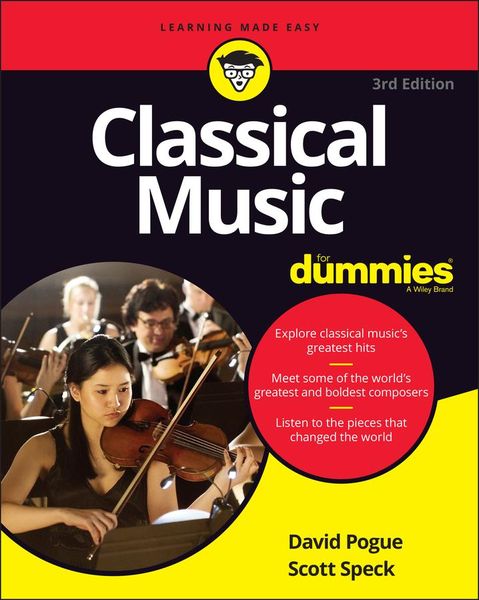
Produktbild: Classical Music For Dummies

Classical Music For Dummies

25,99 €

inkl. gesetzl. MwSt., Versandkostenfrei


Beschreibung

Produktdetails

Einband

Taschenbuch

Erscheinungsdatum

03.03.2022

Verlag

John Wiley & Sons

Seitenzahl

384

Maße (L/B/H)

23,2/18,7/2,3 cm

Gewicht

522 g

Auflage

3. Auflage

Sprache

Englisch

ISBN

978-1-119-84774-8

Beschreibung

Produktdetails

Einband

Taschenbuch

Erscheinungsdatum

03.03.2022

Verlag

John Wiley & Sons

Seitenzahl

384

Maße (L/B/H)

23,2/18,7/2,3 cm

Gewicht

522 g

Auflage

3. Auflage

Sprache

Englisch

ISBN

978-1-119-84774-8

Herstelleradresse

Libri GmbH
Europaallee 1
36244 Bad Hersfeld
DE

Email: gpsr@libri.de

Kundinnen und Kunden meinen

0 Bewertungen

Informationen zu Bewertungen

Zur Abgabe einer Bewertung ist eine Anmeldung im Konto notwendig. Die Authentizität der Bewertungen wird von uns nicht überprüft. Wir behalten uns vor, Bewertungstexte, die unseren Richtlinien widersprechen, entsprechend zu kürzen oder zu löschen.

Die Bewertungen sind nach Format, Anzahl Sterne und Datum sortiert.

Verfassen Sie die erste Bewertung zu diesem Artikel

Helfen Sie anderen Kund*innen durch Ihre Meinung

Kundinnen und Kunden meinen

0 Bewertungen filtern

Die Leseprobe wird geladen.
  • Produktbild: Classical Music For Dummies
  • Introduction 1

    About This Book 1

    Foolish Assumptions 2

    Icons Used in This Book 2

    Beyond the Book 3

    Where to Go from Here 4

    Part 1: Getting Started with Classical Music 5

    Chapter 1: Prying Open the Classical Music Oyster 7

    Discovering What Classical Music Really Is 8

    Figuring Out What You Like 8

    The Seven Habits of Highly Effective Composers 9

    Their music is from the heart 9

    They use a structure that you can feel 9

    They're creative and original 10

    They express a relevant human emotion 10

    They keep your attention with variety and pacing 11

    Their music is easy to remember 11

    They move you with their creations 12

    Chapter 2: The Entire History of Music in 80 Pages 13

    Understanding How Classical Music Got Started 13

    Chanting All Day: The Middle Ages 14

    Gregorian chant 14

    A monk named Guido 15

    Mass dismissed! 15

    The First Composer-Saint 16

    Born Again: The Renaissance 16

    The madrigal takes off 16

    Opera hits prime time 17

    Getting Emotional: The Baroque Era 18

    Renegade notes on wheels 18

    Kings, churches, and other high rollers 19

    Antonio Vivaldi 19

    George Frideric Handel 21

    Johann Sebastian Bach 24

    Tightening the Corset: The Classical Style 26

    Joseph Haydn 27

    Wolfgang Amadeus Mozart 29

    Joseph Boulogne, Chevalier de Saint-Georges 34

    Ludwig van Beethoven: The man who changed everything 34

    Schubert and his Lieder 39

    Felix Mendelssohn 42

    Fanny Mendelssohn 44

    Falling in Love: Hopeless Romantics 45

    Carl Maria von Weber 45

    Hector Berlioz 46

    Frédéric Chopin 49

    Robert Schumann 51

    Johannes Brahms 54

    The superstars: Paganini and Liszt 56

    Liszt follows Paganini's lead 57

    Richard Wagner 58

    Strauss and Mahler 59

    Saluting the Flag(s): Nationalism in Classical Music 63

    Bed¿ich Smetana 64

    Antonín Dvöák 65

    Edvard Grieg 67

    Jean Sibelius 68

    Carl Nielsen 70

    Glinka and the Mighty Fistful 71

    Peter Tchaikovsky 73

    Sergei Rachmaninoff 75

    Listening to Music of the 20th Century and Beyond 77

    Debussy and Ravel 78

    Igor Stravinsky 80

    Sergei Prokofiev 83

    Dmitri Shostakovich 84

    The Second Viennese School 86

    The Americans 87

    Chapter 3: Spotting a Sonata 95

    Symphonies 95

    First movement: brisk and lively 96

    Second movement: slow and lyrical 97

    Third movement: dancy 98

    Finale: rollicking 98

    Sonatas and Sonatinas 99

    Concertos 100

    Concerto structure 101

    The cadenza 101

    Dances and Suites 103

    Serenades and Divertimentos 104

    Themes and Variations 105

    Fantasias and Rhapsodies 106

    Tone Poems (Or Symphonic Poems) 107

    Lieder (and Follower) 107

    Leader of the Lieder 108

    Song forms 108

    Oratorios and Other Choral Works 109

    Operas, Operettas, and Arias 110

    Overtures and Preludes 110

    Ballets and Ballerinas 111

    String Quartets and Other Motley Assortments 112

    Why Do You Need a Form, Anyway? 113

    Part 2: Listen Up! 115

    Chapter 4: Dave 'n' Scott's E-Z Concert Survival Guide(TM) 117

    Preparing - or Not 117

    Knowing When to Arrive at the Concert 118

    Can I Wear a Loincloth to The Rite of Spring? 119

    The Gourmet Guide to Pre-Concert Dining 119

    Figuring Out Where to Sit - and How to Get the Best Ticket Deals 120

    To Clap or Not to Clap: That's the Question 122

    Why nobody claps 122

    More on the insane "no-clap" policy 123

    Who to Bring and Who to Leave at Home with the Dog 125

    Recognizing Which Concerts to Attend - or Avoid - on a Date 125

    Peeking at the Concert Program 126

    The typical concert format 127

    The music itself 129

    A different kind of program 130

    Introducing the Concertmaster 132

    Finding the pitch 133

    Twisting and turning, pulling and pushing 133

    Enter the Conductor 135

    Understanding interpretation 135

    Slicing up time 137

    Reading the job description 138

    Chapter 5: For Your Listening Pleasure 141

    1 Handel: Water Music Suite No 2: Alla Hornpipe 142

    2 Bach: Well-Tempered Clavier, Book 2: Prelude and Fugue in C Major 143

    3 Mozart: Piano Concerto No 22 in E-Flat, Third Movement 145

    4 Beethoven: Symphony No. 5, First Movement 149

    Exposition 150

    Development 151

    Recapitulation 151

    Coda 152

    5 Brahms: Symphony No 4, Third Movement 153

    6 Dvöák: Serenade for Strings, Fourth Movement 155

    7 Tchaikovsky: Symphony No 6, Fourth Movement 156

    8 Debussy: La Mer: Dialogue du Vent et de la Mer 158

    9 Stravinsky: The Rite of Spring: Opening to the End of Jeu de Rapt 161

    Introduction 161

    Danses des adolescentes (Dances of the Adolescent Girls) 162

    Jeu de rapt (Ritual of Abduction) 163

    INTERMISSION: Backstage Tour 165

    Living in the Orchestral Fishpond 165

    What I Did for Love 166

    Going through an Audition 167

    An almost-true story 167

    Rigged auditions 169

    The list 169

    The prescription 170

    Playing the odds 170

    An unexpected meeting 171

    The return 171

    Onstage 172

    Behind the screen 172

    The wait 174

    The aftermath 175

    The Life of an Orchestra Musician, or What's Going on in the Practice Room? 175

    Selling the Product 176

    Understanding Contract Riders 179

    The Strange and Perilous Relationship between an Orchestra and Its Conductor 180

    Why an Orchestra Career Is Worth the Grief 182

    Part 3: A Field Guide to the Orchestra 183

    Chapter 6: Keyboards & Co 185

    The Piano 185

    Looking inside the piano 186

    Naming the notes 186

    Finding an octave 186

    Playing the black keys 187

    Looking inside the piano 188

    Pressing down the pedals 188

    Hearing the piano 190

    The Harpsichord 191

    Winning the Baroque gold medal 191

    Hearing the harpsichord 192

    The Organ 193

    Pulling out the stops 194

    Hearing the organ 194

    The Synthesizer 195

    Chapter 7: Strings Attached 197

    The Violin 198

    Drawing the bow 199

    Tuning up 199

    Playing the violin 200

    Vibrating the string 201

    The unbearable lightness of bowing 201

    Plucking the strings 202

    Hearing the violin 203

    The Other String Instruments 204

    The viola 204

    The cello 206

    The double bass 208

    The harp 209

    The guitar 212

    Chapter 8: Gone with the Woodwinds 215

    The Flute 216

    Making music out of thin air 216

    Hearing the flute 217

    The Piccolo 218

    The Oboe 219

    Playing the oboe 221

    Hearing the oboe 222

    The English Horn 223

    The Clarinet 223

    Transposing instruments 223

    Hearing the clarinet 225

    The Saxophone 226

    The Bassoon 227

    Chapter 9: The Top (and Bottom) Brass 231

    Making a Sound on a Brass Instrument 232

    The French Horn 233

    Hunting for notes: The natural horn 234

    Adding valves: The modern, treacherous horn 234

    Hearing the French horn 235

    The Trumpet 236

    Tonguing 237

    Using mutes 237

    Hearing the trumpet 237

    The Trombone 238

    Sliding around 239

    Hearing the trombone 240

    The Tuba 241

    A gaggle of tubas 241

    Hearing the tuba 242

    Pet Peeves of the Brassily Inclined 242

    Chapter 10: Percussion's Greatest Hits 243

    The Timpani 244

    Drum roll, please! 246

    Hearing the timpani 246

    The Bass Drum 246

    The Cymbals 247

    The Snare Drum 247

    The Xylophone 248

    Other Xylo-like Instruments 250

    More Neat Instruments Worth Banging 250

    The triangle 250

    The tambourine 252

    The tam-tam and gong 253

    The castanets 254

    The whip 254

    The cowbell 255

    The ratchet 255

    Part 4: Peeking Into the Composer's Brain 257

    Chapter 11: The Dreaded Music Theory Chapter 259

    I've Got Rhythm: The Engine of Music 260

    Dividing up time 260

    Feeling the beat 261

    Sight-reading for the first time 262

    Making notes longer 263

    Making notes shorter 264

    Adding a dot 265

    Taking the final exam 266

    Understanding Pitch: Beethoven at 5,000 rpm 267

    Performing an experiment for the betterment of mankind 268

    12 pitches! 269

    Notating pitches 270

    Dave 'n' Scott's 99.9999% Key-Determining Method 278

    Why we have keys 279

    Making the Leap into Intervals 280

    The major second 281

    The major third 282

    The fourth 282

    The fifth 283

    The major sixth 284

    The major seventh 285

    The octave 285

    Telling the difference: major and minor intervals 286

    The minor second 286

    The minor third 287

    The minor fifth (not!) - aka the tritone 288

    The minor sixth 288

    The minor seventh 289

    Getting on the Scale 290

    Constructing a Melody 292

    Getting Two-Dimensional: Piece and Harmony 292

    Major, minor, and insignificant chords 293

    Friends and relations: harmonic progressions 294

    Friends, Romans, chord progressions 295

    Listening to the oldies 296

    Put in Blender, Mix Well 297

    Getting Your Music Theory Degree 298

    Chapter 12: Once More, with Feeling: Tempo, Dynamics, and Orchestration 299

    Meet the Dynamics Duo: Soft and Loud 300

    Honey, I shrunk the LoudSoft(TM) 301

    Wearing Italian hairpins 302

    Getting into matters of sonic taste 303

    Throwing Tempo Tantrums 303

    Telling 'Bones from Heckelphones: Orchestration Made Easy 304

    Playing with sound colors 304

    Notating orchestrations 304

    Who's the orchestrator? 305

    Part 5: the Part of Tens 307

    Chapter 13: The Ten Most Common Misconceptions about Classical Music 309

    Classical Music Is Boring 309

    Classical Music Is for Snobs 310

    All Modern Concert Music Is Hard to Listen to 310

    They Don't Write Classical Music Anymore 311

    You Have to Dress Up to Go to the Symphony 311

    If You Haven't Heard of the Guest Artist, She Can't Be Any Good 311

    Professional Musicians Have It Easy 312

    The Best Seats Are Down Front 313

    Clapping between Movements Is Illegal, Immoral, and Fattening 313

    Classical Music Can't Change Your Life 314

    Chapter 14: The Ten Best Musical Terms for Cocktail Parties 315

    Atonal 316

    Cadenza 316

    Concerto 317

    Counterpoint 317

    Crescendo 317

    Exposition 318

    Intonation 318

    Orchestration 318

    Repertoire 318

    Rubato 318

    Tempo 319

    Using Your New-Found Mastery 319

    Chapter 15: Ten Great Classical Music Jokes 321

    Master of Them All 321

    The Heavenly Philharmonic 322

    Brass Dates 322

    The Late Maestro 323

    Basses Take a Breather 323

    Houseless Violist 324

    Ludwig's Grave 324

    The Weeping Violist 324

    Musicians' Revenge 325

    One Last Viola Joke 325

    Chapter 16: Ten Ways to Get More Music in Your Life 327

    Get Involved with Your Orchestra 327

    Join a Classical Music Tour 328

    Meet the Artists - Be a Groupie 328

    Make Music Friends on the Internet 329

    Join an Unlimited Music Service 330

    Listen to Your Local Classical Station 330

    Load Up on Your Own Recordings 331

    Watch Classical Music Movies 332

    Study Up on the Classics 333

    Make Your Own Music 334

    Part 6: the Appendixes 337

    Appendix A: Listen to This! Starting a Classical Music Collection 339

    List 1: Old Favorites 340

    List 2: MILD on the Taste Meter 341

    List 3: MEDIUM on the Taste Meter 342

    List 4: MEDIUM HOT on the Taste Meter 343

    List 5: HOT on the Taste Meter 344

    Appendix B: Classical Music Timeline 345

    Appendix C: Glossary 353

    Index 359