- 18%
Beschreibung
Produktdetails
Einband
Gebundene Ausgabe
Erscheinungsdatum
17.02.2022
Abbildungen
Illustrated in colour, farbige Illustrationen
Herausgeber
British MuseumVerlag
Thames & HudsonSeitenzahl
272
Maße (L/B/H)
28,6/25,7/3,1 cm
Gewicht
1800 g
Sprache
Englisch
ISBN
978-0-7141-2349-3
'A simply outstanding book'
'Astonishing'
'[A] rich treasure-trove of photographs of objects'
'The book truly is a delight, and is a 'book of the ancestors' in a very real sense.'
'Highly recommended.' - Sacred Hoop Magazine
'A must-have book for those interested in Stonehenge and Neolithic and Bronze Age northwest Europe, whether one is a specialist or an interested non-specialist. The illustrations alone - particularly the beautifully photographed artefacts - make it a worthwhile purchase, but the accessible prose, excellent summaries of current issues and thought-provoking connections and insights are also highly recommended.' - the Journal of Skyscape Archaeology
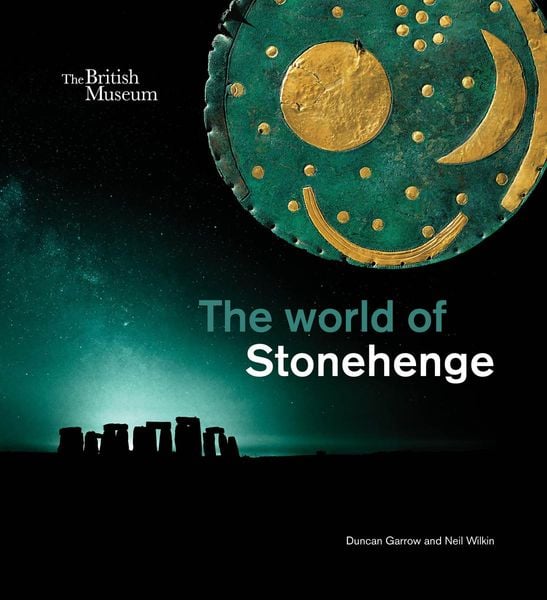
Stonehenge is one of the best known, but most misunderstood, monuments in the world. Contrary to common belief, it was not a static, unchanging structure built by shadowy figures or druids. Rather it represents the cumulative achievement of numerous generations who were woven into a complex and widespread network of cultural interactions, environmental change and belief systems. This publication, which accompanies the first exhibition about Stonehenge ever staged in London, uses the monument as a gateway to explore the communities and civilisations active at the time of its construction and beyond, between 4,000 and 1,000 BCE.
Recent archaeological findings regarding the origin of Stonehenge's striking 'bluestones' have reignited interest in this ancient wonder, the people who built it and the beliefs they held. Through the 'iconic' structure, spectacular objects of precious and exotic material and more humble, personal objects, authors Duncan Garrow and Neil Wilkin examine the dramatic cultural and societal shifts that characterised the world of Stonehenge, including the introduction of farming and development of metalworking.
Covering a period of thousands of years, the publication traces the appearance of the first monuments in the landscape of Britain around 4,000 BCE, the arrival of the bluestones from the Preseli Hills in Pembrokeshire 1,000 years later, all the way up to a remarkable era of cross-Channel connectivity and trade between 1,500 and 800 BCE.
Through a new study of the enigmatic and beautiful objects made and circulated during the age of Stonehenge, connections are charted in the shared religious practices and beliefs of communities from across Britain, Ireland and continental Europe. The presence of other stone and wooden circles hundreds of miles from Salisbury Plain - including Seahenge, discovered on a beach in Norfolk in 1998 - is further evidence of these shared ways of thinking.
At a critical moment in the narrative of Stonehenge, around 2,500 BCE, the significance of the cosmos and the heavens expressed through the construction of stone circles and megalithic passage tombs began to wane and portable objects gained increasing importance. This key transformation is demonstrated by a highlight object from Germany: the Nebra Sky Disc, a bronze disc inlaid with gold symbols believed to represent the sun, a crescent moon and the Pleiades constellation. More modest items found in tombs, burials and settlements are no less important in shedding light on the development of ideas relating to identity, religious practices, and relationships between the living and dead.
Monuments such as Stonehenge cannot be understood in isolation. Stonehenge was not always a static, monolithic structure: over generations it was adapted and added to by communities that changed and developed the landscape on which it still stands today.
'Astonishing'
'[A] rich treasure-trove of photographs of objects'
'The book truly is a delight, and is a 'book of the ancestors' in a very real sense.'
'Highly recommended.' - Sacred Hoop Magazine
'A must-have book for those interested in Stonehenge and Neolithic and Bronze Age northwest Europe, whether one is a specialist or an interested non-specialist. The illustrations alone - particularly the beautifully photographed artefacts - make it a worthwhile purchase, but the accessible prose, excellent summaries of current issues and thought-provoking connections and insights are also highly recommended.' - the Journal of Skyscape Archaeology
Stonehenge is one of the best known, but most misunderstood, monuments in the world. Contrary to common belief, it was not a static, unchanging structure built by shadowy figures or druids. Rather it represents the cumulative achievement of numerous generations who were woven into a complex and widespread network of cultural interactions, environmental change and belief systems. This publication, which accompanies the first exhibition about Stonehenge ever staged in London, uses the monument as a gateway to explore the communities and civilisations active at the time of its construction and beyond, between 4,000 and 1,000 BCE.
Recent archaeological findings regarding the origin of Stonehenge's striking 'bluestones' have reignited interest in this ancient wonder, the people who built it and the beliefs they held. Through the 'iconic' structure, spectacular objects of precious and exotic material and more humble, personal objects, authors Duncan Garrow and Neil Wilkin examine the dramatic cultural and societal shifts that characterised the world of Stonehenge, including the introduction of farming and development of metalworking.
Covering a period of thousands of years, the publication traces the appearance of the first monuments in the landscape of Britain around 4,000 BCE, the arrival of the bluestones from the Preseli Hills in Pembrokeshire 1,000 years later, all the way up to a remarkable era of cross-Channel connectivity and trade between 1,500 and 800 BCE.
Through a new study of the enigmatic and beautiful objects made and circulated during the age of Stonehenge, connections are charted in the shared religious practices and beliefs of communities from across Britain, Ireland and continental Europe. The presence of other stone and wooden circles hundreds of miles from Salisbury Plain - including Seahenge, discovered on a beach in Norfolk in 1998 - is further evidence of these shared ways of thinking.
At a critical moment in the narrative of Stonehenge, around 2,500 BCE, the significance of the cosmos and the heavens expressed through the construction of stone circles and megalithic passage tombs began to wane and portable objects gained increasing importance. This key transformation is demonstrated by a highlight object from Germany: the Nebra Sky Disc, a bronze disc inlaid with gold symbols believed to represent the sun, a crescent moon and the Pleiades constellation. More modest items found in tombs, burials and settlements are no less important in shedding light on the development of ideas relating to identity, religious practices, and relationships between the living and dead.
Monuments such as Stonehenge cannot be understood in isolation. Stonehenge was not always a static, monolithic structure: over generations it was adapted and added to by communities that changed and developed the landscape on which it still stands today.
Noch keine Bewertungen vorhanden
Verfassen Sie die erste Bewertung zu diesem Artikel
Helfen Sie anderen Kundinnen und Kunden durch Ihre Meinung.
Kurze Frage zu unserer Seite
Vielen Dank für Ihr Feedback
Wir nutzen Ihr Feedback, um unsere Produktseiten zu verbessern. Bitte haben Sie Verständnis, dass wir Ihnen keine Rückmeldung geben können. Falls Sie Kontakt mit uns aufnehmen möchten, können Sie sich aber gerne an unseren Kund*innenservice wenden.
zum Kundenservice