Beschreibung
Produktdetails
Format
ePUB
Kopierschutz
Nein
Family Sharing
Nein
Text-to-Speech
Ja
Erscheinungsdatum
07.02.2023
Herausgeber
Ralf RogowskiVerlag
Anthem PressSeitenzahl
198 (Printausgabe)
Sprache
Englisch
EAN
9781839984907
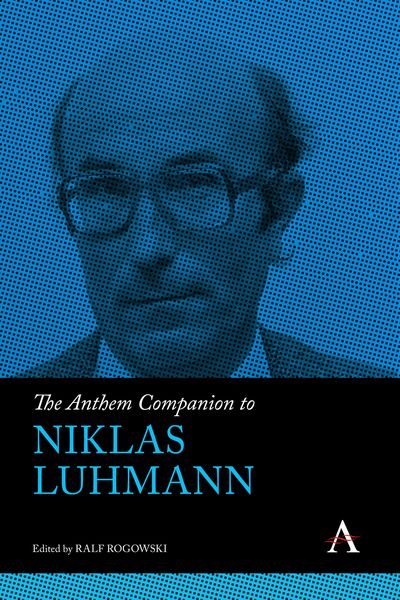
In the "Introduction," Ralf Rogowski provides biographical information and an overview of the development of Luhmann's social systems theory. In "Luhmann and Constitutional Sociology: Law and Functional Differentiation Revisited," Chris Thornhill analyses how Luhmann's theory of functional differentiation can be used as a methodological device to examine the construction of an institutional and legal framework for governance in the world society. In "Far from Equilibrium. Niklas Luhmann on Politics and Economy in 21st Century's World Society," Aldo Mascareño argues that the political and economic systems have intensified their unpredictable dynamics, hence increasing their levels of instability, as shown by critical events such as the 2008 financial crisis, the 2011 political upheavals, and the 2020 COVID-19 global pandemic. In "Luhmann on Law and Legal Theory," Richard Nobles and David Schiff explain how legal argumentation yields sufficient redundancy and variety in the legal system to achieve the recursive reproduction of legal communications which gives the system opportunities to evolve autopoietically.
In "Epistemic Sociology: Luhmann's Theory of Science and Knowledge," Gert Verschraegen underscores the connection of science in society with other function systems such as the educational (coupled via curricula content in textbooks), the economy (coupled via patents), politics (coupled through research policy as well as policy advice), and the medical system (coupled through scientifically tested medicinal knowledge and operation practices). In "Luhmann's Theory of Art," Paul Buckermann examines how Luhmann's functional method is key to understanding art and makes visible possibilities of order that otherwise remain invisible. In "Luhmann on Religion and Secularization," Raf Vanderstraeten discusses, with reference to a host of examples, how the religious system contributed to the genesis of modern society, and how it was forced to adapt to the consequences of modern society's functional differentiation.
In "Niklas Luhmann and Critical Systems Theory," Kolja Möller and Jasmin Siri outline features of a critical systems theory and its potential for a critique of modern society. In "Niklas Luhmann and His Sceptical Notion of Culture," Dirk Baecker outlines Luhmann's reserved attitude towards the concept of culture. In "Luhmann, on Algorithms, in 1966," Elena Esposito analyses an early text of Luhmann on Law and Automation in Public Administration. In "Niklas Luhmann Observed from a Luhmannian Perspective," Klaus Dammann analyses Luhmann's biography using Luhmannian concepts and in "Three Encounters with Niklas Luhmann," Gunther Teubner narrates his academic and personal experiences with Luhmann.
Kundinnen und Kunden meinen
Verfassen Sie die erste Bewertung zu diesem Artikel
Helfen Sie anderen Kund*innen durch Ihre Meinung
Kurze Frage zu unserer Seite
Vielen Dank für Ihr Feedback
Wir nutzen Ihr Feedback, um unsere Produktseiten zu verbessern. Bitte haben Sie Verständnis, dass wir Ihnen keine Rückmeldung geben können. Falls Sie Kontakt mit uns aufnehmen möchten, können Sie sich aber gerne an unseren Kund*innenservice wenden.
zum Kundenservice