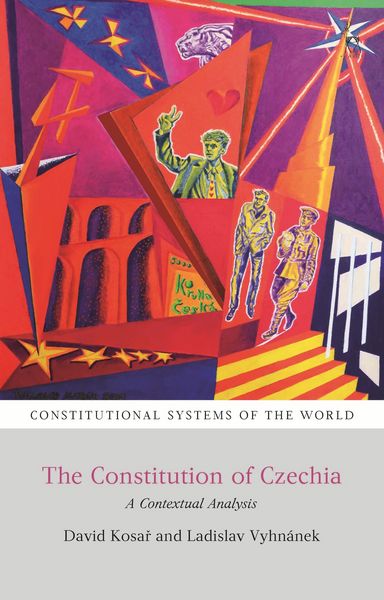
Produktbild: Constitution of Czechia

Constitution of Czechia A Contextual Analysis

71,99 €

inkl. gesetzl. MwSt., Versandkostenfrei


Beschreibung

Produktdetails

Einband

Taschenbuch

Erscheinungsdatum

01.10.2022

Herausgeber

Andrew Harding

Verlag

Hart Publishing

Seitenzahl

272

Maße (L/B/H)

21,6/14/1,4 cm

Gewicht

320 g

Sprache

Englisch

ISBN

978-1-5099-5282-3

Beschreibung

Produktdetails

Einband

Taschenbuch

Erscheinungsdatum

01.10.2022

Herausgeber

Andrew Harding

Verlag

Hart Publishing

Seitenzahl

272

Maße (L/B/H)

21,6/14/1,4 cm

Gewicht

320 g

Sprache

Englisch

ISBN

978-1-5099-5282-3

Herstelleradresse

Libri GmbH
Europaallee 1
36244 Bad Hersfeld
DE

Email: gpsr@libri.de

Noch keine Bewertungen vorhanden

Verfassen Sie die erste Bewertung zu diesem Artikel

Helfen Sie anderen Kundinnen und Kunden durch Ihre Meinung.

Kundinnen und Kunden meinen

Bewertungen (0)

Die Leseprobe wird geladen.
  • Produktbild: Constitution of Czechia
  • 1. The Rise of Czech Constitutionalism: History and Context
    I. The Rise and Fall of the Kingdom of Bohemia
    II. Influence of Foreign Legal Cultures
    III. Czech Constitutional Scholarship and its Changing Role Over Time
    IV. Inter-war Czechoslovakia
    V. The Communist Legacy
    VI. Democratic Transition and Dealing with the Past
    VII. The Dissolution of Czechoslovakia
    VIII. Return to Europe
    IX. Where are the People?
    X. Conclusion
    Further Reading

    2. The Challenge of a Pluralist Constitution
    I. Drafting the 1993 Constitution
    II. The Pluralist Constitution
    III. The Eternity Clause
    IV. International and Supranational Sources
    V. Super-statutes
    VI. Constitutional Conventions
    VII. Judicial Decisions as a Source of Constitutional Law
    VIII. Conclusion
    Further Reading

    3. Constitutional Principles
    I. The Democratic Principle
    II. The Rechtsstaat Principle
    III. Principle of the Separation of Powers
    IV. Principle of Sovereignty
    V. Principle of the Unitary State
    VI. Protection of Fundamental Rights
    VII. The Implicit Welfare State Principle
    VIII. Conclusion
    Further Reading

    4. The Czech Parliament
    I. Basic Structure: The Chamber of Deputies and the Senate
    II. Competences of the Parliament and its Chambers
    III. The Procedural Limits of Parliamentary Power
    IV. Parliamentary Elections and the Czech Political Party System in Turmoil
    V. Scandals, Corruption and Immunities
    VI. Conclusion
    Further Reading

    5. The Growing Tension within the Double-Headed Executive
    I. The Challenge of a Double-Headed Executive
    II. Over-achieving President and Under-achieving Governments
    III. The State of Emergency and the Hidden Powers of the Executive
    IV. The Quest to Depoliticise the State Administration
    V. Conclusion
    Further Reading

    6. Local Governance
    I. The Centre and the Periphery
    II. The Structure of Territorial Self-Governance
    III. Election of Municipal and Regional Bodies
    IV. Direct Democracy at the Local Level
    V. The Rise of the Municipal Power
    VI. It is All About Taxes and EU Subsidies
    VII. Local Self-Governance in the EU
    VIII. Conclusion: Towards Moderate Decentralisation
    Further Reading

    7. The Judicial Branch
    I. Setting the Scene: Key Players within Czech Judicial Politics
    II. Who are the Czech Judges?
    III. The Constitutional Court
    IV. Basic Features of the Ordinary Judiciary
    V. Civil and Criminal Courts
    VI. Administrative Courts
    VII. Prohibition of Special Courts and Tribunals
    VIII. The War(s) of the Courts
    IX. Czech Courts and European Supranational Courts: A Complicated Relationship
    X. Constitutional Politics of the Judicial Branch
    XI. Conclusion: From the Judicialisation of Politics to the Politicisation of the Judiciary
    Further Reading

    8. Human Rights Constitutionalism
    I. The Charter and the Rest: The Pluralist Nature of Human Rights Protection in Czechia
    II. How to Challenge the State: Constitutional Review, General Courts, Administrative Review and the
    Ombudsman
    III. Human Dignity as a Fundamental Right?
    IV. Proportionality as a Key Unifying Principle?
    V. Positive Obligations and the Challenge of Socio-economic Rights
    VI. Public/Private Distinction and the Importance of Drittwirkung
    VII. The Influence of the European Convention on Human Rights
    VIII. Selective Judicial Activism - Expounding or Expanding Human Rights?
    IX. Conclusion
    Further Reading

    Conclusion: Dynamics of Constitutional Change and the Search for Constitutional Identity
    I. Formal Amendments in a Rigid System
    II. Constitutional Interpretation and Informal Amendments as a Mechanism of Constitutional Change
    III. The Unconstitutional Constitutional Amendments Doctrine
    IV. Conflicting Legacies and the Search for Constitutional Identity
    V. Concluding Remarks: A Danger of Democratic Backsliding?