• Produktbild: The Time Nature Keeps
  • Produktbild: The Time Nature Keeps
  • Produktbild: The Time Nature Keeps
  • Produktbild: The Time Nature Keeps
  • Produktbild: The Time Nature Keeps
  • Produktbild: The Time Nature Keeps

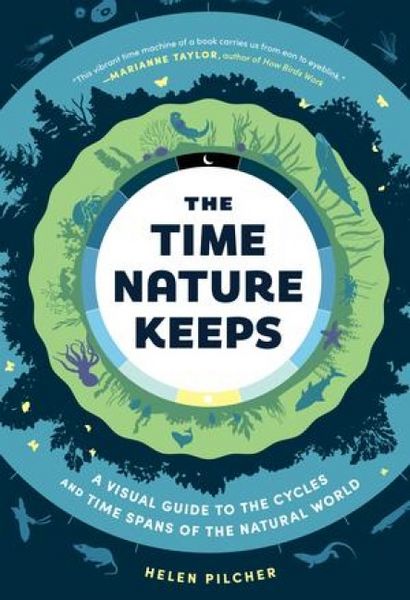
The Time Nature Keeps A Visual Guide to the Cycles and Time Spans of the Natural World

22,99 €

inkl. gesetzl. MwSt., Versandkostenfrei


Beschreibung

Produktdetails

Einband

Gebundene Ausgabe

Erscheinungsdatum

18.04.2023

Verlag

Experiment

Seitenzahl

208

Maße (L/B/H)

23,9/16/2,4 cm

Gewicht

652 g

Sprache

Englisch

ISBN

978-1-61519-952-5

Beschreibung

Produktdetails

Einband

Gebundene Ausgabe

Erscheinungsdatum

18.04.2023

Verlag

Experiment

Seitenzahl

208

Maße (L/B/H)

23,9/16/2,4 cm

Gewicht

652 g

Sprache

Englisch

ISBN

978-1-61519-952-5

Herstelleradresse

Libri GmbH
Europaallee 1
36244 Bad Hersfeld
DE

Email: gpsr@libri.de

Kundinnen und Kunden meinen

0 Bewertungen

Informationen zu Bewertungen

Zur Abgabe einer Bewertung ist eine Anmeldung im Konto notwendig. Die Authentizität der Bewertungen wird von uns nicht überprüft. Wir behalten uns vor, Bewertungstexte, die unseren Richtlinien widersprechen, entsprechend zu kürzen oder zu löschen.

Die Bewertungen sind nach Format, Anzahl Sterne und Datum sortiert.

Verfassen Sie die erste Bewertung zu diesem Artikel

Helfen Sie anderen Kund*innen durch Ihre Meinung

Kundinnen und Kunden meinen

0 Bewertungen filtern

  • Produktbild: The Time Nature Keeps
  • Produktbild: The Time Nature Keeps
  • Produktbild: The Time Nature Keeps
  • Produktbild: The Time Nature Keeps
  • Produktbild: The Time Nature Keeps
  • Produktbild: The Time Nature Keeps
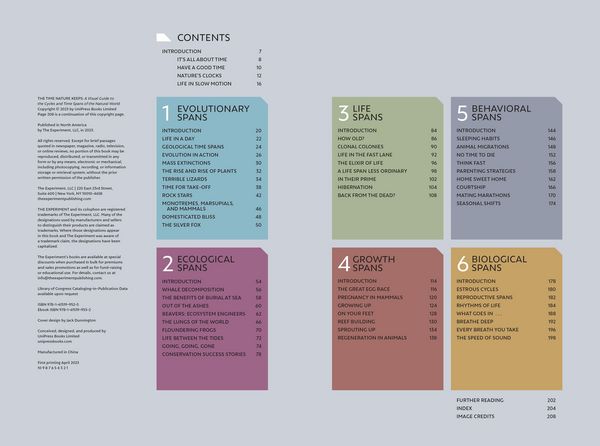
  • Contents:
     
    Introduction
    • Clock of the Long Now
    • Critical flicker fusion frequency and how all animals perceive time differently
    CHAPTER 1: EVOLUTIONARY SPANS
    • Humans arrive at five seconds to midnight
    • The nautilus and the whale
    • When early man decided to ride the horse
    CHAPTER 2: ECOLOGICAL SPANS
    • Lichen growth to show pollution reduction
    • River regeneration
    • After the fire
    • After the flood
    • Lemming population fluctuations
    • From chaos to order, self-organizing systems in social insects
    • Rates of migration
    • How disease spreads
    • Occupation of a shared nesting hole by tits and other species
    • Seasonal ocean current migrations
    CHAPTER 3: LIFE SPANS
    • Clonal colonies (the quaking aspen called Pando)
    • Mahogany vs. pine
    • Time taken for an immortal jellyfish to die
    • From the very, very old to the very, very young (Galapagos tortoise to the mayfly)
    • The mad cat virus
    • Metamorphosis
    • Long pupations in cicadas, mayflies, and butterflies
    CHAPTER 4: GROWTH SPANS
    • Why is an elephant pregnancy so long?
    • Time from birth to maturity (human vs. aphid)
    • Parenting spans and kittens’ eyes
    • A little older than my teeth?
    • A cat gives birth
    • A baby giraffe learns to walk
    • A limb regenerates (human, lizard, jellyfish)
    • Every breath we take (comparing respiratory rates)
    • Estrous cycles
    • In heat
    • Skunk rut
    • The melatonin effect
    • A circadian rhythm
    • Hair growth
    • Nail growth
    • Ugly ducklings (and penguins)
    CHAPTER 5: BEHAVIORAL SPANS
    • Quick to react? (springbok, fly, sloth)
    • Sleep tight (sloth, cat, bird)
    • Hibernation
    • For a beaver to build a kingdom
    • For a bowerbird to build a bower
    • For a weaverbird to weave a nest
    • Alzheimers
    CHAPTER 6: DECOMPOSITION SPANS
    • Pumpkin
    • Human
    • Aging
    • Whale fall
    • Rock erosion
    Further reading
    Index
    Acknowledgments