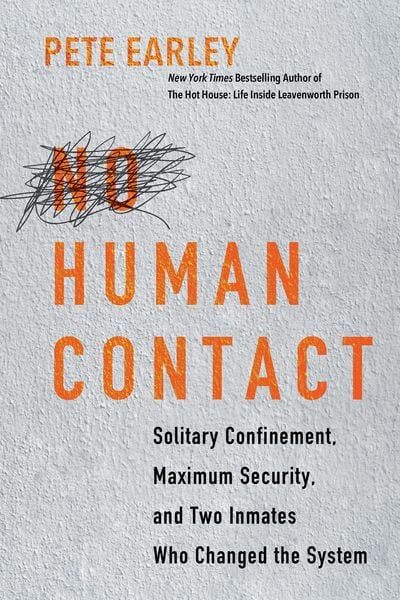
No Human Contact Solitary Confinement, Maximum Security, and Two Inmates Who Changed the System
25,99 €
inkl. gesetzl. MwSt.,
Beschreibung
Produktdetails
Einband
Gebundene Ausgabe
Erscheinungsdatum
25.04.2023
Abbildungen
Illustrationen, nicht spezifiziert
Verlag
TurnaroundSeitenzahl
304
Maße (L/B/H)
23,3/15,4/3,2 cm
Gewicht
490 g
Sprache
Englisch
ISBN
978-0-8065-4188-4
A deeply disturbing and human look at the American prison system’s practice of lifelong solitary confinement, and the two killers who changed modern day corrections. No Human Contact by the New York Times bestselling author of THE HOT HOUSE, Pulitzer Prize finalist Pete Earley takes readers inside the criminal justice system, examining the brutal lives of those in solitary confinement in an eye opening narrative of reprehensible crime, draconian punishment, and seemingly impossible reform in the harshest depths of the country’s most dangerous prisons.
In 1983, Thomas Silverstein and Clayton Fountain, both serving life sentences at the U.S, Prison in Marion, Illinois, separately murdered two correction officers on the same day. The Bureau of Prisons condemned both men to the severest punishment that could legally be imposed, one created specifically for them. It was unofficially called “no human contact.”
Each initially spent nine months in a mattress-sized cell where the lights burned twenty-four hours a day. They were clothed only in boxer shorts, completely sealed off from the outside world with only their minds to occupy their time. Eventually granted minimal privileges, Fountain turned to religion and endured twenty-one-years before dying alone of natural causes. Silverstein became a skilled artist and lasted thirty-six years, longer than any other American prisoner held in isolation. Amazingly, both men found purpose to their existence while confined in the belly of the beast.
Pete Earley—the only journalist to be granted face-to-face access with Silverstein—examines profound questions at the heart of our justice system. Were Silverstein and Fountain born bad? Or were they twisted by abusive childhoods? Did incarceration offer them a chance of rehabilitation—or force them to commit increasingly heinous crimes? No Human Contact elicits a uniquely deep and uncomfortable understanding of the crimes committed, the use of solitary confinement, and the reality of life, redemption, and death behind prison walls.
Noch keine Bewertungen vorhanden
Verfassen Sie die erste Bewertung zu diesem Artikel
Helfen Sie anderen Kundinnen und Kunden durch Ihre Meinung.
Kurze Frage zu unserer Seite
Vielen Dank für Ihr Feedback
Wir nutzen Ihr Feedback, um unsere Produktseiten zu verbessern. Bitte haben Sie Verständnis, dass wir Ihnen keine Rückmeldung geben können. Falls Sie Kontakt mit uns aufnehmen möchten, können Sie sich aber gerne an unseren Kund*innenservice wenden.
zum Kundenservice