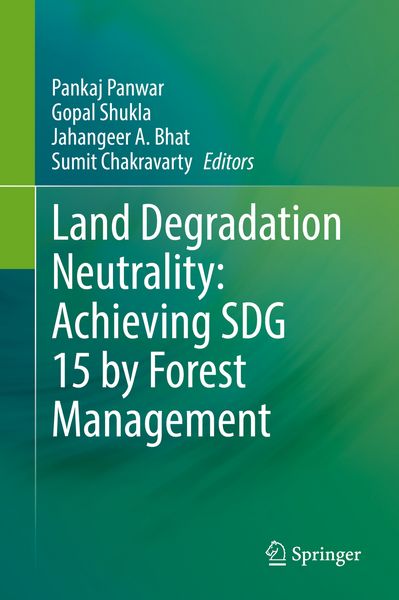
Land Degradation Neutrality: Achieving SDG 15 by Forest Management
-
- Hardcover ausgewählt
- Taschenbuch
- eBook
-
Sprache:Englisch
139,99 €
UVP
160,49 €
inkl. gesetzl. MwSt.,
Beschreibung
Produktdetails
Einband
Gebundene Ausgabe
Erscheinungsdatum
19.10.2022
Abbildungen
XVI, 452 p. 1 illus.
Herausgeber
Pankaj Panwar + weitereVerlag
Springer SingaporeSeitenzahl
452
Maße (L/B/H)
24,1/16/3,1 cm
Gewicht
863 g
Auflage
22001 Auflage 1st edition 2022
Sprache
Englisch
ISBN
978-981-19-5477-1
This edited book covers all aspects of forest deforestation and degradation in detail and their link to land degradation. Poor natural resource management is often a contributory factor in the depletion of resources particularly like degradation of land which hinders the goals to achieve land degradation neutrality (LDN). Sustainable Development Goal (SDG) target 15.3 states: “By 2030, combat desertification, restore degraded land and soil, including land affected by desertification, drought, and floods, and strive to achieve a land degradation-neutral world.” To achieve the set goals a comprehensive multidirectional approach is required involving policymakers, field functionaries, researchers, and above all educators. The book compiles the field experiences and wisdom of some of the best researchers and authors working in the field of land degradations for quite a long time. The objective of the book is to disseminate the status of land degradation, the importance of achieving land degradation and share success stories of reclaiming Land degradation, and suggests means and ways of achieving land degradation neutrality. This book act as a repository of knowledge on Land degradation neutrality for students, researchers and practitioners, and policy planners.
Noch keine Bewertungen vorhanden
Verfassen Sie die erste Bewertung zu diesem Artikel
Helfen Sie anderen Kundinnen und Kunden durch Ihre Meinung.
Kurze Frage zu unserer Seite
Vielen Dank für Ihr Feedback
Wir nutzen Ihr Feedback, um unsere Produktseiten zu verbessern. Bitte haben Sie Verständnis, dass wir Ihnen keine Rückmeldung geben können. Falls Sie Kontakt mit uns aufnehmen möchten, können Sie sich aber gerne an unseren Kund*innenservice wenden.
zum Kundenservice