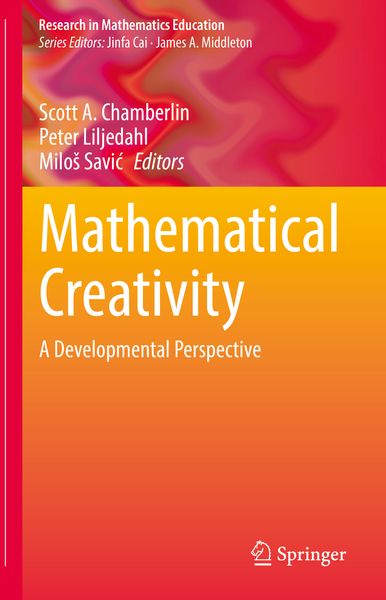

Mathematical Creativity A Developmental Perspective
-
- Hardcover ausgewählt
- Taschenbuch
- eBook
-
Sprache:Englisch
209,99 €
UVP
246,09 €
inkl. gesetzl. MwSt.,
Beschreibung
Produktdetails
Einband
Gebundene Ausgabe
Erscheinungsdatum
01.12.2022
Abbildungen
XIII, 250 p. 24 illus., 12 illus. in color.
Herausgeber
Scott A. Chamberlin + weitereVerlag
SpringerSeitenzahl
250
Maße (L/B/H)
24,1/16/2 cm
Gewicht
565 g
Auflage
22001 Auflage 1st edition 2022
Sprache
Englisch
ISBN
978-3-031-14473-8
This book is important and makes a unique contribution in the field of mathematics education and creativity. The book comprises the most recent research by renowned international experts and scholars, as well as a comprehensive up to date literature review. The developmental lens applied to the research presented makes it unique in the field. Also, this book provides a discussion of future directions for research to complement what is already known in the field of mathematical creativity. Finally, a critical discussion of the importance of the literature in relation to development of learners and accordingly pragmatic applications for educators is provided.
Many books provide the former (2) foci, but omit the final discussion of the research in relation to developmental needs of learners in the domain of mathematics. Currently, educators are expected to implement best practices and illustrate how their adopted approaches are supported by research. The authors and editors of this book have invested significant effort in merging theory with practice to further this field and develop it for future generations of mathematics learners, teachers and researchers.
Noch keine Bewertungen vorhanden
Verfassen Sie die erste Bewertung zu diesem Artikel
Helfen Sie anderen Kundinnen und Kunden durch Ihre Meinung.
Kurze Frage zu unserer Seite
Vielen Dank für Ihr Feedback
Wir nutzen Ihr Feedback, um unsere Produktseiten zu verbessern. Bitte haben Sie Verständnis, dass wir Ihnen keine Rückmeldung geben können. Falls Sie Kontakt mit uns aufnehmen möchten, können Sie sich aber gerne an unseren Kund*innenservice wenden.
zum Kundenservice