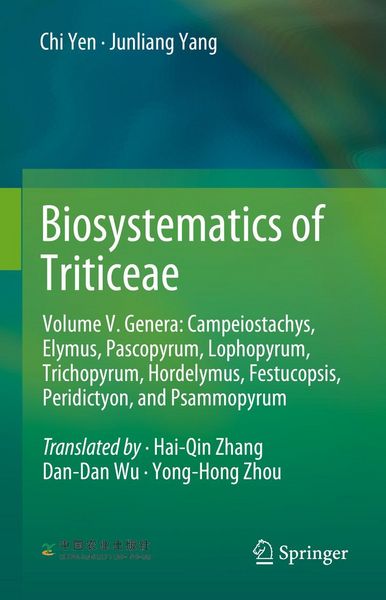
Biosystematics of Triticeae Volume V. Genera: Campeiostachys, Elymus,Pascopyrum, Lophopyrum, Trichopyrum, Hordelymus, Festucopsis, Peridictyon, and Psammopyrum
-
- Hardcover
- Taschenbuch
- eBook ausgewählt
-
Form:Einzelkauf Download
-
Sprache:Englisch
96,29 €
inkl. gesetzl. MwSt.Beschreibung
Produktdetails
Format
Kopierschutz
Nein
Family Sharing
Nein
Text-to-Speech
Nein
Erscheinungsdatum
13.08.2022
Verlag
Springer Nature SingaporeSeitenzahl
712 (Printausgabe)
Dateigröße
28302 KB
Übersetzt von
Hai-Qin Zhang + weitere
Sprache
Englisch
EAN
9789811900150
This book review and rearrange the research data of Triticeae published over hundreds of years, applying a modern scientific approach. Triticeae is an important tribe in the grass family (Peaceae). It includes the major cereal crops, such as wheat, barley and rye, in addition to many valuable forage crops found in different genera, such as Elymus, Agropyron, Pasthyrostachys, and Leymus. The knowledge of appropriate Triticeae taxonomy and biosystematics will serve as genetic breeding of wheat, barley, rye and forage grass. The authors attempted to remain the truth and remove the false for deriving a more natural biosystematics of Triticeae.
This book covers taxonomy, cytogenetics, and molecular phylogeny. It summarizes the biosystematics of Triticeae with comprehensive and updated data. This book is divided into five volumes (Volumes 1- 5), and includes 30 genera, 2 subgenera, 464 species, 9 subspecies, and 186 varieties in Triticeae. Volume 5 introduces nine perennial genera in Triticeae: Campeiostachys, Elymus, Pascopyrum, Lophopyrum, Trichopyrum, Hordelymus, Festucopsis, Peridictyon, and Psammopyrum.
Elymus (StH), Campeiostachys (StYH), Lophopyrum (E), and Trichopyrum (ESt)are polymorphic genus. They show similar morphological characters, and it is difficult to distinguish them based merely on morphological variation. Pascopyrum (StHNsXm), Hordelymus (XoXr), Festucopsis (L), Peridictyon (Xp), and Psammopyrum (EL) are small genera, mostly monotypic genera.
This book can serve as highly qualified, valuable, and convenient handbooks for audiences who are interested in Triticeae. This book also includes many illustrations, in addition to the description, to help the audience understand, morphological features of the concerned taxa, which makes the explanation more precise andobvious. It is a useful tool to understand the relationship among species in Triticeae.
Noch keine Bewertungen vorhanden
Verfassen Sie die erste Bewertung zu diesem Artikel
Helfen Sie anderen Kundinnen und Kunden durch Ihre Meinung.
Kurze Frage zu unserer Seite
Vielen Dank für Ihr Feedback
Wir nutzen Ihr Feedback, um unsere Produktseiten zu verbessern. Bitte haben Sie Verständnis, dass wir Ihnen keine Rückmeldung geben können. Falls Sie Kontakt mit uns aufnehmen möchten, können Sie sich aber gerne an unseren Kund*innenservice wenden.
zum Kundenservice