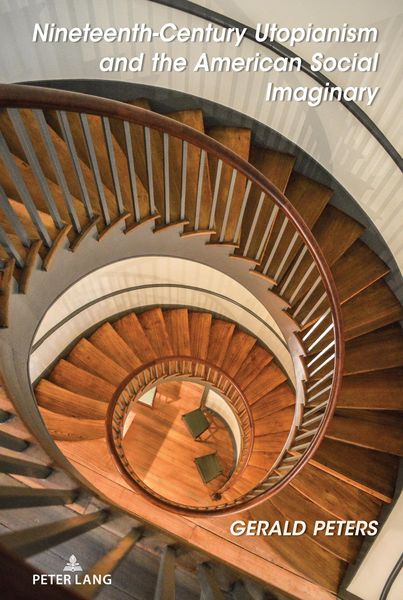
Nineteenth-Century Utopianism and the American Social Imaginary
-
Form:Einzelkauf Download
-
Sprache:Englisch
-
eBook Format:PDF
- PDF 104,99 € ausgewählt
- ePUB 104,99 €
104,99 €
inkl. gesetzl. MwSt.Beschreibung
Produktdetails
Format
Kopierschutz
Ja
Family Sharing
Nein
Text-to-Speech
Nein
Erscheinungsdatum
22.03.2021
Verlag
Peter Lang Inc., International Academic PublishersSeitenzahl
216 (Printausgabe)
Dateigröße
9911 KB
Auflage
1. Auflage
Sprache
Englisch
EAN
9781433181986
Religious sectarianism played a significant role in the early settlement and social development of the United States. Although historians have minimized what these societies contributed to the creation of a uniquely American "social imaginary," this era of social experimentalism drew the attention of highly influential European writers including Goethe, Tolstoy, Marx, and Weber. More recent social thinkers like Benedict Anderson, Charles Taylor, and Robert Wuthnow emphasize the importance of discourses (familial, dynastic, religious) in the creation of community. They contend that literary analysis, in particular, is critical for understanding how "social imaginaries" develop, sustain, and transform themselves. Drawing on thinkers like Marx, Weber, Dawkins, and Goethe, Nineteenth-Century Utopianism and the American Social Imaginary explores the "evolution" of the American social imaginary within these discursive traditions. Goethe, in particular, becomes a major contributor to this discussion, not simply because of his profound international influence during the period, but because he was a contemporary witness to these events. His final novel Wilhelm Meister's Journeyman Years (1829) depicts an emigrant society about to start an intentional community in the New World as an illustration of "cultural metamorphosis" that becomes central to understanding social development during the period. Utilizing a theoretical framework that draws on Lacan, the Frankfurt School, and post-structuralist thinkers like Fredric Jameson, Slavoj Zizek, Ernesto Laclau, and Chantal Mouffe, the author shows how communities develop within specific discursive structures and how American adaptations of these structures have the potential to create more radical and equitable democracies.
Noch keine Bewertungen vorhanden
Verfassen Sie die erste Bewertung zu diesem Artikel
Helfen Sie anderen Kundinnen und Kunden durch Ihre Meinung.
Kurze Frage zu unserer Seite
Vielen Dank für Ihr Feedback
Wir nutzen Ihr Feedback, um unsere Produktseiten zu verbessern. Bitte haben Sie Verständnis, dass wir Ihnen keine Rückmeldung geben können. Falls Sie Kontakt mit uns aufnehmen möchten, können Sie sich aber gerne an unseren Kund*innenservice wenden.
zum Kundenservice