Beschreibung
Produktdetails
Einband
Gebundene Ausgabe
Erscheinungsdatum
19.09.2023
Verlag
Europa EditionsSeitenzahl
512
Maße (L/B/H)
23,2/15,4/4,2 cm
Gewicht
762 g
Übersetzt von
Polly Gannon
Sprache
Englisch
ISBN
978-1-60945-934-5
Named Best Foreign Book of 2021 in France
Finalist for the Prix Médicis 2021
Longlisted for the European Literature Prize 2021
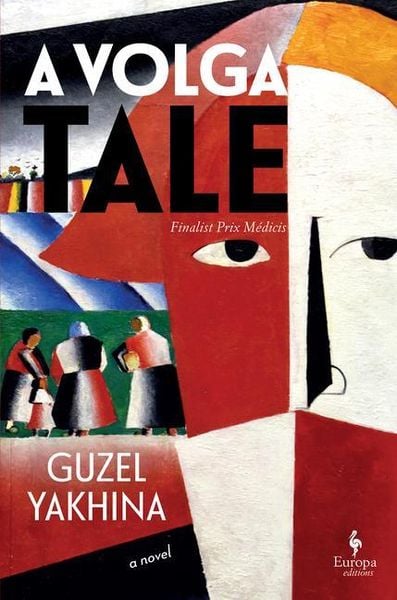
The longest river in Europe, the Volga, divides the continent in two. On one side, mighty mountains, large Russian cities with white stone churches, translucent blue lakes of icy water, a cold wind blowing from the North Sea, and, in the early years of the twentieth century, the winds of momentous change blowing even harder, bringing with them revolution and ideologies that will shape the next two centuries of human history. On the other side, a world that belongs to the past, that is shored up by the vast Western Steppe, where small villages dot vast farmlands and life is perfumed by a hot, fragrant breeze that has its source in the Turkmen desert and the salty Caspian Sea.
Two worlds that could not be further apart. Two worlds that will be brought together when Jakob Bach is hired by Udo Grimm to give lessons to Grimm's daughter, Klara. The love that grows between Jakob and Klara has unimaginable consequences. Expelled from Gnadenthal when their affair is discovered, they settle in a secluded hamlet hidden deep in the woods to live their lives in peace. But following a tragic episode, Jacob, psychically scarred, is forced to raise his daughter Anche alone. The fairy tales he invents and puts to paper in an effort to forge a bond with his daughter become widely known and slowly life in the German colonies along Volga begins to resemble the stories created by Bach.
In the 18th century, the Russian empress Catherine the Great invited Europeans to immigrate and become Russian citizens and farm Russian lands while maintaining their language and culture. The settlers came mainly from Germany, and following the Russian Revolution, the Volga German Soviet Republic was founded, lasting until 1941, when it was abolished after the Germans invaded the region. In September 1941 all Volga Germans were deported. Over half a million were sent into exile in Siberia and Kazakhstan.
Jacob Bach's life reflects and foreshadows that of his native colony, Gnadenthal, in this sweeping epic set in the dying years of the 19th century through to the mid-twentieth century of personal tragedy and resilience. In telling a stirring family story, Yakhina also recounts the story of a people, a republic, a nation, a tale that begins in quietude, flows and grows mighty, crosses space and time, like the Volga River itself.
Kundinnen und Kunden meinen
Verfassen Sie die erste Bewertung zu diesem Artikel
Helfen Sie anderen Kund*innen durch Ihre Meinung
Kurze Frage zu unserer Seite
Vielen Dank für Ihr Feedback
Wir nutzen Ihr Feedback, um unsere Produktseiten zu verbessern. Bitte haben Sie Verständnis, dass wir Ihnen keine Rückmeldung geben können. Falls Sie Kontakt mit uns aufnehmen möchten, können Sie sich aber gerne an unseren Kund*innenservice wenden.
zum Kundenservice