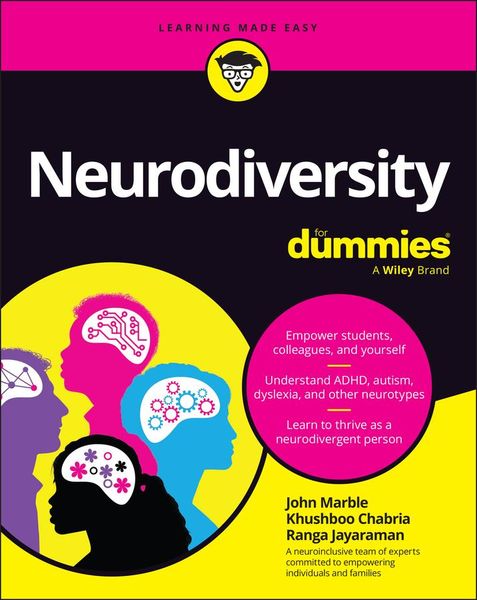
Produktbild: Neurodiversity For Dummies

Neurodiversity For Dummies

25,99 €

inkl. gesetzl. MwSt., Versandkostenfrei


Beschreibung

Produktdetails

Einband

Taschenbuch

Erscheinungsdatum

19.03.2024

Verlag

John Wiley & Sons

Seitenzahl

384

Maße (L/B/H)

23,4/18,5/2,4 cm

Gewicht

499 g

Auflage

1. Auflage

Sprache

Englisch

ISBN

978-1-394-21617-8

Beschreibung

Produktdetails

Einband

Taschenbuch

Erscheinungsdatum

19.03.2024

Verlag

John Wiley & Sons

Seitenzahl

384

Maße (L/B/H)

23,4/18,5/2,4 cm

Gewicht

499 g

Auflage

1. Auflage

Sprache

Englisch

ISBN

978-1-394-21617-8

EU-Ansprechpartner

Zeitfracht Medien GmbH
Ferdinand-Jühlke-Straße 7
99095 Erfurt
DE
produktsicherheit@zeitfracht.de

Herstelleradresse

Wiley & Sons
1 Oldlands Way
PO22 9NQ Bognor Regis
GB
trade@wiley.com

Kundinnen und Kunden meinen

0 Bewertungen

Informationen zu Bewertungen

Zur Abgabe einer Bewertung ist eine Anmeldung im Konto notwendig. Die Authentizität der Bewertungen wird von uns nicht überprüft. Wir behalten uns vor, Bewertungstexte, die unseren Richtlinien widersprechen, entsprechend zu kürzen oder zu löschen.

Die Bewertungen sind nach Format, Anzahl Sterne und Datum sortiert.

Verfassen Sie die erste Bewertung zu diesem Artikel

Helfen Sie anderen Kund*innen durch Ihre Meinung

Kundinnen und Kunden meinen

0 Bewertungen filtern

Die Leseprobe wird geladen.
  • Produktbild: Neurodiversity For Dummies
  • Introduction 1

    About This Book 2

    Foolish Assumptions 3

    Icons Used in This Book 3

    Beyond the Book 4

    Where to Go from Here 4

    Part 1: Understanding Neurodiversity 5

    Chapter 1: What Is Neurodiversity? 7

    The Normalcy of Neurodiversity 8

    Understanding Neurodivergent Conditions 16

    Exploring the Neurodiversity Movement 19

    Chapter 2: Disability Is Not a Dirty Word 21

    First Things First: Why We Fear Disability 21

    What Disability Actually Means 22

    Neurodivergence and Disability 25

    The Disability Rights Movement 26

    You're Not Alone: Building Community 27

    Chapter 3: Someone You Know Is Neurodivergent 29

    Neurodiversity Has Always Been Here 30

    Neurodivergence Is Rather Common 31

    The Role of Neurodiversity Today 33

    Extraordinary People: Ordinary Traits 35

    Chapter 4: Why Is Our World Not Yet Neuroinclusive? 37

    The Myth of Normality 37

    In education 38

    In therapy 38

    In the workplace 39

    Why Things Are Designed to Look Like Us 39

    Falling Into a Fixed Mindset 40

    Acknowledging Barriers to Inclusion 41

    Barriers society places in front of neurodivergent people 41

    Additional barriers neurodivergent people must navigate 42

    Part 2: Recognizing the Types of Neurodivergence 43

    Chapter 5: Understanding Neurotypes 45

    Introducing Neurotypes 45

    Understanding How Neurotypes Differ 46

    Uncovering Neurodivergent Strengths 48

    Seeing How Doctors Label Neurotypes 49

    Chapter 6: Understanding Autism 53

    What Is Autism? 53

    How Society Talks About Autism 57

    How the Autistic Brain Thinks 58

    How the Autistic Brain Organizes Thoughts 61

    How the Autistic Brain Uses Focus 63

    How the Autistic Brain Uses Memory 64

    How the Autistic Brain Uses Senses 64

    How the Autistic Brain Processes Emotions and Exercises Empathy 65

    How the Autistic Brain Communicates 66

    How the Autistic Brain Socializes 70

    How Autistic Bodies Respond 73

    Empowering Autistic People 78

    Closely Associated Conditions 79

    Myths and Misconceptions 81

    Chapter 7: Understanding ADHD 83

    Talking about ADHD 84

    Understanding ADHD Traits 85

    Enhancing Daily Living 91

    Empowering Those with ADHD 96

    Myths and Misconceptions 97

    Chapter 8: Understanding Dyslexia, Dyscalculia, Dysgraphia, and Dyspraxia 99

    Understanding Dyslexia 100

    Understanding Dyscalculia 106

    Understanding Dysgraphia 110

    Understanding Dyspraxia 112

    Myths and Misconceptions 114

    Chapter 9: Understanding Associated Conditions 117

    Understanding Tourette's 118

    Understanding OCD 119

    Understanding Bipolar 122

    Understanding Cerebral Palsy 125

    Understanding Multiple Sclerosis 126

    Understanding Intellectual Disabilities 127

    Aging and Acquired Impairments 129

    Thinking About Mental Health 130

    Myths and Misconceptions 132

    Part 3: Navigating Life as a Neurodivergent Person 133

    Chapter 10: Understanding Yourself as a Neurodivergent Person 135

    Seeking a Diagnosis 136

    Profiling Your Neurodivergent Traits 138

    Finding Success 146

    Chapter 11: Understanding Others 147

    Recognizing How Others Think and Experience the World 147

    Practicing Compassionate Curiosity 149

    Chapter 12: Improving Personal Effectiveness 153

    Understanding the Impact of Trauma 154

    Choosing a Productive Mindset 157

    Cultivating Habits of Effectiveness 160

    Achieving Your Goals 167

    Building Resilience to Overcome Setbacks 169

    Part 4: Thriving as a Neurodivergent Person 171

    Chapter 13: Discovering What It Means to Thrive 173

    The Keys to Thriving: Coping and Resilience 174

    Understanding What You Need to Thrive 174

    Tapping Into Support Systems 178

    Community: Finding People to Nurture You 182

    Cultivating Self-Advocacy 183

    Chapter 14: Thriving in Educational Settings 185

    Understanding Yourself or Your Child as Neurodivergent 186

    Enhancing the Elementary School Journey 186

    Advocating for Yourself in High School 188

    Navigating Post-Secondary Education 189

    Chapter 15: Thriving in the Workplace 191

    Formulating a Strategy for Employment 192

    Exploring Career Opportunities 199

    Being Effective at Work 205

    Becoming a Great Employee 211

    Chapter 16: Thriving in Relationships and Communities 213

    Thriving in Personal Relationships 214

    Dating as a Neurodivergent Person 219

    Our Children: Parenting as a Neurodivergent Person 220

    Thriving in Friendships 222

    Thriving in Communities 225

    Part 5: Empowering Neurodistinct People 229

    Chapter 17: Discovering Universal Perspectives and Helpful Strategies 231

    Take Time to Understand Your Perspective 231

    Adopt a Broad Understanding of Neurodiversity 232

    Practice Strategies That Empower 236

    Chapter 18: Understanding Differences and Embracing Strengths 241

    Understanding Executive Functioning 242

    Embracing Communication Differences 243

    Decoding Social Behavior 244

    Making Sense of Sensory Differences 245

    Saying "Heck, Yes!" to Stimming 247

    Appreciating Neurodivergent Strengths 247

    Chapter 19: Caring for a Neurodivergent Child 251

    Understanding Common Barriers 252

    Coping as a Parent or Caregiver 257

    Mapping and Securing Your Support 263

    Advocating for Your Child's Needs 264

    Planning for the Future 270

    Chapter 20: Supporting Neurodivergent Students 277

    Valuing Neurodiversity in the Classroom 277

    Understanding Barriers Educators Face 278

    Coping and Succeeding as Educators 281

    Empowering Students in a K-12 Setting 283

    Empowering Students in Post-Secondary Education 286

    Chapter 21: Empowering Neurodivergent Employees and Colleagues 289

    Appreciating the Role of Neurodiversity in the Workplace 290

    Updating How We Work 294

    Employing Affirming Practices 298

    Part 6: Building a Neuroinclusive World 307

    Chapter 22: Designing for Universal Inclusion 309

    Adopting Principles of Universal Design 310

    Putting Universal Design into Practice 312

    Chapter 23: Supporting Parents and Caregivers 315

    Practicing Empathy 316

    Providing Support 320

    Incorporating Families into Daily Life 322

    Chapter 24: Shaping Society 323

    Laying a Firm Foundation 323

    Creating a Solid Frame 325

    Installing Networks 326

    Beginning to Build 327

    Conducting Accurate Research 330

    Turning the Power On 331

    Renovating How We Provide Therapy 333

    Making Sure Everyone's Work Is Seen 334

    Part 7: the Part of Tens 335

    Chapter 25: Ten Key Concepts about Neurodiversity 337

    Neurodiversity Is Normal 337

    A Shift Is Needed in Our Perspective 338

    Self-Advocacy Is Essential 339

    People and Families Need Better Support 339

    Compassionate Curiosity Is Key 340

    Accepting People for Their Differences 340

    Including Others for Their Abilities 341

    Expanding Awareness of Neurodiversity 341

    Supporting Identity and Community 341

    Making Society Accessible for Everyone 342

    Chapter 26: Ten Ways to Help Neurodivergent People Thrive 343

    Understand Neurodiversity as Normal 344

    Appreciate Everyone's Differences and Strengths 344

    Practice Compassionate Curiosity 345

    Believe in Neurodivergent People 345

    Rethink How You View Accommodations 346

    Advocate with Neurodivergent People 346

    Work to Include Everyone 347

    Help Neurodivergent People Overcome Barriers 347

    Educate Others about Neurodiversity 348

    Practice Universal Design 348

    Appendix 349

    Index 355