Gutscheinbedingungen

Gültig bis 13.07.2026 | Gültig für Spielzeug (außer Tonieboxen & ausgewählte Tonies), Filme, Musik, Software, Games, Schreibwaren, Hörbücher und Hörbuch-Downloads (außer Abo & Shelfies), gebrauchte Bücher, nicht preisgebundene Bücher und Kalender | Einlösbar unter osiander.de und in der Osiander App | Click & Collect nur mit Online-Zahlung (Paypal/Kreditkarte) vorab | Einzelne Artikel können ausgeschlossen sein | Nicht kombinierbar mit anderen Gutscheinen oder Preisaktionen | Nur einmal pro Einkauf einlösbar | Gutschein wird auf max. 500€ Bestellwert angerechnet | Keine Barauszahlung | Digitale Hörbücher nur für Android | Nicht gültig für preisgebundene Artikel (aufgrund der Buchpreisbindung sind Gutscheine nicht auf Bücher, eBooks, Presse einlösbar), tolino eReader & Zubehör, Elektronik, Geschenke & Trends, Abonnements & Flatrates, Geschenkkarten, Versandkosten und Services

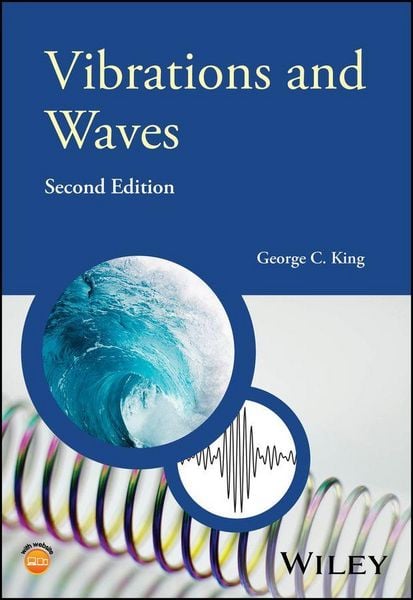
Produktbild: Vibrations and Waves

Vibrations and Waves

62,99 €

inkl. gesetzl. MwSt., Versandkostenfrei


Beschreibung

Produktdetails

Einband

Taschenbuch

Erscheinungsdatum

25.12.2025

Verlag

John Wiley & Sons Inc

Seitenzahl

256

Maße (L/B/H)

24,2/17,1/1,8 cm

Gewicht

506 g

Auflage

2. Auflage

Sprache

Englisch

ISBN

978-1-394-24923-7

Beschreibung

Produktdetails

Einband

Taschenbuch

Erscheinungsdatum

25.12.2025

Verlag

John Wiley & Sons Inc

Seitenzahl

256

Maße (L/B/H)

24,2/17,1/1,8 cm

Gewicht

506 g

Auflage

2. Auflage

Sprache

Englisch

ISBN

978-1-394-24923-7

Herstelleradresse

Libri GmbH
Europaallee 1
36244 Bad Hersfeld
DE

Email: GPSR Kontakt

Noch keine Bewertungen vorhanden

Verfassen Sie die erste Bewertung zu diesem Artikel

Helfen Sie anderen Kundinnen und Kunden durch Ihre Meinung.

Kundinnen und Kunden meinen

Bewertungen (0)

  • Produktbild: Vibrations and Waves
  • Editors' Preface to the Manchester Physics Series ix

    Preface to First Edition xi

    Preface to Second Edition xiii

    1 Simple Harmonic Motion 1

    1.1 Physical Characteristics of Simple Harmonic Oscillators 1

    1.2 A Mass on a Spring 2

    1.2.1 A Mass on a Horizontal Spring 2

    1.2.2 A Mass on a Vertical Spring 4

    1.2.3 Displacement, Velocity and Acceleration in SHM 5

    1.2.4 General Solutions for SHM and the Phase Angle ¿ 7

    1.2.5 The Energy of a Simple Harmonic Oscillator 9

    1.2.6 The Physics of Small Vibrations 11

    1.3 The Pendulum 16

    1.3.1 The Simple Pendulum 16

    1.3.2 The Energy of a Simple Pendulum 18

    1.3.3 The Physical Pendulum 21

    1.3.4 Numerical Solution of SHM 23

    1.4 Oscillations in Electrical Circuits: Similarities in Physics 26

    1.4.1 The LC Circuit 26

    1.4.2 Similarities in Physics 27

    Problems 1 29

    2 The Damped Harmonic Oscillator 35

    2.1 Physical Characteristics of Damped Harmonic Oscillators 35

    2.2 The Equation of Motion for a Damped Harmonic Oscillator 36

    2.2.1 Light Damping 37

    2.2.2 Heavy Damping 40

    2.2.3 Critical Damping 40

    2.3 Rate of Energy Loss in a Damped Harmonic Oscillator 43

    2.3.1 The Quality Factor Q of a Damped Harmonic Oscillator 44

    2.4 Damped Electrical Oscillations 47

    Problems 2 49

    3 Forced Oscillations 53

    3.1 Physical Characteristics of Forced Harmonic Motion 54

    3.2 The Equation of Motion of a Forced Harmonic Oscillator 54

    3.2.1 Undamped Forced Oscillations 54

    3.2.2 Forced Oscillations with Damping 57

    3.3 Power Absorbed During Forced Oscillations 63

    3.4 Resonance in Electrical Circuits 68

    3.5 Transient Phenomena 70

    3.6 The Complex Representation of Oscillatory Motion 72

    3.6.1 Complex Numbers 72

    3.6.2 The Use of Complex Numbers to Represent Physical Quantities 75

    3.6.3 Use of the Complex Representation for Forced Oscillations with Damping 76

    Problems 3 78

    4 Coupled Oscillators 85

    4.1 Physical Characteristics of Coupled Oscillators 85

    4.2 Normal Modes of Oscillation 86

    4.3 Superposition of Normal Modes 89

    4.4 Oscillating Masses Coupled by Springs 93

    4.5 Forced Oscillations of Coupled Oscillators 101

    4.6 Transverse Oscillations 104

    Problems 4 108

    5 Travelling Waves 115

    5.1 Physical Characteristics ofWaves 116

    5.2 TravellingWaves 116

    5.2.1 Travelling SinusoidalWaves 119

    5.3 TheWave Equation 122

    5.4 The Equation of a Vibrating String 124

    5.5 The Energy in aWave 126

    5.6 The Transport of Energy by aWave 129

    5.7 Waves at Discontinuities 130

    5.8 Waves in Two and Three Dimensions 134

    5.8.1 Waves of Circular or Spherical Symmetry 138

    Problems 5 141

    6 StandingWaves147

    6.1 StandingWaves on a String 147

    6.2 StandingWaves as the Superposition of Two TravellingWaves 153

    6.3 The Energy in a StandingWave 155

    6.4 StandingWaves as Normal Modes of a Vibrating String 157

    6.4.1 The Superposition Principle 157

    6.4.2 The Superposition of Normal Modes 158

    6.4.3 The Amplitudes of Normal Modes and Fourier Analysis 161

    6.4.4 The Energy of Vibration of a String 163

    Problems 6 165

    7 Interference and Diffraction of Waves 169

    7.1 Interference and Huygens' Principle 169

    7.1.1 Young's Double-Slit Experiment 172

    7.1.2 Michelson Spectral Interferometer 178

    7.2 Diffraction 180

    7.2.1 Diffraction at a Single Slit 181

    7.2.2 Circular Apertures and Angular Resolving Power 185

    7.2.3 Double Slits of Finite Width 187

    Problems 7 188

    8 The Dispersion of Waves 193

    8.1 The Superposition ofWaves in Non-Dispersive Media 193

    8.1.1 Beats 194

    8.1.2 Amplitude Modulation of a RadioWave 196

    8.2 The Dispersion ofWaves 197

    8.2.1 Phase and Group Velocities 197

    8.3 The Dispersion Relation 201

    8.4 Wave Packets 204

    8.4.1 Formation of aWave Packet 205

    Problems 8 209

    Index 215