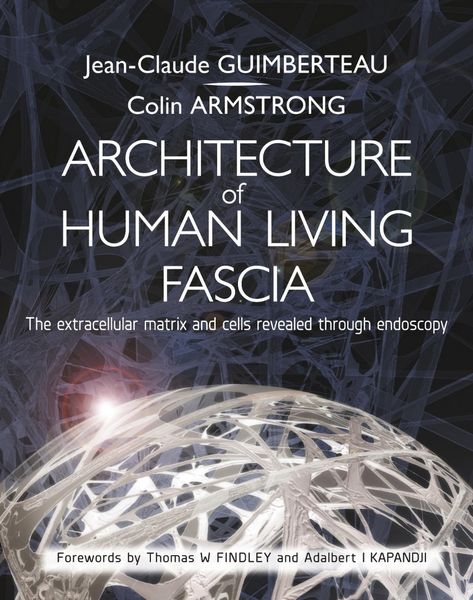
Architecture of Human Living Fascia The Extracellular Matrix and Cells Revealed Through Endoscopy
-
- Taschenbuch
- eBook ausgewählt
-
Form:Einzelkauf Download
-
Sprache:Englisch
74,99 €
inkl. gesetzl. MwSt.Beschreibung
Produktdetails
Format
ePUB
Kopierschutz
Ja
Family Sharing
Ja
Text-to-Speech
Ja
Erscheinungsdatum
21.02.2024
Verlag
Jessica Kingsley Publishers LtdSeitenzahl
224 (Printausgabe)
Dateigröße
42600 KB
Sprache
Englisch
EAN
9781805013082
This unique book illustrates the structure of the fascia in the living human being. Dr Guimberteau's photographs provide a detailed account of fascial architecture. He is the first person to publish video "movies" showing the structure of the fascia and how the fascia responds to it. The accompanying text explains what the photographs mean, clarifies the importance of the fascia, and sets out the implications of these findings for everyday therapeutic practice.
This beautifully illustrated book provides an introduction to Dr Guimberteau's groundbreaking work. Based on what can be seen he has developed his own concept of the multifibrillar structural organisation of the body, wherein the "microvacuole" is the basic functional unit. His films confirm the continuity of fibres throughout the body thereby seeming to confirm the tensegrity theory, which provides the basis of many manual therapy and bodywork teachings. His work ties in with that of Donald Ingber on tensegrity within the cytoskeleton, and adds to the evidence linking the cytoskeleton to the extracellular matrix as described by James Oschman. The book provides, for the first time, an explanatory introduction and explanation of these theories. This material will be highly valued by osteopaths, massage therapists, chiropractors and others as it provides part of the scientific underpinning of their techniques, as well as an explanation of what is happening when they use those techniques to treat their clients.
So Guimberteau's material confirms what manual therapists already believed but didn't fully understand. He has provided an explanation of how fascial layers slide over each other and how adjacent structures can move independently in different directions and at different speeds while maintaining the stability of the surrounding tissues.
Noch keine Bewertungen vorhanden
Verfassen Sie die erste Bewertung zu diesem Artikel
Helfen Sie anderen Kundinnen und Kunden durch Ihre Meinung.
Kurze Frage zu unserer Seite
Vielen Dank für Ihr Feedback
Wir nutzen Ihr Feedback, um unsere Produktseiten zu verbessern. Bitte haben Sie Verständnis, dass wir Ihnen keine Rückmeldung geben können. Falls Sie Kontakt mit uns aufnehmen möchten, können Sie sich aber gerne an unseren Kund*innenservice wenden.
zum KundenserviceWeitere Artikel finden Sie in
- eBooks >
- Fachbücher >
- Medizin