
The Psychosocial Impacts of Whistleblower Retaliation Shattering Employee Resilience and the Workplace Promise
-
- Hardcover
- Taschenbuch ausgewählt
- eBook
-
Sprache:Englisch
66,99 €
UVP
74,89 €
inkl. gesetzl. MwSt.,
Beschreibung
Produktdetails
Einband
Taschenbuch
Erscheinungsdatum
13.12.2023
Verlag
SpringerSeitenzahl
231
Maße (L/B/H)
23,5/15,5/1,4 cm
Gewicht
388 g
Auflage
1st ed. 2022
Sprache
Englisch
ISBN
978-3-031-19057-5
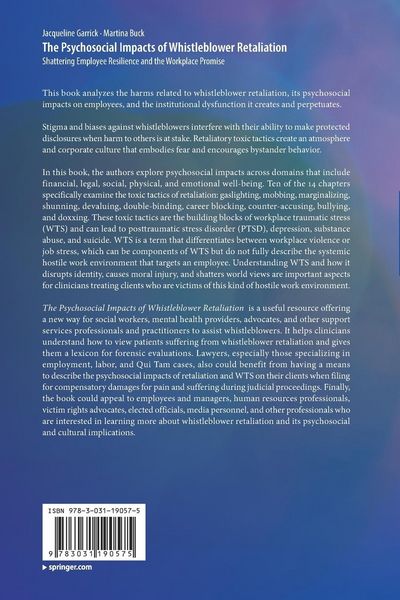
Stigma and biases against whistleblowers interfere with their ability to make protected disclosures when harm to others is at stake. Retaliatory toxic tactics create an atmosphere and corporate culture that embodies fear and encourages bystander behavior.
In this book, the authors explore psychosocial impacts across domains that include financial, legal, social, physical, and emotional well-being. Ten of the 14 chapters specifically examine the toxic tactics of retaliation: gaslighting, mobbing, marginalizing, shunning, devaluing, double-binding, career blocking, counter-accusing, bullying, and doxxing. These toxic tactics are the building blocks of workplace traumatic stress (WTS) and can lead to posttraumatic stress disorder (PTSD), depression, substance abuse, and suicide. WTS is a term that differentiates between workplace violence or job stress, which can be components of WTS but do not fully describe the systemic hostile work environment that targets an employee. Understanding WTS and how it disrupts identity, causes moral injury, and shatters world views are important aspects for clinicians treating clients who are victims of this kind of hostile work environment.
The Psychosocial Impacts of Whistleblower Retaliation is a useful resource offering a new way for social workers, mental health providers, advocates, and other support services professionals and practitioners to assist whistleblowers. It helps clinicians understand how to view patients suffering from whistleblower retaliation and gives them a lexicon for forensic evaluations. Lawyers, especially those specializing in employment, labor, and Qui Tam cases, also could benefit from having a means to describe the psychosocialimpacts of retaliation and WTS on their clients when filing for compensatory damages for pain and suffering during judicial proceedings. Finally, the book could appeal to employees and managers, human resources professionals, victim rights advocates, elected officials, media personnel, and other professionals who are interested in learning more about whistleblower retaliation and its psychosocial and cultural implications.
Noch keine Bewertungen vorhanden
Verfassen Sie die erste Bewertung zu diesem Artikel
Helfen Sie anderen Kundinnen und Kunden durch Ihre Meinung.
Kurze Frage zu unserer Seite
Vielen Dank für Ihr Feedback
Wir nutzen Ihr Feedback, um unsere Produktseiten zu verbessern. Bitte haben Sie Verständnis, dass wir Ihnen keine Rückmeldung geben können. Falls Sie Kontakt mit uns aufnehmen möchten, können Sie sich aber gerne an unseren Kund*innenservice wenden.
zum Kundenservice