Gutscheinbedingungen

Gültig bis 13.07.2026 | Gültig für Spielzeug (außer Tonieboxen & ausgewählte Tonies), Filme, Musik, Software, Games, Schreibwaren, Hörbücher und Hörbuch-Downloads (außer Abo & Shelfies), gebrauchte Bücher, nicht preisgebundene Bücher und Kalender | Einlösbar unter osiander.de und in der Osiander App | Click & Collect nur mit Online-Zahlung (Paypal/Kreditkarte) vorab | Einzelne Artikel können ausgeschlossen sein | Nicht kombinierbar mit anderen Gutscheinen oder Preisaktionen | Nur einmal pro Einkauf einlösbar | Gutschein wird auf max. 500€ Bestellwert angerechnet | Keine Barauszahlung | Digitale Hörbücher nur für Android | Nicht gültig für preisgebundene Artikel (aufgrund der Buchpreisbindung sind Gutscheine nicht auf Bücher, eBooks, Presse einlösbar), tolino eReader & Zubehör, Elektronik, Geschenke & Trends, Abonnements & Flatrates, Geschenkkarten, Versandkosten und Services

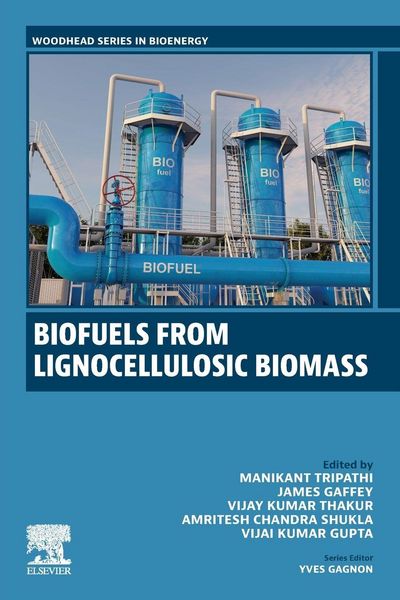
Produktbild: Biofuels from Lignocellulosic Materials
- 18%

Biofuels from Lignocellulosic Materials

18% sparen

164,99 € UVP 201,50 €

inkl. gesetzl. MwSt., Versandkostenfrei


Beschreibung

Produktdetails

Einband

Taschenbuch

Erscheinungsdatum

14.11.2025

Herausgeber

Manikant Tripathi + weitere

Verlag

Elsevier Science & Technology

Seitenzahl

468

Maße (L/B/H)

22,6/15,3/2,6 cm

Gewicht

1000 g

Sprache

Englisch

ISBN

978-0-443-21527-8

Beschreibung

Portrait

Dr. Manikant Tripathi is Assistant Professor in the Biotechnology Program at Dr. Rammanohar Lohia Avadh University, Ayodhya, India with eight years of teaching experience. After passing M.Sc. and qualifying National Eligibility Test, he completed Ph.D. program in Microbiology. He received research fellowship by University Grants Commission, India, and awards by various scientific societies in international and national conferences. His primary research interest is to explore different efficient strategies toward bioremediation of environmental pollutants and microbial applications for value added product development. Dr. Tripathi has published more than 50 research and review articles in peer-reviewed journals with h-index: 15 and has edited three books. He is an active member of various scientific societies. Presently, he is working on development of cleanup technology for in situ bioremediation of industrial effluent, biomass valorisation, and green synthesis of nanoparticles along with its antimicrobial applications.

Co-Director of the Circular Bioeconomy Research Group at Centre of Applied BioSciences Resources at Munster Technology University, Ireland and Adjunct Professor at University College Dublin, School of Biomolecular and Biomedical Sciences.

Vijay Kumar Thakur is currently a Professor in the Biorefining and Advanced Materials Research Centre at SRUC, Edinburgh, U.K. He holds an Adjunct Professor position in the Research School of Polymeric Materials, Jiangsu University, China and is a Visiting Professor at Shiv Nadar University, India, and Visitor at Cranfield University, U.K. He has previously held faculty positions at Cranfield University, U.K., Washington State University, U.S.A., and Nanyang Technological University, Singapore. His research activities span the disciplines of Biorefining, Chemistry, Chemical Engineering, Manufacturing, Materials Science, and Nanotechnology, as well as all aspects of Sustainable and Advanced Materials. He has published over 200 SCI journal articles, 2 patents, 50 books, and 37 book chapters in areas concerning polymers, nanotechnology, and materials science. He sits on the editorial board of several SCI journals (e.g., Nature Scientific Reports, Journal of Renewable Materials, Advances in Polymer Technology, International Journal of Polymer Analysis and Characterization, Polymers for Advanced Technologies, Biomolecules, Nanomaterials, Surfaces and Interfaces, Sustainable Chemistry and Pharmacy, Current Opinion in Green and Sustainable Chemistry, and Nano-Structures & Nano-Objects) as an Editor or Editorial Advisory Board member.

Prof Amritesh Chandra SHUKLA is Professor of Botany at University of Lucknow, India. His research has mainly focused on exploration and conservation of fungal diversity and its bioprospection as well as unraveling the mechanism of action of potential antifungal plant products/ biomolecules as pharmaceuticals and herbal drugs. He has developed some commercial antifungal formulations and granted USA, UK, Japanese and Indian patents. He has credited eleven books and published his research findings in various internationally reputed journals including seminars in cancer biology. For his scientific accomplishments, he received numerous awards and recognition, including the prestigious Fellow of the Linnean Society of London in the year 2021. He has also served the international scientific community well as Visiting Professor- University of Mauritius, and University of British Columbia, Vancouver, Canada.

Prof. Dr. Vijai Kumar Gupta is working as an Associate Professor and Bioprocess Engineering Lead at the School of Biotechnology at Dublin City University, Ireland. The overall focus of his research is on developing bioprocess technologies to valorise available bioresources (including dairy waste-streams) to produce value-added bioproducts and fuels. He has several articles, book chapters, and books with an author H-index of 81. Also, he is the editor of several reputed journals, including Biotechnology Advances, Critical Reviews in Biotechnology, Critical Reviews in Environmental Science and Technology, Environmental Chemistry Letters, Microbial Cell Factories, Microbiome, Mycosphere. He is listed among the world’s top 2% of scientists by Stanford University-USA

Produktdetails

Einband

Taschenbuch

Erscheinungsdatum

14.11.2025

Herausgeber

Verlag

Elsevier Science & Technology

Seitenzahl

468

Maße (L/B/H)

22,6/15,3/2,6 cm

Gewicht

1000 g

Sprache

Englisch

ISBN

978-0-443-21527-8

EU-Ansprechpartner

Zeitfracht Medien GmbH
Ferdinand-Jühlke-Straße 7
99095 Erfurt
DE
produktsicherheit@zeitfracht.de

Herstelleradresse

Elsevier Science & Technology
London Wall 125
EC2Y 5AS London
GB
tradeorders@elsevier.com

Noch keine Bewertungen vorhanden

Verfassen Sie die erste Bewertung zu diesem Artikel

Helfen Sie anderen Kundinnen und Kunden durch Ihre Meinung.

Kundinnen und Kunden meinen

Bewertungen (0)

  • Produktbild: Biofuels from Lignocellulosic Materials
  • Volume II: Biofuels
    1. Lignocellulosic biomass: Structure, Properties, and a potential feedstock for biofuel
    2. Innovation in Biotechnological Strategies for conversion of biomass to fuels: challenges and advancements
    3. Advancements in pre-treatment technologies for the conversion of lignocellulosic biomass to Biofuels
    4. Challenges, technological bottlenecks, applications, and future perspectives in Biofuel generation using biotechnology
    5. Sustainable biofuel production through thermochemical and biological conversion technologies
    6. Microbial and innovative technologies for bioethanol production: for a sustainable green environment
    7. Recent biotechnological approaches for liquid biofuels biobutanol and biomethanol production from lignocellulosic wastes: advancement and challenges
    8. Sustainable production of methyl esters from lignocellulosic biomass: challenges and perspectives
    9. Hydrotreated vegetable oil as an alternative biofuel from lignocellulosic wastes
    10. Bio-LPG synthesis from lignocellulosic biomass: a sustainable bioenergy resource
    11. Syngas and biogas production from lignocellulosic waste biomass: : cleaning and upgrading technologies
    12. Biohydrogen production from lignocellulosic feedstock: current status and future perspectives
    13. Dimethylfurane from lignocellulosic biomass: an alternative biofuel for future energy need
    14. Production of renewable methyl tert-butyl ether (MTBE) and bioethyl-tertiary-butyl ether (ETEB) from lignocellulosic biomass and its applications as a energy source
    15. Recent advancement in life cycle assessment (LCA) studies of lignocellulosic biofuels
    16. Advances and impacts of biofuel applications on environment and global economy
    17. International policies for biofuel production, its marketability and challenges