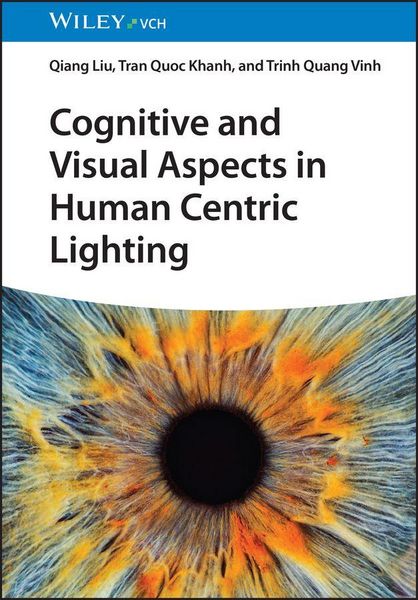
Produktbild: Cognitive and Visual Aspects in Human Centric Interior Lighting
Vorbesteller Neu

Cognitive and Visual Aspects in Human Centric Interior Lighting

133,99 €

inkl. gesetzl. MwSt., Versandkostenfrei


Beschreibung

Produktdetails

Einband

Gebundene Ausgabe

Erscheinungsdatum

09.12.2026

Abbildungen

150

Verlag

Wiley-VCH

Seitenzahl

400

Maße (L/B)

24,4/17 cm

Auflage

1. Auflage

Sprache

Englisch

ISBN

978-3-527-41434-5

Beschreibung

Produktdetails

Einband

Gebundene Ausgabe

Erscheinungsdatum

09.12.2026

Abbildungen

150

Verlag

Wiley-VCH

Seitenzahl

400

Maße (L/B)

24,4/17 cm

Auflage

1. Auflage

Sprache

Englisch

ISBN

978-3-527-41434-5

Herstelleradresse

Wiley-VCH GmbH
Boschstraße 12
69469 Weinheim
DE

Email: GPSR Kontakt

Noch keine Bewertungen vorhanden

Verfassen Sie die erste Bewertung zu diesem Artikel

Helfen Sie anderen Kundinnen und Kunden durch Ihre Meinung.

Kundinnen und Kunden meinen

Bewertungen (0)

  • Produktbild: Cognitive and Visual Aspects in Human Centric Interior Lighting

  • 1. Introduction


    2. Fundamentals of Colorimetry


    2.1 Human Color Vision


    2.2 Light Sources and Illuminants


    2.3 Object Color


    2.4 CCT and Duv


    2.5 Tristimulus Values and Color Matching Functions


    2.6 Color Space


    2.7 Color Difference


    2.8 Photometric and Colorimetric Measurement


    3. Color Appearance Models


    3.1 Terminology


    3.2 View Conditions


    3.3 Chromatic Adaptation


    3.4 Recent Color Appearance Models


    4. Literature Review of Color Quality of Lighting


    4.1 CIE Specifications


    4.2 Industrial Applications


    4.3 Typical Standards


    5. Psychophysics


    5.1 Typical Methods


    5.2 Methodological Discussion


    5.3 Limitations


    6. The White Sensation of Lighting (White Locus and Metrics)


    6.1 Terminology


    6.2 Literature Review of White Locus


    6.3 Metrics for White Sensation Quantification


    6.4 Correlation Between White Sensation and Color Perception


    7. Color Fidelity


    7.1 Terms and Definitions


    7.2 Color Rendering Index (Ra)


    7.3 TM-30-20 Rf


    7.4 CIE Rf


    7.5 Other Metrics


    8. Color Preference


    8.1 Terms and Definitions


    8.2 Literature Review


    8.3 The Contribution of CIE


    8.4 Color Preference Metrics


    9. Color Discrimination


    9.1 Terms and Definitions


    9.2 Literature Review


    9.3 Color Discrimination Metrics


    10. Other Color Attributes (Naturalness, Comfort, Vividness)


    10.1 Color Naturalness


    10.2 Color Comfort


    10.3 Color Vividness


    10.4 Freshness for Food


    11. Brightness Perception


    11.1 Terms and Definitions


    11.2 Literature Review


    11.3 Brightness Metrics


    12. Visual Perception and Cognitive Performance


    12.1 Typical Testing Protocol


    12.2 Literature Review on Visual Perception


    12.3 Literature Review on Cognitive Performance


    13. Contextual Factors Influencing Human Visual Responses


    13.1 Impact of Sex Difference


    13.2 Impact of Cultural Difference


    13.3 Impact of Experimental Protocol


    13.4 Impact of Experimental Objects


    13.5 Memory Colors


    14. The Meta-Analysis Approaches


    14.1 Method Introduction


    14.2 Necessity of Meta-Analysis


    14.3 Success Stories


    15. The Impact of Illuminance


    15.1 Impact of Illuminance on Color Preference


    15.2 Impact of Illuminance on Color Discrimination


    15.3 Impact of Illuminance on Color Comfort


    15.4 Impact of Illuminance on Cognitive Performance


    16. Specific Lighting Applications


    16.1 Museum Lighting


    16.2 Food Lighting


    16.3 Display Lighting


    16.4 Cosmetic Lighting


    16.5 Classroom Lighting


    16.6 Office Lighting


    17. Human Centric Lighting


    17.1 Concept and Development


    17.2 Circadian Effect


    17.3 Non-Visual Effect of Lighting


    17.4 Impact of Lighting on Emotion


    17.5 Impact of Lighting on Working Efficiency


    18. Conclusions