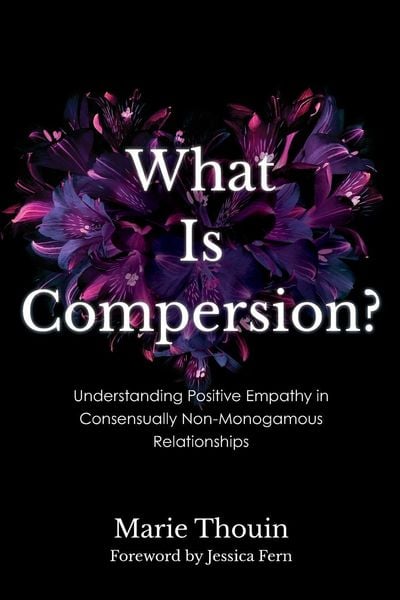

• Produktbild: What Is Compersion?
  • Produktbild: What Is Compersion?

What Is Compersion? Understanding Positive Empathy in Consensually Non-Monogamous Relationships

46,99 €

inkl. gesetzl. MwSt., Versandkostenfrei


Beschreibung

Produktdetails

Einband

Taschenbuch

Erscheinungsdatum

07.06.2024

Abbildungen

3 b/w illustrations 3 tables

Verlag

Rowman & Littlefield

Seitenzahl

314

Maße (L/B/H)

22,9/15,2/1,8 cm

Gewicht

490 g

Farbe

Schwarz

Sprache

Englisch

ISBN

978-1-5381-8394-6

Beschreibung

Produktdetails

Einband

Taschenbuch

Erscheinungsdatum

07.06.2024

Abbildungen

3 b/w illustrations 3 tables

Verlag

Rowman & Littlefield

Seitenzahl

314

Maße (L/B/H)

22,9/15,2/1,8 cm

Gewicht

490 g

Farbe

Schwarz

Sprache

Englisch

ISBN

978-1-5381-8394-6

Herstelleradresse

Libri GmbH
Europaallee 1
36244 Bad Hersfeld
DE

Email: gpsr@libri.de

Kundinnen und Kunden meinen

0 Bewertungen

Informationen zu Bewertungen

Zur Abgabe einer Bewertung ist eine Anmeldung im Konto notwendig. Die Authentizität der Bewertungen wird von uns nicht überprüft. Wir behalten uns vor, Bewertungstexte, die unseren Richtlinien widersprechen, entsprechend zu kürzen oder zu löschen.

Die Bewertungen sind nach Format, Anzahl Sterne und Datum sortiert.

Verfassen Sie die erste Bewertung zu diesem Artikel

Helfen Sie anderen Kund*innen durch Ihre Meinung

Kundinnen und Kunden meinen

0 Bewertungen filtern

Die Leseprobe wird geladen.
  • Produktbild: What Is Compersion?
  • Produktbild: What Is Compersion?
  • Acknowledgments
    Foreword by Jessica Fern
    Introduction
    What Is Compersion?
    Compersion and Buddhism
    Prevalence of Consensual Non-Monogamy
    Mononormativity and Compersion
    How Is Compersion Relevant to Monogamous People?
    The Research behind This Book
    Contributions and Relevance of This Book
    Should Compersion Always Be the Goal?
    Overview of the Book
    Notes
    Chapter 1: Developing a Non-Mononormative Relationship to Jealousy as a Foundation for Compersion
    The Entanglement of Jealousy and Mononormativity
    Different Types of Jealousy
    Essentialist, Cross-Cultural, and Socially Constructed Perspectives on Jealousy
    Jealousy and Power Dynamics in CNM Relationships
    How CNM People Relate to Jealousy Differently: The Advent of Non-Mononormative Jealousy
    The Malleability of Jealousy
    Notes
    Part I: Components of Compersion
    Chapter 2: Positive Empathy
    What Is Empathy?
    Participants' Accounts of Positive Empathy
    Notes
    Chapter 3: Gratitude
    Participants' Accounts of Gratitude
    Is Compersion Selfish or Selfless?
    Notes
    Part II: Dimensions of Compersion
    Chapter 4: Two Kinds of Compersion: Attitudinal and Embodied
    Attitudinal Compersion
    Embodied Compersion
    Is Compersion Necessary?
    Congruence with Previous Research
    Notes
    Chapter 5: Spectrum of Compersion
    Understanding the Spectrum
    Is the Spectrum Linear?
    Is the Spectrum Hierarchical?
    Other Flavors of Compersion
    Chapter 6: Coexistence of Jealousy and Compersion
    Participants' Accounts of Jealousy and Compersion Coexisting
    Comperstruggle
    Fluidity between Jealousy and Compersion
    Explanatory Frameworks for the Coexistence of Jealousy and Compersion
    Part III: A Compersion Roadmap
    Chapter 7: What Promotes Compersion?
    Grouping 1: Individual Factors
    Grouping 2: Relational Factors
    Grouping 3: Social Factors
    Notes
    Chapter 8: What Hinders Compersion?
    Grouping 1: Individual Factors
    Grouping 2: Relational Factors
    Grouping 3: Social Factors
    Notes
    Part IV: A Comprehensive Model of Compersion
    Chapter 9: A Proposed Theory of Compersion
    Congruency and Exceptions
    A Dual Control Model of Compersion
    Applying the Model in Practice
    Notes
    Part V: Social Lenses on Compersion
    Chapter 10: The Role of Coming Out and Pride in Compersion
    What Is Coming Out?
    Identity Development and Coming Out for CNM People
    CNM Resilience, Coming Out, and Compersion
    CNM Identity Development Based on Perception of Innateness versus Choice
    Chapter 11: Social Positionality and Compersion
    The Research Process
    Is Compersion a Privileged Emotion? The Surprising Impact of Compounded Discrimination
    Compersion as Resistance
    Compersion and Age or Stage of Life
    Compersion and Disability
    Compersion and Gender
    Sexual Orientation and Compersion
    Race and Compersion
    Socioeconomic Status and Compersion
    Conclusion: The Double-Edged Sword of Otherness
    Part VI: Concluding Thoughts
    Chapter 12: Can Compersion Be Learned?
    Learning by Creating a "Fertile Terrain"
    Learning by Example
    Learning by Unlearning
    Learning by Shifting Paradigms
    Learning through Practice
    Learning by Cultivating Empathy
    Learning by Doing
    Conclusion
    Notes
    Chapter 13: Parting Words: Compersion, Personal Transformation, and Social Change
    Notes
    References
    Index
    About the Author