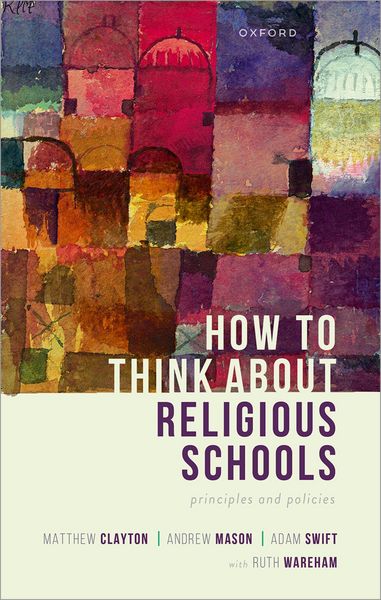
How to Think about Religious Schools Principles and Policies
-
- Hardcover ausgewählt
- Taschenbuch
- eBook
-
Sprache:Englisch
96,99 €
inkl. gesetzl. MwSt.,
Beschreibung
Produktdetails
Einband
Gebundene Ausgabe
Erscheinungsdatum
15.11.2024
Verlag
Oxford University PressSeitenzahl
224
Maße (L/B/H)
22,2/14,7/1,9 cm
Gewicht
426 g
Sprache
Englisch
ISBN
978-0-19-892400-5
Should religious schools be an option? Should they receive public funding? Are they bad for community cohesion? What should we make of the charge that they indoctrinate? How should they be regulated? People disagree on the answers to these questions. Some maintain that religious schools should not be permitted. If parents want to raise their children in a particular faith at home, then that is up to them, but schools should not be involved. Others think it obvious that parents should be free to send their children to religious schools. Any government that ruled that out would be violating parents' right to religious freedom, or their right to raise their children according to their own beliefs. In order to make progress on these issues, we need a way of thinking about them that enables us to understand more clearly what is at stake. This book provides a framework that identifies the different kinds of normative considerations that are in play and provides the basis for understanding why people disagree about religious schools. It uses a method that involves moving from the relevant normative considerations--especially the child's potential to acquire personal autonomy and to develop a capacity and disposition to treat others as equals--to specific policy proposals for governing religious schools in England today, taking into account the legal and political constraints on policy options and the likely unintended consequences of reforms. A unique feature of the book is that its three authors have somewhat different perspectives on the implications of the normative framework they each endorse, which they draw out in separate chapters. Despite reaching different conclusions on some philosophical issues concerning religious schools, the framework and method they share enables them to converge on a regulatory framework that forbids directive teaching aimed at imparting religious beliefs in publicy-funded religious schools, and that makes the charitable status of private religious schools conditional on avoiding this kind of teaching.
Noch keine Bewertungen vorhanden
Verfassen Sie die erste Bewertung zu diesem Artikel
Helfen Sie anderen Kundinnen und Kunden durch Ihre Meinung.
Kurze Frage zu unserer Seite
Vielen Dank für Ihr Feedback
Wir nutzen Ihr Feedback, um unsere Produktseiten zu verbessern. Bitte haben Sie Verständnis, dass wir Ihnen keine Rückmeldung geben können. Falls Sie Kontakt mit uns aufnehmen möchten, können Sie sich aber gerne an unseren Kund*innenservice wenden.
zum Kundenservice