• Produktbild: Practical Language Testing
  • Produktbild: Practical Language Testing
- 13%

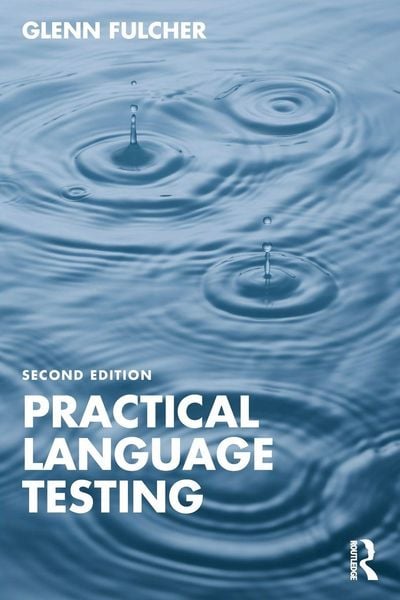
Practical Language Testing

13% sparen

49,99 € UVP 58,10 €

inkl. gesetzl. MwSt., Versandkostenfrei


Beschreibung

Produktdetails

ISBN

978-1-03-244728-5

Auflage

2. Auflage

Erscheinungsdatum

29.11.2024

Einband

Taschenbuch

Verlag

Taylor & Francis

Seitenzahl

366

Maße (L/B/H)

23,4/15,6/2 cm

Gewicht

556 g

Sprache

Englisch

Beschreibung

Produktdetails

ISBN

978-1-03-244728-5

Auflage

2. Auflage

Erscheinungsdatum

29.11.2024

Einband

Taschenbuch

Verlag

Taylor & Francis

Seitenzahl

366

Maße (L/B/H)

23,4/15,6/2 cm

Gewicht

556 g

Sprache

Englisch

EU-Ansprechpartner

Taylor & Francis Verlag GmbH
Kaufingerstraße 24
80331 München
DE
GPSR@taylorandfrancis.com

Herstelleradresse

Taylor & Francis Group
5 Howick Place
SW1P 1WG London
UK
GPSR@taylorandfrancis.com

Noch keine Bewertungen vorhanden

Verfassen Sie die erste Bewertung zu diesem Artikel

Helfen Sie anderen Kundinnen und Kunden durch Ihre Meinung.

Kundinnen und Kunden meinen

Bewertungen (0)

  • Produktbild: Practical Language Testing
  • Produktbild: Practical Language Testing
  • Acknowledgements

    Preface

    Chapter 1 - Testing and assessment in context

    1.      Test purpose

    2.      Tests in educational systems

    3.      Testing rituals

    4.      Unintended consequences

    5.      Testing and society

    6.      Historical interlude I

    7.      The politics of language testing

    8.      Historical interlude II

    9.      Professionalising language education and testing

    10.  Validity

    Activities

    Chapter 2 - Standardised testing

    1.      Two paradigms

    2.      Testing as science

    3.      What's in a curve?

    4.      The curve and score meaning

    5.      Putting it into practice

    6.      Test scores in a consumer age

    7.      Testing the test

    8.      Introducing reliability

    9.      Calculating reliability

    10.  Living with uncertainty

    11.  Reliability and test length

    12.  Relationships with other measures

    13.  Measurement

    Activities

    Chapter 3 - Classroom assessment

    1.      Life at the chalk-face

    2.      Assessment for learning

    3.      Self- and peer-assessment

    4.      Dynamic assessment

    5.      Understanding change

    6.      Assessment and second language acquisition

    7.      Criterion-referenced testing

    8.      Dependability

    9.      Assessment literacy

    Activities

    Chapter 4 - Deciding what to test

    1.      The test design cycle

    2.      Construct definition

    3.      Where do constructs come from?

    4.      Models of communicative competence

    5.      From definition to design

    Activities

    Chapter 5 - Designing test specifications

    1.      What are test specifications?

    2.      Specifications for testing and teaching

    3.      A sample detailed specification for reading test

    4.      Granularity

    5.      Performance conditions

    6.      Target language use domain analysis

    7.      Accommodations

    8.      Back and forth

    Activities

    Chapter 6 - Evaluating, prototyping and piloting

    1.      Investigating usefulness and usability

    2.      Evaluating items, tasks and specifications

    3.      Guidelines for multiple-choice items

    4.      Prototyping

    5.      Piloting

    6.      Field testing

    7.      Item shells

    8.      Operational item review and pre-testing

    Activities

    Chapter 7 - Scoring language tests

    1.      Scoring items

    2.      Scorability

    3.      Scoring constructed response tasks

    4.      Automated scoring

    5.      Corrections for guessing

    6.      Avoiding own goals

    Activities

    Chapter 8 - Aligning tests to standards

    1.      It's as old as the hills

    2.      The definition of 'standards'

    3.      The uses of standards

    4.      Unintended consequences revisited

    5.      Using standards for harmonisation and identity

    6.      How many standards can we afford?

    7.      Performance level descriptors (PLDs) and test scores

    8.      Some initial decisions

    9.      Standards-setting methodologies

    10.  Evaluating standard-setting

    11.  Training

    12.  The special case of CEFR

    13.  You can always count on uncertainty

    Activities

    Chapter 9 - Validity

    1.      Preliminaries

    2.      The Messick consensus

    3.      Argument-based validation

    4.      Technicalism

    5.      The new realism

    6.      Constructivism

    7.      Pragmatic realism

    8.      Conclusion

    Activities


    Epilogue

    Appendices

    Glossary

    References

    Index