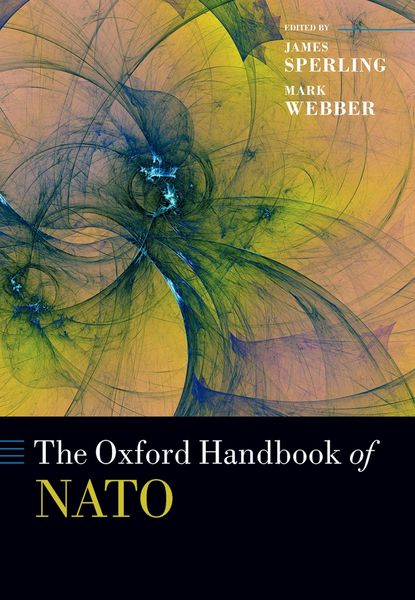
Produktbild: The Oxford Handbook of NATO

The Oxford Handbook of NATO

253,99 €

inkl. gesetzl. MwSt., Versandkostenfrei


Beschreibung

Produktdetails

Einband

Gebundene Ausgabe

Erscheinungsdatum

20.05.2025

Herausgeber

Sperling James + weitere

Verlag

Oxford Academic

Seitenzahl

1004

Maße (L/B/H)

24,9/17,3/6,2 cm

Gewicht

1852 g

Sprache

Englisch

ISBN

978-0-19-885119-6

Beschreibung

Produktdetails

Einband

Gebundene Ausgabe

Erscheinungsdatum

20.05.2025

Herausgeber

Verlag

Oxford Academic

Seitenzahl

1004

Maße (L/B/H)

24,9/17,3/6,2 cm

Gewicht

1852 g

Sprache

Englisch

ISBN

978-0-19-885119-6

Herstelleradresse

Libri GmbH
Europaallee 1
36244 Bad Hersfeld
DE

Email: GPSR Kontakt

Kundinnen und Kunden meinen

0 Bewertungen

Informationen zu Bewertungen

Zur Abgabe einer Bewertung ist eine Anmeldung im Konto notwendig. Die Authentizität der Bewertungen wird von uns nicht überprüft. Wir behalten uns vor, Bewertungstexte, die unseren Richtlinien widersprechen, entsprechend zu kürzen oder zu löschen.

Die Bewertungen sind nach Format, Anzahl Sterne und Datum sortiert.

Verfassen Sie die erste Bewertung zu diesem Artikel

Helfen Sie anderen Kund*innen durch Ihre Meinung

Kundinnen und Kunden meinen

0 Bewertungen filtern

Die Leseprobe wird geladen.
  • Produktbild: The Oxford Handbook of NATO
    • Part I. Context

    • 1: James Sperling and Mark Webber: Understanding NATO

    • 2: Trine Flockhart: Global Order

    • 3: Stephanie C. Hofmann and Michael John Williams: Domestic Politics

    • Part II. Questions

    • 4: Michael Clarke: What is NATO for (Redux)?

    • 5: Andrew T. Wolff: Who is NATO for?

    • 6: Stanley R. Sloan: Whither NATO? A History of NATO's Futures

    • Part III. Perspectives

    • 7: Seth A. Johnston: Realisms

    • 8: Sebastian Harnisch and Florian Böller: Liberalisms

    • 9: Alexandra Gheciu: Security Community: Identity, Practices, and Trust

    • 10: Katharine A. M. Wright: Gender

    • 11: Rita Floyd: Securitization, Desecuritization, and Just Securitization

    • 12: Maria Mÿlksoo: Risk, Resilience, and Resistance

    • 13: Gabi Schlag: Visual Discourses of Identity Making

    • 14: Jordan Becker: Strategic Culture

    • Part IV. Strategy, Policy, and Command

    • 15: R. James Orr: The North Atlantic Treaty

    • 16: Lawrence Freedman and Jeffrey H. Michaels: Strategy

    • 17: John R. Deni: Doctrine

    • 18: Sebastian Mayer: The International Staff

    • 19: Paal Sigurd Hilde: Military and Command Structures

    • 20: Maryann Foster: Defence Planning and Force Generation

    • 21: Ian Davis: Representation and Decision-making

    • 22: Ryan C. Hendrickson: The Secretary General

    • Part V. Deterrence, Defence, and Security

    • 23: David S. Yost: Nuclear Deterrence

    • 24: Stephan Frÿhling: Ballistic Missile Defence

    • 25: Jens Ringsmose: Conventional Force Posture

    • 26: Julian Lindley-French: Cybrid Warfare

    • 27: Jamie Shea: Non-Traditional Security Threats

    • 28: Cornelia Baciu: COVID-19, Crisis Management, and Civil Emergency Response

    • 29: James Sperling: Emerging and Disruptive Technologies

    • 30: Benjamin Zyla: Burden-sharing

    • Part VI. Operations

    • 31: Jonathan Marcus: Bosnia

    • 32: Martin A. Smith: Kosovo

    • 33: Kjell Engelbrekt and Braxton Palmer: Libya

    • 34: Sten Rynning: Afghanistan

    • 35: Brooke A. Smith-Windsor: Maritime Operations

    • 36: Thierry Tardy: Counter-terrorism and Projecting Stability

    • 37: Linde Desmaele and Luis Simón: Forward Deployment and Reassurance

    • Part VII. Key Allies

    • 38: James Goldgeier: The United States

    • 39: Andrew M. Dorman and Matthew Uttley: The United Kingdom

    • 40: Olivier Schmitt: France

    • 41: Tom Dyson: Germany

    • 42: Luca Ratti: Italy

    • 43: Wojciech Lorenz: Poland

    • 44: Tarik Oguzlu: Turkey

    • Part VIII. Key Relationships

    • 45: Magnus Petersson: Partnerships

    • 46: Richard G. Whitman: The European Union

    • 47: Andrew Cottey: The European Neutrals

    • 48: Tracey German: Georgia and Ukraine

    • 49: Alessandro Marrone: The Mediterranean Dialogue

    • 50: Eleonora Ardemagni: The Istanbul Cooperation Initiative

    • 51: Ben Schreer: Australia

    • 52: Roland Dannreuther: Russia

    • 53: Andrew Cottey and Mark Webber: China

    • Part IX. Conclusion

    • 54: Alexander Moens and Alexandra Richards: NATO's Redoubled Relevance