• Produktbild: How to Do Discourse Analysis
  • Produktbild: How to Do Discourse Analysis
- 22%

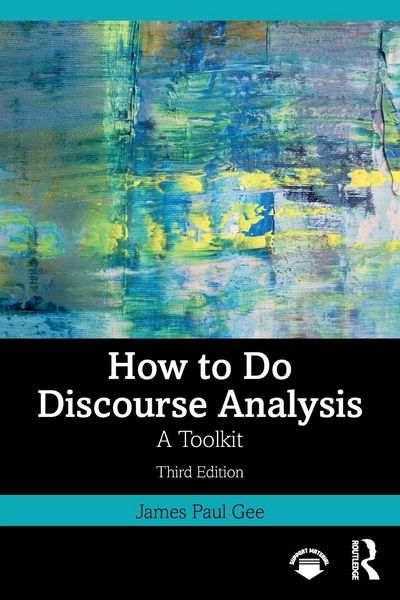
How to Do Discourse Analysis A Toolkit

22% sparen

48,99 € UVP 63,60 €

inkl. gesetzl. MwSt., Versandkostenfrei


Beschreibung

Produktdetails

Einband

Taschenbuch

Erscheinungsdatum

28.02.2025

Verlag

Taylor & Francis

Seitenzahl

244

Maße (L/B/H)

23,4/15,6/1,3 cm

Gewicht

376 g

Auflage

3. Auflage

Sprache

Englisch

ISBN

978-1-03-288478-3

Beschreibung

Rezension

'The main strengths of How to Do Discourse Analysis and An Introduction to Discourse Analysis lie in the clear, engaging style that makes complicated concepts accessible through the use of metaphor, and the abundance of examples. I would recommend everyone who teaches discourse analysis to have these two books in their inventory, if not as main course books, then for selective use as a collection of readings and exercises.'


Daria Dayter, Tampere University, Finland

Produktdetails

Einband

Taschenbuch

Erscheinungsdatum

28.02.2025

Verlag

Taylor & Francis

Seitenzahl

244

Maße (L/B/H)

23,4/15,6/1,3 cm

Gewicht

376 g

Auflage

3. Auflage

Sprache

Englisch

ISBN

978-1-03-288478-3

EU-Ansprechpartner

Taylor & Francis Verlag GmbH
Kaufingerstraße 24
80331 München
DE
GPSR@taylorandfrancis.com

Herstelleradresse

Taylor & Francis Group
5 Howick Place
SW1P 1WG London
UK
GPSR@taylorandfrancis.com

Kundinnen und Kunden meinen

0 Bewertungen

Informationen zu Bewertungen

Zur Abgabe einer Bewertung ist eine Anmeldung im Konto notwendig. Die Authentizität der Bewertungen wird von uns nicht überprüft. Wir behalten uns vor, Bewertungstexte, die unseren Richtlinien widersprechen, entsprechend zu kürzen oder zu löschen.

Die Bewertungen sind nach Format, Anzahl Sterne und Datum sortiert.

Verfassen Sie die erste Bewertung zu diesem Artikel

Helfen Sie anderen Kund*innen durch Ihre Meinung

Kundinnen und Kunden meinen

0 Bewertungen filtern

Die Leseprobe wird geladen.
  • Produktbild: How to Do Discourse Analysis
  • Produktbild: How to Do Discourse Analysis
  • Introduction


    Unit 1: Language and Context


              1.1 Grammar


              1.2 Language Acquisition


              1.3 Speed and Clarity


              1.4 Context and Cultural Knowledge


              1.5 Making the Taken-for-Granted New and Strange


              1.6 Working with The Making Strange Tool


              1.7 Deixis


              1.8 Working with the Deixis Tool


              1.9 Context


              1.10 Working with the Fill-In Tool


              1.11 Subjects and Predicates


              1.12 Working with Subject Tool


              1.13 Intonation


              1.14 Working with the Intonation Tool


              1.15 The Frame Problem


              1.16 The Frame Problem in Action


              1.17 Working with the Frame Tool


    Unit 2: Saying, Doing, and Designing


              2.1 People Do things with Language, Not Just Say Things


              2.2 Working with Doing and Not Just Saying Tool


              2.3 Grammar as Tools for Structure and Meaning


              2.4 Working with the Grammar as Choice Tool


              2.5 Vocabulary


              2.6 Working with the Vocabulary Tool


              2.7 Topics and Themes


              2.8 Working with the Topic and Theme Tool


              2.9 Stanzas


              2.10 Working with the Stanza Tool


    Unit 3: Building Things in the World


              3.1 Building Tasks


              3.2 Building Things with Language


              3.3 An Example: A Collaboration around Oral History


              3.4 The Context is Reflexive Tool


              3.5 Working with the Context is Reflexive Tool


              3.6 Working with the Significance Building Tool


              3.7 Working with the Practices/Activities Building Tool


              3.8 Working with the Identities Building Tool


              3.9 Working with the Relationships Building Tool


              3.10 Working with the Politics Building Tool


              3.11 Working with the Connections Building Tool


              3.12 Working with the Sign Systems and Knowledge Building Tool


              3.13 Topic Flow or Topic Chaining Tool


              3.14 Working with the Topic Flow or Topic Chaining Tool


    Unit 4: Theoretical Tools


              4.1 Six Theoretical Tools


              4.2 The Situational Meaning Tool


              4.3 Working with the Situational Meaning Tool


              4.4 The Social Languages Tool


              4.5 Working with the Social Languages Tool


              4.6 The Intertextuality Tool


              4.7 Working with the Intertextuality Tool


              4.8 The Figured Worlds Tool


              4.9 Working with the Figured Worlds Tool


              4.10 The Big "D" Discourse Tool


              4.11 Working with the Big "D" Discourse Tool


              4.12 Notes about Discourses


    4.13 Notes about DiscoursesThe Big "C" Conversation Tool


              4.14 Working with the Big "C" Conversation Tool


              4.15 Conclusion