
• Produktbild: Translating Nations
  • Produktbild: Translating Nations
- 20%

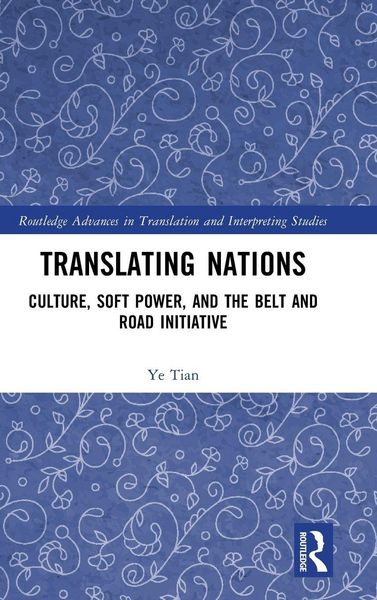
Translating Nations Culture, Soft Power, and the Belt and Road Initiative

20% sparen

156,99 € UVP 196,30 €

inkl. gesetzl. MwSt., Versandkostenfrei


Beschreibung

Produktdetails

Einband

Gebundene Ausgabe

Erscheinungsdatum

30.12.2024

Abbildungen

schwarz-weiss Illustrationen, Zeichnungen, schwarz-weiss

Verlag

Taylor & Francis

Seitenzahl

250

Maße (L/B/H)

23,5/15,7/1,8 cm

Gewicht

466 g

Sprache

Englisch

ISBN

978-1-03-266323-4

Beschreibung

Produktdetails

Einband

Gebundene Ausgabe

Erscheinungsdatum

30.12.2024

Abbildungen

schwarz-weiss Illustrationen, Zeichnungen, schwarz-weiss

Verlag

Taylor & Francis

Seitenzahl

250

Maße (L/B/H)

23,5/15,7/1,8 cm

Gewicht

466 g

Sprache

Englisch

ISBN

978-1-03-266323-4

EU-Ansprechpartner

Taylor & Francis Verlag GmbH
Kaufingerstraße 24
80331 München
DE
GPSR@taylorandfrancis.com

Herstelleradresse

Taylor & Francis Group
5 Howick Place
SW1P 1WG London
UK
GPSR@taylorandfrancis.com

Kundinnen und Kunden meinen

0 Bewertungen

Informationen zu Bewertungen

Zur Abgabe einer Bewertung ist eine Anmeldung im Konto notwendig. Die Authentizität der Bewertungen wird von uns nicht überprüft. Wir behalten uns vor, Bewertungstexte, die unseren Richtlinien widersprechen, entsprechend zu kürzen oder zu löschen.

Die Bewertungen sind nach Format, Anzahl Sterne und Datum sortiert.

Verfassen Sie die erste Bewertung zu diesem Artikel

Helfen Sie anderen Kund*innen durch Ihre Meinung

Kundinnen und Kunden meinen

0 Bewertungen filtern

Die Leseprobe wird geladen.
  • Produktbild: Translating Nations
  • Produktbild: Translating Nations
  • Contents

    Acknowledgements

    Introduction        

    0.1 Purpose 

    0.2 Main thesis of the book     

    0.3 Chapter overview     


    Chapter 1 Map-Sketching as an Interdisciplinary Method: Against Map, Linearity, and Mastery  

    1.1     Map and power: Inspirations from critical cartography

    1.1.1 Critical cartography, maps, and power

    1.1.2 The map of TS and its problems

    1.2 Sketch map as a method: Line, meshwork, and rhizomatic epistemology         

    1.2.1 Sketch map and lines of a meshwork  

    1.2.2 Rhizome      

    1.2.3 Serendipity and translation       

    1.3 Conclusion      


    Part I: Culture as Defined by Translation


    Chapter 2 Culture as Meaning Making    

    2.1 Culture as a lifestyle

    2.2 Culture as a system   

    2.3 Culture as signs and meanings      


    Chapter 3 Culture function and translation       

    3.1 Culture differentiates

    3.1.1 An anthropological account       

    3.1.2 A sociological account     

    3.2 Culture assimilates    

    3.2.1 Cultural assimilation        

    3.2.2 Deculturation and acculturation 

    3.2.3 Cultural fusion       

    3.3 Overview of culture function: Re-examining globalisation, deculturation, and glocalisation        

    3.3.1 Globalisation as cosmopolitanism        

    3.3.2 Globalisation as deculturation    


    Entanglement 1: Culture and Translation

    Part II: Soft Power, Nation Branding, and Translation


    Chapter 4 Power and Translation   

    4.1 Defining power         

    4.2 Soft power and translation

    4.2.l Culture as the resource for soft power   

    4.2.2. Instruments of soft power

    4.2.3 Overview: soft power and translation   


    Chapter 5 Nation Branding as Translation         

    5.1 Constructability of national identity        

    5.2 Branding         

    5.3 Nation branding        

    5.3.1 Nation branding compared with commercial branding      

    5.3.2 Nation branding conveying national identity: Nation branding as touching 

    5.3.3 Soft power as a resource for nation branding: Nation branding as communication and development   


    Entanglement 2: Translation, Power, and Branding   

    Part III: China's Nation Branding as Translation       


    Chapter 6 Introduction to the BRI: A Geo-Economic, Geo-Political, Geo-Cultural, or Interconnective Initiative?  

    6.1 The BRI as a geo-economic initiative     

    6.2 The BRI as a geo-political initiative        

    6.3 The BRI as a geo-cultural initiative        

    6.3.1 The BRI and the concept of He: The peace-building and interconnectivity outlook of the BRI       

    6.3.2 The BRI as eco-translation         


    Chapter 7 The "What" Question: Framing, Reframing, and Stereotypes   

    7.1 Translation as framing        

    7.2 Framing in nation branding 

    7.2.1 Framing as stereotyping   

    7.2.2 Framing as selecting information         

    7.2.3 Framing in the BRI: Framing history as an example 

    7.3 Conclusion: Framing the Silk Road as translatio studii et imperii     


    Chapter 8 The "Who" Question: Translation and Identity in China's Nation Branding         

    8.1 Self and otherness     

    8.2 The self and otherness in TS         

    8.3 The self and otherness for China   

    8.3.1 A philosophical exploration       

    8.3.2 An anthropological exploration  

    8.4 The self and otherness in BRI branding  

    8.4.1 From the periphery to the centre

    8.4.2  Who is allowed to translate?     

    8.5 Conclusion: Choose translators with otherness in mind 


    Chapter 9 The "How" Question: How do Nations Communicate their Brands to Others?     

    9.1 Development communication: An overview      

    9.1.1 Empowerment        

    9.1.2 Participatory development

    9.2 Development communication and nation branding         

    9.3 Development communication in the BRI

    9.3.1 China's communication for development: The case of Confucius Institute  

    9.3.2 China's communication about development         

    9.3.3 China's communication of development         

    9.4 Conclusion: Development translation     


    Entanglement 3: Who, what, and how to brand a nation from a translational perspective      


    Chapter 10 Translation Studies as Knowledge, Method, and Meta-Discipline

    10.1 Revisiting research questions    

    10.1.1 Translation as connection         

    10.1.2 Translation as differentiation and assimilation

    10.1.3 Translation as criticism of authority   

    10.1.4 Translation as a process rather than a product       

    10.2 Implications  

    10.2.1 Translation knowledge   

    10.2.2 Translation as a method 

    10.2.3 TS as a meta-discipline  

    10.3 Potential for future research        


    Bibliography

    Index