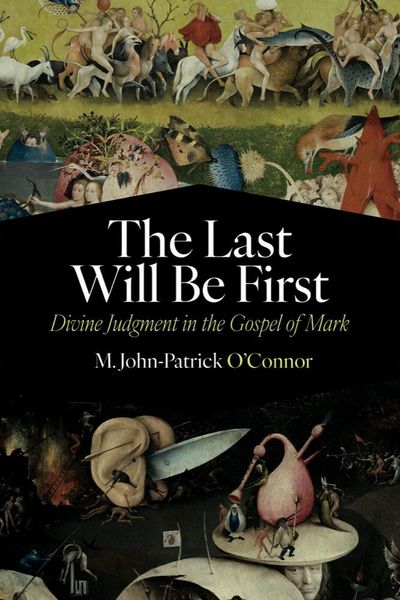
The Last Will Be First Divine Judgment in the Gospel of Mark
-
- Einzelkauf Download ausgewählt
-
Sprache:Englisch
64,49 €
inkl. gesetzl. MwSt.Beschreibung
Produktdetails
Format
ePUB
Kopierschutz
Nein
Family Sharing
Nein
Text-to-Speech
Ja
Erscheinungsdatum
02.09.2024
Verlag
Baylor University PressSeitenzahl
256 (Printausgabe)
Sprache
Englisch
EAN
9781481320016
To contemporary sensibilities, the idea of divine judgment can seem at best off-putting, at worst a reason to jettison the biblical text altogether. Long gone are the days of Puritan preachers and their fiery, turn-or-burn tirades--but should preachers and teachers wholly avoid the topic of divine judgment? In the words of Dostoyevsky's character Ivan in The Brothers Karamazov, "What good can hell do, since those children have already been tortured?" Or, as Mary Ann Tolbert asks, "What happens when the text is read, not by the marginalized but by the oppressor, not by the colonized, but by the colonizer?"
Rather than continue to neglect the theme of God's judgment for a modern world, M. John-Patrick O'Connor suggests that Christian communities ought to improve upon their "grammar of judgment" by judiciously evaluating the "who," the "what," and the "why" of God's judgment and by considering the historic use and abuse of such language. O'Connor's journey toward better theologies of judgment begins with the Gospel of Mark. While readers of Scripture most frequently associate divine judgment in the New Testament with Matthew, Luke, or Paul, The Last Will Be First claims that Mark's Gospel offers an equally robust vision of God's judgment upon evil and, crucially, God's justice for the "least of these."
After cataloging the range of divine judgment language in the Hebrew Bible and Second Temple Judaism, O'Connor turns to the second Gospel, proposing that God's judgment as portrayed in Mark is for the purpose of defending God's children. O'Connor demonstrates that Mark participates in a well-established "grammar of judgment" that can be dispensed in a variety of contexts while retaining God's role as the primary agent of judgment. To that end, this book also hopes to build a constructive theology of judgment for readers of Mark, with a hopeful vision for the gospel's ongoing relevance in a world still marked by oppression.
Noch keine Bewertungen vorhanden
Verfassen Sie die erste Bewertung zu diesem Artikel
Helfen Sie anderen Kundinnen und Kunden durch Ihre Meinung.
Kurze Frage zu unserer Seite
Vielen Dank für Ihr Feedback
Wir nutzen Ihr Feedback, um unsere Produktseiten zu verbessern. Bitte haben Sie Verständnis, dass wir Ihnen keine Rückmeldung geben können. Falls Sie Kontakt mit uns aufnehmen möchten, können Sie sich aber gerne an unseren Kund*innenservice wenden.
zum Kundenservice