• Produktbild: The Stitched Landscape
  • Produktbild: The Stitched Landscape
  • Produktbild: The Stitched Landscape
  • Produktbild: The Stitched Landscape
  • Produktbild: The Stitched Landscape
  • Produktbild: The Stitched Landscape
  • Produktbild: The Stitched Landscape
  • Produktbild: The Stitched Landscape
  • Produktbild: The Stitched Landscape
  • Produktbild: The Stitched Landscape
  • Produktbild: The Stitched Landscape
  • Produktbild: The Stitched Landscape

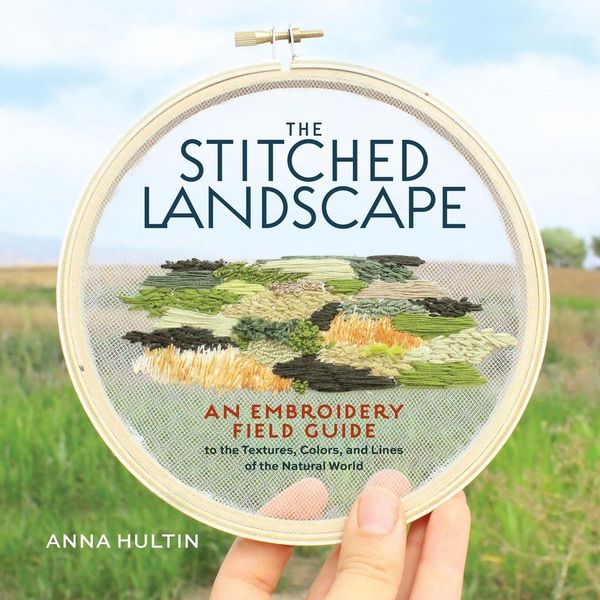
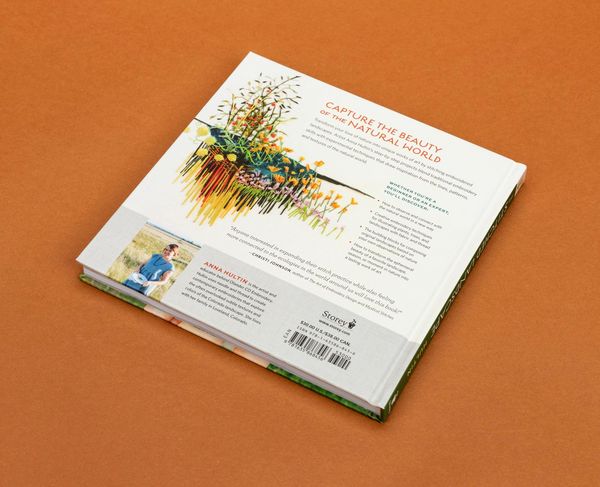
The Stitched Landscape An Embroidery Field Guide to the Textures, Colors, and Lines of the Natural World

26,99 €

inkl. gesetzl. MwSt., Versandkostenfrei


Beschreibung

Produktdetails

Einband

Gebundene Ausgabe

Erscheinungsdatum

07.10.2025

Verlag

Workman

Seitenzahl

212

Maße (L/B/H)

20,5/20,4/1,7 cm

Gewicht

628 g

Farbe

Lichtgrau / Moosgrün

Sprache

Englisch

ISBN

978-1-63586-845-6

Beschreibung

Produktdetails

Einband

Gebundene Ausgabe

Erscheinungsdatum

07.10.2025

Verlag

Workman

Seitenzahl

212

Maße (L/B/H)

20,5/20,4/1,7 cm

Gewicht

628 g

Farbe

Lichtgrau / Moosgrün

Sprache

Englisch

ISBN

978-1-63586-845-6

Herstelleradresse

Libri GmbH
Europaallee 1
36244 Bad Hersfeld
DE

Email: gpsr@libri.de

Kundinnen und Kunden meinen

0 Bewertungen

Informationen zu Bewertungen

Zur Abgabe einer Bewertung ist eine Anmeldung im Konto notwendig. Die Authentizität der Bewertungen wird von uns nicht überprüft. Wir behalten uns vor, Bewertungstexte, die unseren Richtlinien widersprechen, entsprechend zu kürzen oder zu löschen.

Die Bewertungen sind nach Format, Anzahl Sterne und Datum sortiert.

Verfassen Sie die erste Bewertung zu diesem Artikel

Helfen Sie anderen Kund*innen durch Ihre Meinung

Kundinnen und Kunden meinen

0 Bewertungen filtern

Die Leseprobe wird geladen.
  • Produktbild: The Stitched Landscape
  • Produktbild: The Stitched Landscape
  • Produktbild: The Stitched Landscape
  • Produktbild: The Stitched Landscape
  • Produktbild: The Stitched Landscape
  • Produktbild: The Stitched Landscape
  • Produktbild: The Stitched Landscape
  • Produktbild: The Stitched Landscape
  • Produktbild: The Stitched Landscape
  • Produktbild: The Stitched Landscape
  • Produktbild: The Stitched Landscape
  • Produktbild: The Stitched Landscape
  • Table of Contents
    Author's Preface 
    Introduction
    ●  How to use this book :
    ○  Readers will be able to create a one of a kind landscape embroidery inspired by their own observations
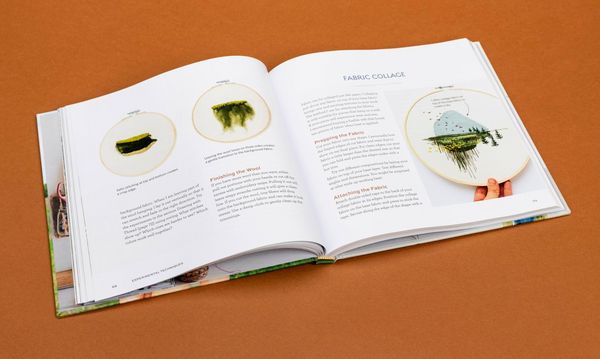
    ○  This book is written in the same way that I developed my embroidery: starting small and working towards a larger landscape. Within these pages we will work like an artist, developing our foreground, middleground, and background. We begin with focusing on stitching one plant at a time while learning embroidery basics. Through the process our embroidery skills will grow, and we will experiment with new processes and materials. Eventually we will be able to stitch an entire landscape with multiple plants, textures, colors, and embroidery techniques.
    ●  Studio Practice
    ○  Describe the ebb and flow of working in my studio, to working on my couch, to working out on the land incorporating the idea of grounding within my work
    ○  Goal of creating a landscape that is both abstract and still grounded in reality
    Chapter 1: Materials
    ●  Fabric
    ●  Needles
    ●  Felt
    ●  Hoops
    ●  Thread
    ●  Scissors/snips
    ●  Water soluble markers
    ●  Watercolor and gouache
    ●  Brushes
    ●  Roving
    ●  Tulle
    ●  Sketchbooks
    ●  Material storage and set up
    Chapter 2: Getting Started
    ●  Getting set up to stitch
    ○  Hooping your fabric
    ○  Threading your needle
    ○  Drawing on the fabric
    ○  Choosing your color palette
    ●  Basic embroidery stitches
    ○ Backstitch
    ○  Satin stitch
    ○  French knot
    Chapter 3: Embroidering single flowers, plants, trees (Creating a Foreground)
    ● How to stitch the parts of flowers, plants, trees, grasses, textures, etc.
    ○  actual patterns/tutorials
    ○  a guide to create your own design through observing
    ■ ie: a satin stitch is used for petals, french knot for the stamen in most flowers
    ○ Explanation that these elements are used to create movement in the composition when used in a larger landscape context
    ● Land and Studio Connection ○ At home
    ■ Had my first baby. Wanted to step away from the gallery world and focus on a simple, age old, craft
    ○ In the Studio
    ■ Early days of studio practice. Needed to meditate on a single plant or tree while keeping my hands busy/mind still
    ○ On the Land
    ■ In the summer the garden is overflowing with flowers, colors, plants, textures. It's almost too much to take in all at once so instead, let’s sit down and study one plant at a time.
    Chapter 4: Creating a Ground (Creating a Middleground)
    ● Techniques that create a ground for your plants
    ○  Watercolor
    How to paint on fabric
    Stitching on top of watercolor
    ○  stitching grass
    ■ “messy” satin stitch
    ■ choosing colors to create depth
    ○  Wool roving
    ■ a grass “shortcut”
    ■ attaching roving to fabric with thread Land and Studio Connection
    ○  At home
    Learning about plant interactions in the garden
    As my family grew, so did the complexity of my studio practice.
    ○  In the Studio
    ■ As skills grew I was able to stitch plant families and begin experimenting
    with new materials (watercolor)
    ○  On the Land
    ■ In the fall we start to notice plant relationships. We see one plant start to die while another is still producing fruit. It is a time of fluctuation. In this chapter we will focus on the relationship between different plants. In our embroidery we will introduce a new medium: watercolor and learn how thread and fabric interact with watercolor while we start to embrace the relationships of plant families.

    Chapter 5: Finding Composition in the Landscape (Creating a Background)
    ●  Getting set up for sketching
    ○  Supplies you’ll need
    ○  How and where to sketch
    ●  Finding line and texture
    ○  Photos of the landscape alongside my own sketches to show how I pick out line and texture in a landscape.
    ○  Describing how to find these elements in any landscape
    ● Building a composition
    ○ Use photos with my sketches overlaid on them to show how I build a composition by looking at a landscape
    ●  Embroidering the Land
    ○  Examples of my finished work
    ○  Examples of other artists
    ●  Techniques
    ○  Collaging with fabric
    ○  Creating a horizon line
    ○  Tulle overlay
    ● Land
    ○ At Home
    and Studio Connection
    ■ The cold days of winter. Learning patience and waiting and finding beauty in the mundane.
    ○  In the Studio
    ■ The breakthrough piece
    ■ First time I stitched a landscape that felt like it had elements of abstract line in it but was still realistic
    ■ How do you make a piece that is both abstract and still grounded in reality?
    ○  On the Land
    ■ Winter is a time of bareness. The bones of the landscape are visible, and
    it is the best time to learn how to see composition within the landscape. In this chapter we will start to find lines, textures and colors in a landscape and learn how to build a composition. You can find these bones through the foliage, but looking at your landscape in the winter will help train your eye to find compositional elements quickly
    Chapter 6: Creating an Abstract Landscape
    ● Creating your own composition
    ○  Creating a sketch and transferring it to fabric
    ○  basic composition templates
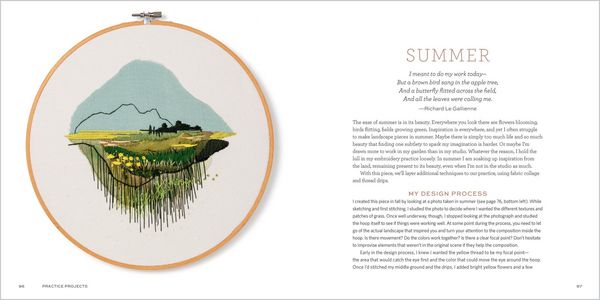
    ○  how to build a composition with a background, middle ground and foreground
    ■ I start by creating a background and middle ground with the techniques we’ve already laid out. From there I use the smaller plants we explored in our foreground chapter to create movement within the piece.
    ● Techniques
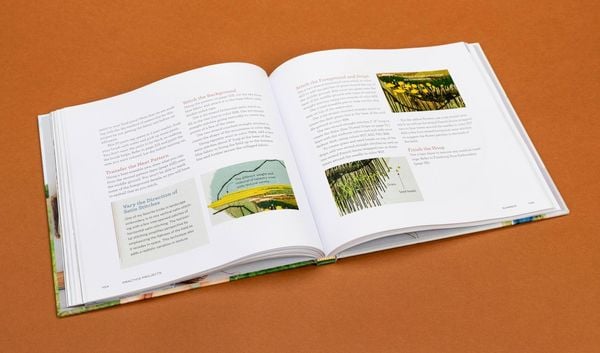
    ○  Dripping effect
    ○  combining techniques
    ■ ie: how to use wool roving with watercolor or combining tulle overlay with fabric collage
    ○ Backing your hoop
    ● Land and Studio Connection
    ○ At Home
    ■ Life is full, abundant, and when we find a rhythm it is magic.
    ○  In the Studio
    ■ Learning how to create pieces with plants/textures/lines harmonizing with
    one another
    ○  On the Land
    ■ Spring is a time of fullness. The winter is melting away and the long wait for new life is over. What better time than this is there to stop and contemplate the landscape as a whole. In this section we will bring together all of the things we have learned to compose an abstract landscape.