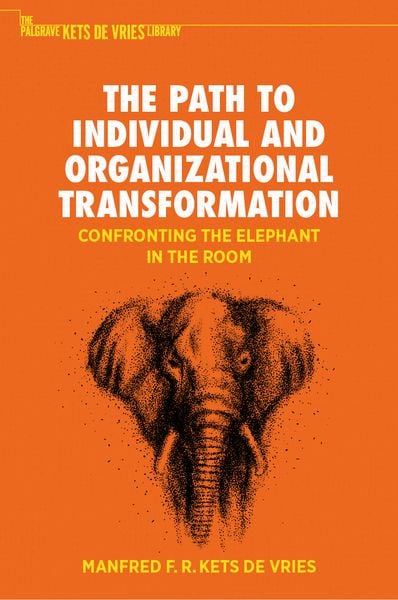
The Path to Individual and Organizational Transformation Confronting the Elephant in the Room
27,99 €
inkl. gesetzl. MwSt.,
Beschreibung
Produktdetails
Einband
Gebundene Ausgabe
Erscheinungsdatum
19.08.2025
Abbildungen
XXV, 11 illus., 10 illus. in color., farbige Illustrationen, schwarz-weiss Illustrationen
Verlag
SpringerSeitenzahl
210
Maße (L/B/H)
24,1/16/1,9 cm
Gewicht
522 g
Sprache
Englisch
ISBN
978-3-031-88329-3
Change can be hard, and for many people, unlearning habitual patterns is an uphill challenge. It can be painful, but not as painful as remaining stuck.
With an estimated 70% of change initiatives failing, Manfred Kets de Vries, a world renowed Professor of Leadership Development, offers a more positive outlook. Infused with his trademark inimitable style of analysis, he demonstrates how change methodologies can be applied in a highly effective way.
At the heart of effective organizations lies human action—what we do, how we do it, and why we do it. As leaders, consultants and executive coaches we need to pay close attention to the individual and group dynamics of the organizations that we work with. By looking more deeply into the world of work with the aim of untangling and explaining what lies below the surface, this book helps you see through the darkness that may lead us astray, yet this kind of “night vision”—efforts to turn the irrational into the rational—requires in-depth observation. To find out what is really happening demands a more clinical orientation. To be successful, Kets de Vries argues, leaders need to recognize the importance of what have been referred to as “soft skills”, essentially using emotional intelligence to their advantage. Contrary to their name, these abilities are often the “hardest” skills to learn.
Adopting a clinical approach to leadership, this book helps you to understand more about the dynamics of organizational life, leading to greater self-awareness, self-knowledge, and the ability to become a more effective change agent. By becoming aware not only of our conscious thoughts, but also of our unconscious prejudices, biases and habits it’s possible to understand more why so many well-laid plans and strategies derail or, conversely, why otherwise effective leaders sometimes act in unexpected ways.
Kundinnen und Kunden meinen
Verfassen Sie die erste Bewertung zu diesem Artikel
Helfen Sie anderen Kund*innen durch Ihre Meinung
Kurze Frage zu unserer Seite
Vielen Dank für Ihr Feedback
Wir nutzen Ihr Feedback, um unsere Produktseiten zu verbessern. Bitte haben Sie Verständnis, dass wir Ihnen keine Rückmeldung geben können. Falls Sie Kontakt mit uns aufnehmen möchten, können Sie sich aber gerne an unseren Kund*innenservice wenden.
zum Kundenservice