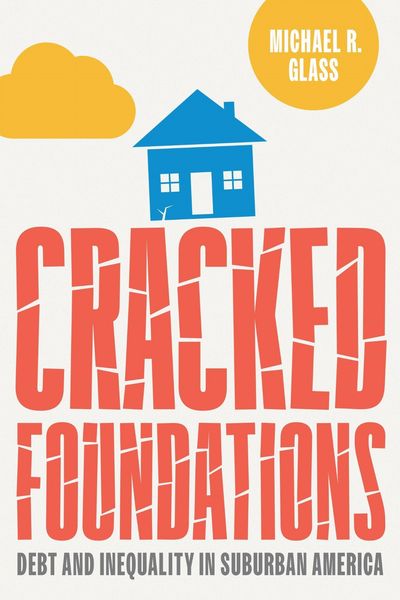
Cracked Foundations Debt and Inequality in Suburban America
33,99 €
inkl. gesetzl. MwSt.,
Beschreibung
Produktdetails
Einband
Gebundene Ausgabe
Erscheinungsdatum
07.10.2025
Verlag
University Of Pennsylvania PressSeitenzahl
336
Maße (L/B/H)
23,1/15,7/3 cm
Gewicht
658 g
Sprache
Englisch
ISBN
978-1-5128-2822-1
How debt and speculation financed the suburban American dream and led to today's inequalities
In the popular imagination, the suburbs are synonymous with the "American Dream" of upward mobility and economic security. After World War II, white families rushed into newly built suburbs, where they accumulated wealth through homeownership and enjoyed access to superior public schools. In this revelatory new account of postwar suburbanization, historian Michael R. Glass exposes the myth of uniform suburban prosperity. Focusing on the archetypal suburbs of Long Island, Cracked Foundations uncovers a hidden landscape of debt and speculation.
Glass shows how suburbanites were not guaranteed decent housing and high-quality education but instead had to obtain these necessities in the marketplace using home mortgages and municipal bonds. These debt instruments created financial strains for families, distributed resources unevenly across suburbs, and codified racial segregation. Most important, debt transformed housing and education into commodities, turning homes and schools into engines of capital accumulation. The resulting pressures made life increasingly precarious, even for those privileged suburbanites who resided in all-white communities. For people of color denied the same privileges, suburbs became places where predatory loans extracted wealth and credit rating agencies punished children in the poorest school districts. Long Islanders challenged these inequalities over several decades, demanding affordable housing, school desegregation, tax equity, and school-funding equalization. Yet the unequal circumstances created by the mortgages and bonds remain very much in place, even today.
Cracked Foundations not only transforms our understanding of housing, education, and inequality but also highlights how contemporary issues like the affordable housing crisis and school segregation have their origins in the postwar golden age of capitalism.
Noch keine Bewertungen vorhanden
Verfassen Sie die erste Bewertung zu diesem Artikel
Helfen Sie anderen Kundinnen und Kunden durch Ihre Meinung.
Kurze Frage zu unserer Seite
Vielen Dank für Ihr Feedback
Wir nutzen Ihr Feedback, um unsere Produktseiten zu verbessern. Bitte haben Sie Verständnis, dass wir Ihnen keine Rückmeldung geben können. Falls Sie Kontakt mit uns aufnehmen möchten, können Sie sich aber gerne an unseren Kund*innenservice wenden.
zum Kundenservice