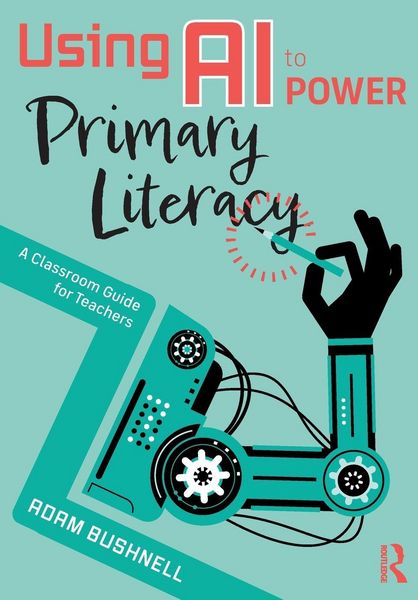
Produktbild: Using AI to Power Primary Literacy

Using AI to Power Primary Literacy A Classroom Guide for Teachers

37,99 €

inkl. gesetzl. MwSt., Versandkostenfrei


Beschreibung

Produktdetails

Einband

Taschenbuch

Erscheinungsdatum

30.09.2025

Verlag

Taylor and Francis

Seitenzahl

280

Maße (L/B/H)

24,4/17/1,6 cm

Gewicht

488 g

Sprache

Englisch

ISBN

978-1-04-102905-2

Beschreibung

Produktdetails

Einband

Taschenbuch

Erscheinungsdatum

30.09.2025

Verlag

Taylor and Francis

Seitenzahl

280

Maße (L/B/H)

24,4/17/1,6 cm

Gewicht

488 g

Sprache

Englisch

ISBN

978-1-04-102905-2

Herstelleradresse

Libri GmbH
Europaallee 1
36244 Bad Hersfeld
DE

Email: gpsr@libri.de

Noch keine Bewertungen vorhanden

Verfassen Sie die erste Bewertung zu diesem Artikel

Helfen Sie anderen Kundinnen und Kunden durch Ihre Meinung.

Kundinnen und Kunden meinen

Bewertungen (0)

Weitere Artikel finden Sie in

  • Produktbild: Using AI to Power Primary Literacy
  • PART 1 - Reading

    Chapter 1 - Personalised Texts and Reading Lists
    Chapter 2 - Speech-to-Text
    Chapter 3 - Phonics
    Chapter 4 - Interactive Storytelling
    Chapter 5 - Reading Fluency
    Chapter 6 - Virtual Reading Buddies
    Chapter 7 - Reading Games
    Chapter 8 - Audiobooks
    Chapter 9 - Simplifying and Extending Texts
    Chapter 10 - Summarising Texts

    PART 2 - Comprehension Skills

    Chapter 11 - Quizzes
    Chapter 12 - Key Moments
    Chapter 13 - Vocabulary Expansion and Building
    Chapter 14 - Emotion Analysis
    Chapter 15 - Book Discussions
    Chapter 16 - Reading Aloud to Avatars
    Chapter 17 - Reading Challenges
    Chapter 18 - Flashcards
    Chapter 19 - Guess the Ending
    Chapter 20 - Clarify the Confusion

    PART 3 - Character Descriptions

    Chapter 21 - Checking Book Character Descriptions
    Chapter 22 - Character Analysis
    Chapter 23 - Context of Characters
    Chapter 24 - Appearance and Personality
    Chapter 25 - Revealing Character Through Actions
    Chapter 26 - Character Development
    Chapter 27 - Sentence Starters
    Chapter 28 - Opposites and Comparisons
    Chapter 29 - Emotive Language
    Chapter 30 - Dialogue

    PART 4 - Setting Descriptions

    Chapter 31 - Example Texts
    Chapter 32 - Change the Timeline
    Chapter 33 - Adding Sensory Detail
    Chapter 34 - Developmental Prompts
    Chapter 35 - Weather and Other Influences
    Chapter 36 - Colour and Tone
    Chapter 37 - Feedback on Descriptions
    Chapter 38 - Movement
    Chapter 39 - Other Worlds
    Chapter 40 - Contrasting Places

    PART 4 - Poetry

    Chapter 41 - Explaining Literary Devices
    Chapter 42 - More Figurative Language
    Chapter 43 - Writing Ballads
    Chapter 44 - Structured Poetry
    Chapter 45 - Free Verse
    Chapter 46 - Poetry Prompts
    Chapter 47 - Rhyme
    Chapter 48 - Thematic Ideas
    Chapter 49 - Collaborative Ideas
    Chapter 50 - Poetry Analysis

    PART 5 - Non-Fiction

    Chapter 51 - Structure
    Chapter 52 - Research
    Chapter 53 - Captions and Headings
    Chapter 54 - Lesson Planning
    Chapter 55 - Topic Related Vocabulary
    Chapter 56 - Fact vs Opinion
    Chapter 57 - Summarising
    Chapter 58 - Explaining Features
    Chapter 59 - Creating Narrative Non-Fiction
    Chapter 60 - Writing Conclusions