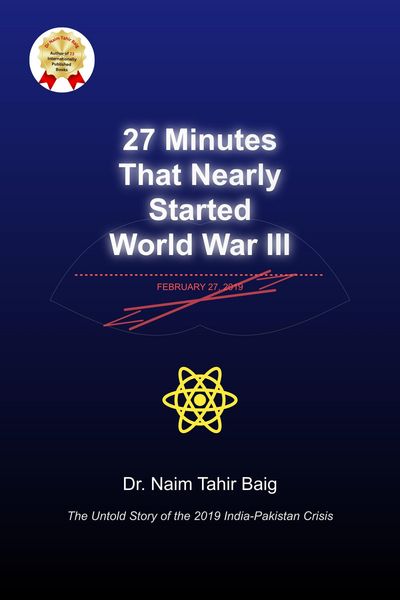
27 Minutes That Nearly Started World War III
-
- Einzelkauf Download ausgewählt
-
Sprache:Englisch
17,99 €
inkl. gesetzl. MwSt.Beschreibung
Produktdetails
Format
ePUB
Kopierschutz
Ja
Family Sharing
Ja
Text-to-Speech
Ja
Erscheinungsdatum
17.05.2025
Verlag
Dr Naim Tahir BaigSeitenzahl
(Printausgabe)
Dateigröße
1099 KB
Sprache
Englisch
EAN
9798231289516
Book Description
"A masterful analysis of the most dangerous nuclear confrontation of the 21st century." - Foreign Affairs
On February 27, 2019, Indian and Pakistani fighter jets engaged in aerial combat over Kashmir for 27 minutes-the first such encounter between nuclear-armed powers since the end of the Cold War. What began with a suicide bombing in Pulwama escalated to airstrikes on Pakistani territory and could have spiraled into catastrophic nuclear war. Former U.S. Secretary of State Mike Pompeo would later reveal that the world came "perilously close to nuclear conflagration" during this crisis.
In this definitive account, Dr. Naim Tahir Baig draws on his extensive diplomatic experience and interviews with key decision-makers to provide unprecedented insight into those harrowing 27 minutes and their aftermath. Through meticulous research and analysis, he reconstructs the chain of events from the Pulwama attack through India's Balakot airstrike to Pakistan's Operation Swift Retort, revealing previously undisclosed details about military planning, intelligence failures, and diplomatic interventions that prevented escalation to full-scale war.
Beyond chronicling this dangerous episode, Dr. Baig explores its profound implications for regional security, nuclear deterrence theory, and international crisis management. He examines how social media, domestic politics, and information warfare influenced decision-making on both sides, creating new challenges for traditional de-escalation mechanisms.
"27 Minutes That Nearly Started World War III" offers critical lessons not just for South Asia but for all nuclear-armed states navigating an increasingly complex global security environment. In an age of rising nationalism, technological change, and great power competition, the India-Pakistan crisis of 2019 serves as a sobering reminder of how quickly conflicts can escalate-and how catastrophic the consequences might be if we fail to learn from this near miss.
Noch keine Bewertungen vorhanden
Verfassen Sie die erste Bewertung zu diesem Artikel
Helfen Sie anderen Kundinnen und Kunden durch Ihre Meinung.
Kurze Frage zu unserer Seite
Vielen Dank für Ihr Feedback
Wir nutzen Ihr Feedback, um unsere Produktseiten zu verbessern. Bitte haben Sie Verständnis, dass wir Ihnen keine Rückmeldung geben können. Falls Sie Kontakt mit uns aufnehmen möchten, können Sie sich aber gerne an unseren Kund*innenservice wenden.
zum Kundenservice