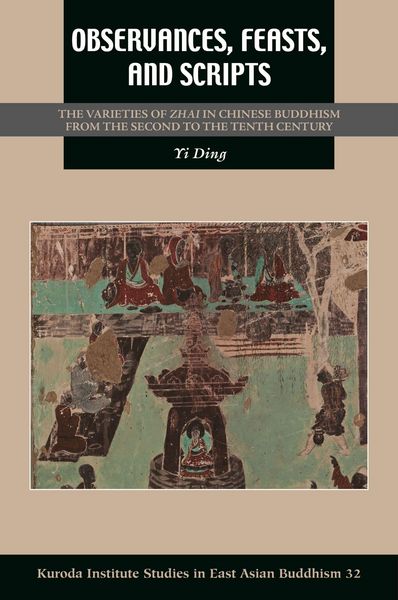
Observances, Feasts, and Scripts The Varieties of Zhai in Chinese Buddhism from the Second to the Tenth Century
-
- Englisch ausgewählt
68,99 €
inkl. gesetzl. MwSt.,
Beschreibung
Produktdetails
Einband
Gebundene Ausgabe
Erscheinungsdatum
28.02.2026
Verlag
University of Hawai'i PressSeitenzahl
288
Maße (L/B/H)
23,8/16,1/2,7 cm
Gewicht
608 g
Sprache
Englisch
EAN
9798880702428
Observances, Feasts, and Scripts is the first monograph written in English to offer a comprehensive analysis of the varieties of zhai, a multifaceted term with deep historical and religious significance in Chinese Buddhism. Drawing on a wide array of sources--including canonical texts, apocryphal writings, hagiographies, and ritual documents--this book unveils zhai as a ritual complex encompassing temporary observances, communal feasts, and modes of interaction between the seen and unseen realms. These practices, rooted in both lay and monastic traditions, illustrate the intricate interplay between food, community, and ritual in Indian and Chinese Buddhism.
Part I traces how Indian Buddhist temporary observances were adapted, debated, and reimagined in the Chinese context. Part II explains the sponsored feast as a mechanism for lay-monastic interaction and merit-making. It also examines how Buddhists engaged with deities and spirit saints through remote invitations and ritual offerings. Part III focuses on "scripts" used for receiving the Eightfold Observance and conducting sponsored feasts, thus revealing their evolution from simple master-disciple interactions to complex communal events. Observances, Feasts, and Scripts is an essential resource for scholars interested in food-related religious practices and the history of Buddhism. Through its meticulous examination of Chinese, Pāli, Sanskrit, and Tibetan materials, the book offers a fresh perspective on Chinese Buddhism as an intercultural endeavor. It sheds light on relevant scholastic debates, the creation of apocrypha, translation strategies, and ritual innovations in medieval China. By moving beyond teleological frameworks such as Sinicization, it emphasizes the agency of cultural, doctrinal, and social factors in shaping these practices. Additionally, it engages with the cognitive dimensions of ritual and highlights ritual logic as a cross-cultural analytical lens.Noch keine Bewertungen vorhanden
Verfassen Sie die erste Bewertung zu diesem Artikel
Helfen Sie anderen Kundinnen und Kunden durch Ihre Meinung.
Kurze Frage zu unserer Seite
Vielen Dank für Ihr Feedback
Wir nutzen Ihr Feedback, um unsere Produktseiten zu verbessern. Bitte haben Sie Verständnis, dass wir Ihnen keine Rückmeldung geben können. Falls Sie Kontakt mit uns aufnehmen möchten, können Sie sich aber gerne an unseren Kund*innenservice wenden.
zum Kundenservice