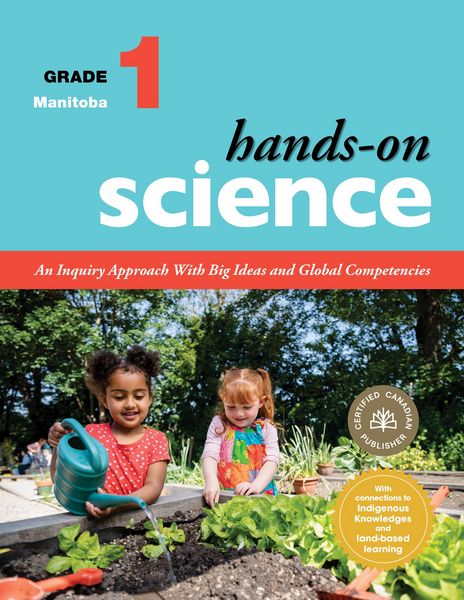
Hands-On Science for Manitoba, Grade 1 An Inquiry Approach with Big Ideas and Global Competencies
-
- Englisch ausgewählt
134,99 €
inkl. gesetzl. MwSt.,
Beschreibung
Produktdetails
Einband
Taschenbuch
Erscheinungsdatum
18.08.2026
Verlag
Portage & Main PressSeitenzahl
264
Maße (L/B/H)
27,9/21,6/1,6 cm
Gewicht
735 g
Sprache
Englisch
ISBN
978-1-77492-151-7
Hands-On Science for Manitoba, Grade 1 is an easy-to-use elementary resource bringing the five strands of the Manitoba science curriculum (2025) to life. Using an Inquiry Model, this guide features student-centred activities that develop Global Competencies and critical thinking. Lessons incorporate Land-Based Learning and Traditional Ecological Knowledge (TEK), providing a modern, holistic Science Education tailored to the Grade 1 Curriculum.
This all-in-one guide contains everything an educator needs to teach a robust STEM/Science and technology program, including curriculum correlation charts; background information on the science topics; a complete, full year of easy-to-follow lesson plans; digital reproducible student materials; materials lists; and hands-on, student-centred activities.
The Big Ideas for grade 1 are addressed in the following units:
- Properties of Matter (Matter)
- What is Energy? (Energy and Evolution)
- Patterns in the Sky and on Earth (Space Science)
- Needs and Variety of Living Things (Life Systems and Evolution)
Useful features include:
- the components of an inquiry-based approach
- a four-part instructional process-engage, explore, embed, and enhance
- ideas to incorporate culturally appropriate teaching methodologies from Indigenous worldviews, including Traditional Ecological Knowledge (TEK) and Indigenous ways of knowing, doing, and being
- a fully developed assessment plan that includes opportunities for assessment for, as, and of learning
- a focus on the six Global Competencies identified in the Manitoba science curriculum in all lessons
- Makerspaces that emphasize practical scientific skills and knowledge through problem-solving and design challenges
Get FREE digital resources with your book purchase. Follow the instructions on the "Access Digital Resources" page at the back of the book to download these resources.
Noch keine Bewertungen vorhanden
Verfassen Sie die erste Bewertung zu diesem Artikel
Helfen Sie anderen Kundinnen und Kunden durch Ihre Meinung.
Kurze Frage zu unserer Seite
Vielen Dank für Ihr Feedback
Wir nutzen Ihr Feedback, um unsere Produktseiten zu verbessern. Bitte haben Sie Verständnis, dass wir Ihnen keine Rückmeldung geben können. Falls Sie Kontakt mit uns aufnehmen möchten, können Sie sich aber gerne an unseren Kund*innenservice wenden.
zum Kundenservice