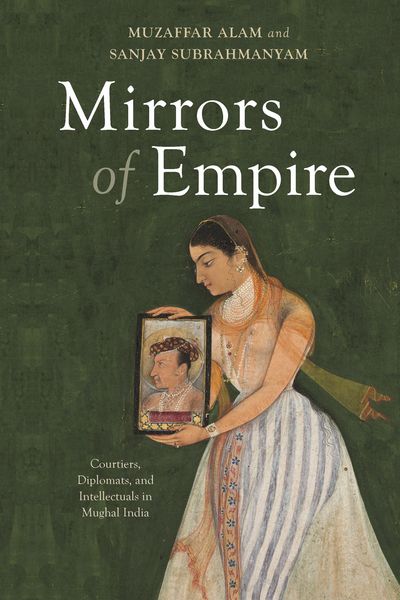
Mirrors of Empire Courtiers, Diplomats, and Intellectuals in Mughal India
-
- Hardcover
- Taschenbuch
- eBook ausgewählt
-
Form:Einzelkauf Download
-
Sprache:Englisch
40,49 €
inkl. gesetzl. MwSt.Beschreibung
Produktdetails
Format
ePUB
Kopierschutz
Nein
Family Sharing
Nein
Text-to-Speech
Ja
Erscheinungsdatum
01.02.2026
Verlag
State University Of New York PressSeitenzahl
474 (Printausgabe)
Dateigröße
5254 KB
Sprache
Englisch
EAN
9798855807073
Approaches the history of the Mughal Empire at the level of human experience, through a diverse group of autobiographical narratives.
Starting from 1526, the Mughals ruled over much of India for three centuries, perhaps the most important Islamic empire in the early modern world. This period saw the production of a fascinating variety of memoirs and autobiographies in which residents of the empire reflected on their own lives, on Islam in a Hindu context, and on the relationship of individual subjects to their new rulers. Those written by Mughal royalty-especially Babur and Jahangir-are well known. This book considers the less well-known writings of diverse others, from the poet laureate Faizi to those who were not part of elite society but a few notches below it, such as the lowly envoy Asad Beg and characters like Mirza Nathan and Abdul Latif, who lived dangerously on the Bengal frontier. Also considered are prolific Hindu writers, such as Bhimsen Saksena and the witty Anand Ram Mukhlis, who lived in Delhi through the turbulent 1730s and 1740s. Together, they offer an original and differently critical perspective on the empire-its religious, social, and political tensions, as well as its strategies for overcoming them.
Covering over two centuries of such materials, Mirrors of Empire is a work of cultural history that is also firmly rooted in social history. It incorporates extensive translations from Persian, including materials that are little-known even to historians and specialists, and shows the transformation of the empire from its difficult emergence, to its expansive height, to its phase of disintegration in the middle of the eighteenth century. Gracefully written, the book approaches the Mughal Empire at the level of human experience, rendering it accessible and not a mere abstraction.
Noch keine Bewertungen vorhanden
Verfassen Sie die erste Bewertung zu diesem Artikel
Helfen Sie anderen Kundinnen und Kunden durch Ihre Meinung.
Kurze Frage zu unserer Seite
Vielen Dank für Ihr Feedback
Wir nutzen Ihr Feedback, um unsere Produktseiten zu verbessern. Bitte haben Sie Verständnis, dass wir Ihnen keine Rückmeldung geben können. Falls Sie Kontakt mit uns aufnehmen möchten, können Sie sich aber gerne an unseren Kund*innenservice wenden.
zum Kundenservice