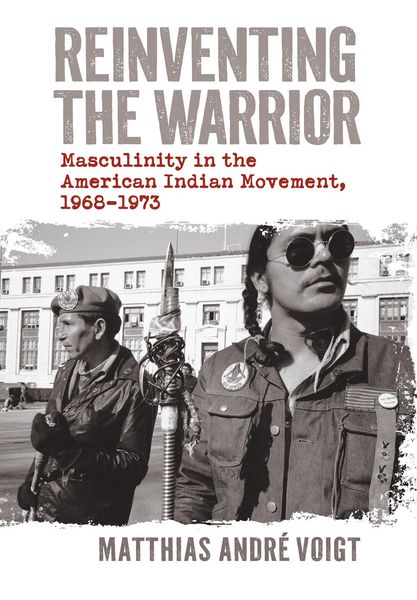
Reinventing the Warrior Masculinity in the American Indian Movement, 1968-1973
-
- Einzelkauf Download ausgewählt
-
Sprache:Englisch
54,99 €
inkl. gesetzl. MwSt.Beschreibung
Produktdetails
Format
ePUB
Kopierschutz
Nein
Family Sharing
Nein
Text-to-Speech
Ja
Erscheinungsdatum
16.08.2024
Verlag
University Press of KansasSeitenzahl
442 (Printausgabe)
Dateigröße
7517 KB
Sprache
Englisch
EAN
9780700636983
On February 27, 1973, a group of roughly 300 armed Indigenous men, women, and children seized the tiny hamlet of Wounded Knee, South Dakota, at gunpoint, took hostages, barricaded themselves in the hilltop church, and raised an upside-down American flag. Taking place at the site of the infamous massacre in 1890, the highly symbolic confrontation spearheaded by the American Indian Movement (AIM) ultimately evolved into a prolonged, seventy-one-day armed standoff between law enforcement officers and modern-day Indigenous warriors. Among these warriors were Vietnam War veterans armed with Vietnam-era equipment and weaponry. By organizing in defense of the newly proclaimed Independent Oglala Nation, the AIM activists at Wounded Knee linked their nationalist quest for sovereignty and self-determination with a warrior masculinity they constructed from a mix of Indigenous cultures and contemporary cultural elements, including the Black civil rights movement, the counterculture of the 1960s and early 1970s, and the antiwar movement.
As Matthias André Voigt shows, the takeover of Wounded Knee was only one moment among many in the complex interplay between protest activism, gender, race, and identity within AIM. While AIM is widely recognized for its militancy and nationalism, Reinventing the Warrior is the first major study to examine the gendered transformation of Indigenous men within the Red Power movement and the United States more generally. AIM activists came to regard themselves, like their ancestors before them, as warriors fighting for their people, their lands, and their rights. They sought to remasculinize their Indigenous identity in order to confront hegemonic masculinitiesand, by implication, colonialism itself. By becoming more manly, Indigenous men challenged the disempowering nature of white supremacy.
Voigt traces the story of the reinvention of Indigenous warriorhood from 1968 to the takeover of Wounded Knee in 1973 and beyond. His trailblazing work explores why and how Indigenous men refashioned themselves as modern-day warriors in their anticolonial nation-building endeavor, thereby remaking both self and society.
Noch keine Bewertungen vorhanden
Verfassen Sie die erste Bewertung zu diesem Artikel
Helfen Sie anderen Kundinnen und Kunden durch Ihre Meinung.
Kurze Frage zu unserer Seite
Vielen Dank für Ihr Feedback
Wir nutzen Ihr Feedback, um unsere Produktseiten zu verbessern. Bitte haben Sie Verständnis, dass wir Ihnen keine Rückmeldung geben können. Falls Sie Kontakt mit uns aufnehmen möchten, können Sie sich aber gerne an unseren Kund*innenservice wenden.
zum Kundenservice