Beschreibung
Produktdetails
Einband
Gebundene Ausgabe
Erscheinungsdatum
04.08.2026
Verlag
Oxford AcademicSeitenzahl
352
Maße (L/B/H)
23,8/16/3 cm
Gewicht
671 g
Farbe
Seidengrau / Kaffee
Sprache
Englisch
ISBN
978-0-19-782750-5
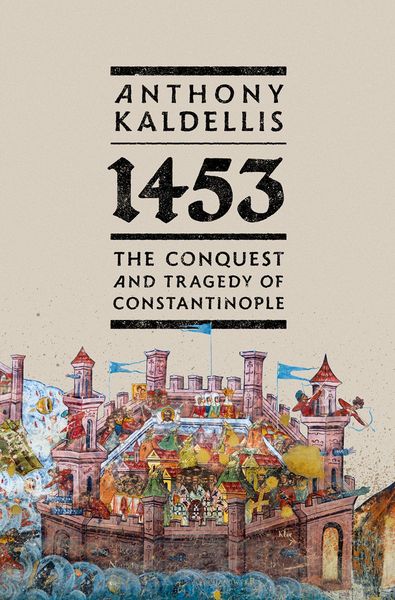
A detailed account of the siege and fall of Constantinople in 1453, a watershed year that closed the book, once and for all, on the Roman Empire and confirmed for Europeans their worst fears about an expanding Ottoman Empire.
Anthony Kaldellis offers a new narrative of the siege and fall of Constantinople in 1453, a watershed year that closed the book, once and for all, on the Roman Empire and confirmed for Europeans their worst fears about an expanding Ottoman Empire.
By the fifteenth century, Constantinople had seen better days, but it was still a vibrant center of learning, worship, commerce, and information. 1453 sketches the tense but exciting shared world of Italians, Turks, and Romans that was thrown into crisis by Mehmed II's decision to conquer the city. Kaldellis showcases a detailed reconstruction following events on a day-by-day basis, pulling from gripping eye-witness testimonies in Latin, Italian, Greek, Russian, and Turkish. He weighs the strategies of both the attackers and defenders, and proves that, contrary to the fatalism that marks almost all narratives written with hindsight, in reality the defense was hardly a lost cause. The defenders knew exactly what they were doing. They were willing to risk their lives, but it was not their intention to become martyrs. Instead, it was the sultan who was scrambling to neutralize a seemingly impregnable defense. That he did so was a testament to his ingenuity and tenacity.
The final chapters of 1453 trace the fate of the vanquished and their captivity. It also weighs the impact of the city's fall on the conquerors, the conquered, and on world history. 1453 was not merely a symbol for the passing of the Middle Ages and the onset of early modernity: it changed the very nature of the Ottoman empire and redirected the transmission of cultural legacies, especially those of Greek classical scholarship. The fall of Constantinople is therefore a nexus of converging pathways between east and west, medieval and modern, ends and beginnings.
Kundinnen und Kunden meinen
Verfassen Sie die erste Bewertung zu diesem Artikel
Helfen Sie anderen Kund*innen durch Ihre Meinung
Kurze Frage zu unserer Seite
Vielen Dank für Ihr Feedback
Wir nutzen Ihr Feedback, um unsere Produktseiten zu verbessern. Bitte haben Sie Verständnis, dass wir Ihnen keine Rückmeldung geben können. Falls Sie Kontakt mit uns aufnehmen möchten, können Sie sich aber gerne an unseren Kund*innenservice wenden.
zum Kundenservice