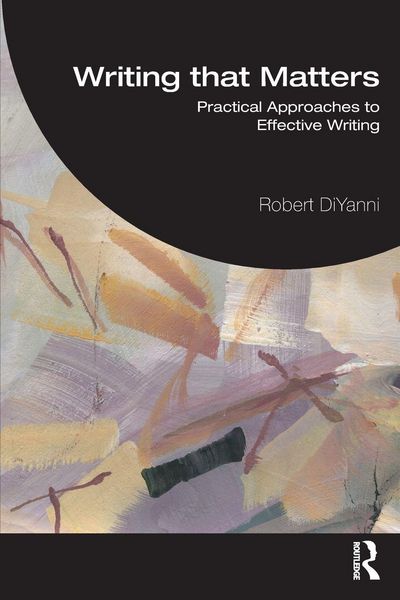
Produktbild: Writing that Matters

Writing that Matters Practical Approaches to Effective Writing

33,99 €

inkl. gesetzl. MwSt., Versandkostenfrei


Beschreibung

Produktdetails

Einband

Taschenbuch

Erscheinungsdatum

18.05.2026

Verlag

Taylor & Francis

Seitenzahl

182

Maße (L/B/H)

22,9/15,2/1,1 cm

Gewicht

370 g

Sprache

Englisch

ISBN

978-1-04-117226-0

Beschreibung

Produktdetails

Einband

Taschenbuch

Erscheinungsdatum

18.05.2026

Verlag

Taylor & Francis

Seitenzahl

182

Maße (L/B/H)

22,9/15,2/1,1 cm

Gewicht

370 g

Sprache

Englisch

ISBN

978-1-04-117226-0

Herstelleradresse

Libri GmbH
Europaallee 1
36244 Bad Hersfeld
DE

Email: gpsr@libri.de

Kundinnen und Kunden meinen

0 Bewertungen

Informationen zu Bewertungen

Zur Abgabe einer Bewertung ist eine Anmeldung im Konto notwendig. Die Authentizität der Bewertungen wird von uns nicht überprüft. Wir behalten uns vor, Bewertungstexte, die unseren Richtlinien widersprechen, entsprechend zu kürzen oder zu löschen.

Die Bewertungen sind nach Format, Anzahl Sterne und Datum sortiert.

Verfassen Sie die erste Bewertung zu diesem Artikel

Helfen Sie anderen Kund*innen durch Ihre Meinung

Kundinnen und Kunden meinen

0 Bewertungen filtern

  • Produktbild: Writing that Matters
  • Preface

    PART I: ESSENTIALS

    Chapter 1. Writing to Learn

    Writing and Learning

    Writing Sentences, Writing Paragraphs

    Sentences-Beginning with Thinking

    Paragraphs-Developing Your Thinking

    Final Thoughts

    Applications and Considerations

    Chapter 2. The Habit of Writing

    Motivations for Writing

    10 Obstacles to Writing

    10 Strategies for Developing the Habit of Writing

    Connecting Reading and Writing

    The Need for Feedback

    Applications and Considerations

    Chapter 3. Writing from Reading

    Annotating

    Freewriting

    Using a Double-Column Notebook

    Summarizing

    Summary

    Applications and Considerations

    Chapter 4. The Writing Process

    Pre-writing-Thinking and Planning

    Drafting

    Revising

    Three Aspects of Revising

    Editing and Proofreading

    Impediments to Writing

    Applications and Considerations

    PART II: STYLE

    Chapter 5. Words

    General and Specific, Abstract and Concrete

    Clichés

    Colloquialisms

    Slang

    Jargon

    Euphemisms

    English Borrowings from Other Languages

    Etymology

    Denotation and Connotation

    Loaded Words

    The Power of Words: Connotation in Action

    The Prevalence of Metaphor

    Metaphor and Meaning

    Metaphor and Ideas

    Metaphor and Politics

    Applications and Considerations

    Chapter 6. Sentences and Punctuation

    The Cumulative Sentence

    The Periodic Sentence

    The Parallel and Antithetical Sentence

    The Inverted Sentence

    The Interrupting Sentence

    The Fragmentary Sentence

    The Questioning Sentence

    Sentence Length

    Sentence Variety

    Emphasis

    Punctuation and the Sentence

    Colon and Semicolon

    Dash

    Double Dash and Parentheses

    Applications and Considerations

    Chapter 7. Paragraphs

    Unity and Coherence

    Paragraph Organization

    Time and Space

    Importance and Climax

    Combining Paragraphs-Unity and Coherence

    Notes on Style and Structure

    Further Notes on Thought

    Applications and Considerations

    PART III: STRUCTURE

    Chapter 8. Aspects of Form

    Two-Part Forms

    Before-After

    Problem-Solution

    Three-Part Forms

    Revision and Form

    Form in Nature and Art

    Applications and Considerations

    Chapter 9. Modes of Discourse

    Description

    Narration

    Argumentation

    Guidelines for Constructing an Argument

    Anticipating Objections

    Making Concessions

    The Modes of Discourse Combined

    Applications and Considerations

    Chapter 10. Patterns of Exposition

    Definition

    Illustration (Exemplification)

    Enumeration

    Process Analysis

    Comparison and Contrast

    Confucianism and Taoism

    Classification

    Cause and Effect Analysis

    Applications and Considerations

    PART IV: MASTERY

    Chapter 11. Master Class

    Key Elements of Close Reading

    Leslie Jamison

    Close Reading

    Style, Structure, and Substance in "A Street Full of Splendid Strangers"

    Style

    Diction

    Syntax

    Figurative Language and Allusion

    Structure

    Substance-Thought

    Chapter 12. Writing with the Masters

    Writing with George Orwell and Annie Dillard

    Orwell

    Dillard

    Writing with Adrienne Rich and E. B. White

    Adrienne Rich

    White

    Writing with Toni Morrison and Maxine Hong Kingston

    Morrison

    Kingston

    Writing with John McPhee and Jhumpa Lahiri

    McPhee

    Lahiri

    Writing with George Saunders and Mary Karr

    Saunders

    Karr

    Writing with Zadie Smith and Chimamanda Ngozi Adichie

    Zadie Smith

    Adichie

    Appendix: Thinking, Writing, and AI

    References

    Index