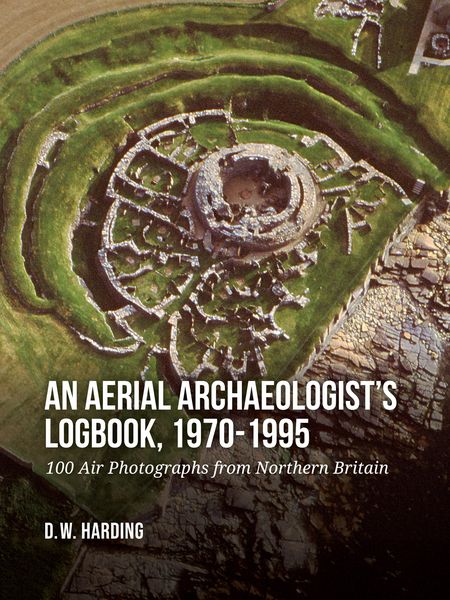
An Aerial Archaeologist's Logbook, 1970-1995
-
- Englisch ausgewählt
29,99 €
UVP
35,00 €
inkl. gesetzl. MwSt.,
Beschreibung
Produktdetails
Einband
Taschenbuch
Erscheinungsdatum
25.11.2025
Verlag
Sidestone PressSeitenzahl
116
Maße (L/B/H)
28/21/0,8 cm
Gewicht
442 g
Auflage
1. Auflage
Sprache
Englisch
ISBN
978-94-6426-398-5
This volume comprises 100 archaeological air photographs, principally of sites dating to the Iron Age and Roman periods in Northern Britain, resulting from aerial survey between 1970 and 1995, before the advent of drones when archaeological air photography was still dependent upon the use of light aircraft. The principal target areas were the Anglo-Scottish Borders, central Scotland (crannogs) and the Northern and Western Isles (brochs and duns). Practically, in order to maximise intended outcome, the author piloted the aircraft to the target area himself, selecting the optimum orbit and height, and only handing over controls to a co-pilot when taking the photographs. Because of the fugitive nature of some archaeological features, large format cameras were used to maximise definition in addition to single-lens reflex cameras. Archaeological air-photography in Northern Britain differs from the better-documented South, in being less concentrated on crop-mark photography. In upland landscapes, fugitive extant earthworks, such as palisaded enclosures and 'cord-rig' agriculture, play an important role in settlement patterns, while certain classes of settlement, like underwater crannogs, are unique in Britain to Scotland. Other classes of field monument, like brochs and duns, may have substantial upstanding remains, but their Highlands and Islands location make many remote to access other than from the air. Optimizing photographic imagery of these sites presents particular problems unique to themselves. In the past twenty years archaeological air photography has been revolutionized by the use of drones, and by the technical advantages of digital photography over film. Though the methodology recorded here now primarily has a historiographical relevance, therefore, the academic issues of settlement and landscape archaeology remain central to current research. The classes of field monument targeted were significantly different from the norm in Britain and Europe, and the tactics deployed in capturing optimum images accordingly were often unique.
Noch keine Bewertungen vorhanden
Verfassen Sie die erste Bewertung zu diesem Artikel
Helfen Sie anderen Kundinnen und Kunden durch Ihre Meinung.
Kurze Frage zu unserer Seite
Vielen Dank für Ihr Feedback
Wir nutzen Ihr Feedback, um unsere Produktseiten zu verbessern. Bitte haben Sie Verständnis, dass wir Ihnen keine Rückmeldung geben können. Falls Sie Kontakt mit uns aufnehmen möchten, können Sie sich aber gerne an unseren Kund*innenservice wenden.
zum Kundenservice